

The Public Health Reality of City Restrooms
City restroom cleaning is essential for public health, with restrooms needing daily disinfection and deep cleaning at least weekly. Here’s what effective maintenance requires:
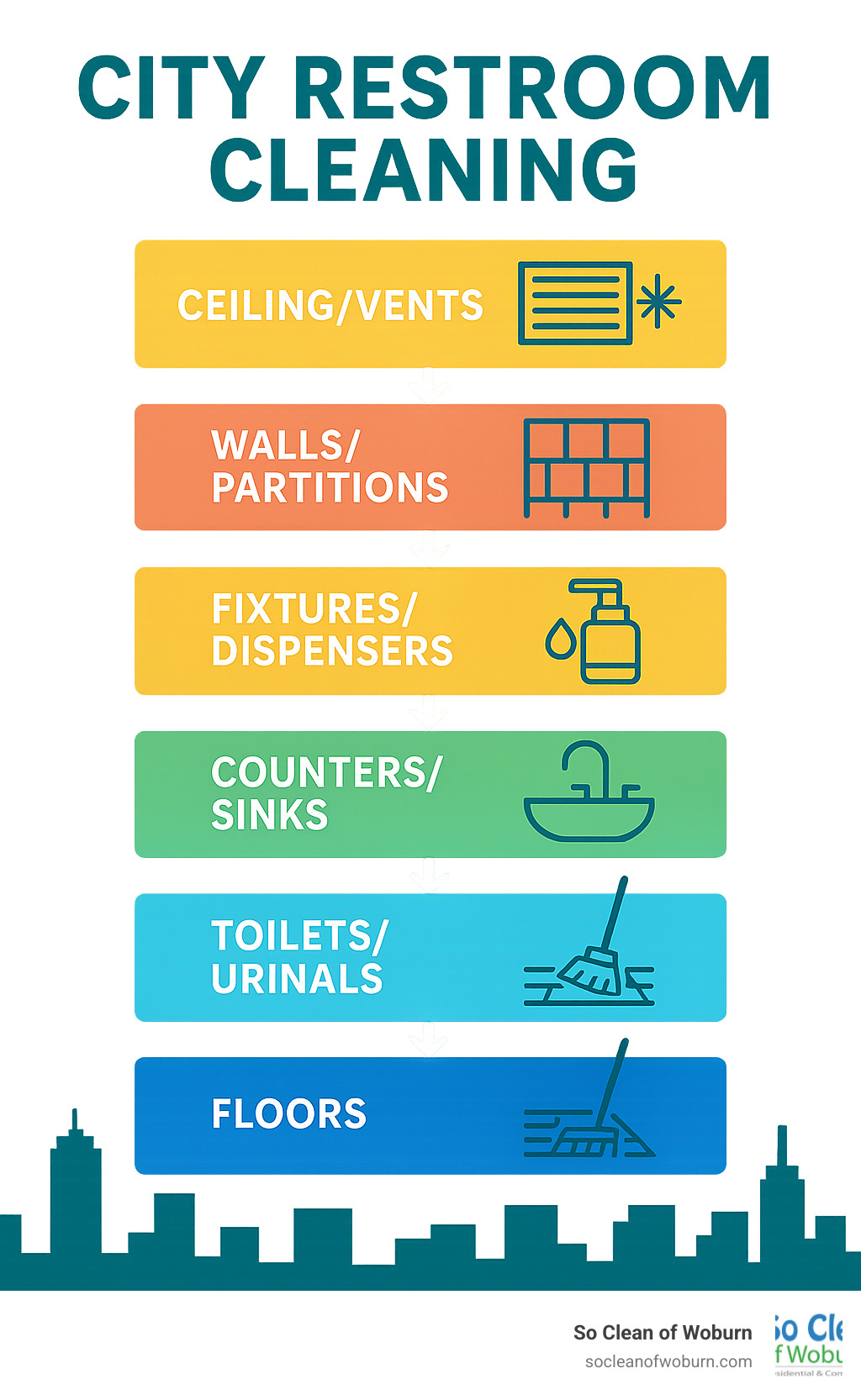
- Daily Tasks: Empty trash, refill supplies, disinfect high-touch surfaces, clean toilets/sinks, mop floors
- Weekly Tasks: Deep clean grout, remove calcium buildup, clean vents, sanitize walls
- Supplies Needed: EPA-approved disinfectants, microfiber cloths, gloves, wet floor signs, toilet brushes
- Frequency: High-traffic restrooms need inspection every 2-4 hours with cleaning at least daily
Public restrooms serve as the unseen barometers of civic pride and public health. When we encounter a clean, well-maintained public restroom, we rarely give it a second thought. But walk into one that’s neglected, with overflowing trash bins, empty soap dispensers, and questionable surfaces, and the experience becomes instantly memorable—for all the wrong reasons.
The statistics speak volumes: 52% of Americans report that a single negative restroom experience is enough to make them avoid returning to a business or public space. This isn’t merely about comfort or convenience—it’s about fundamental public health.
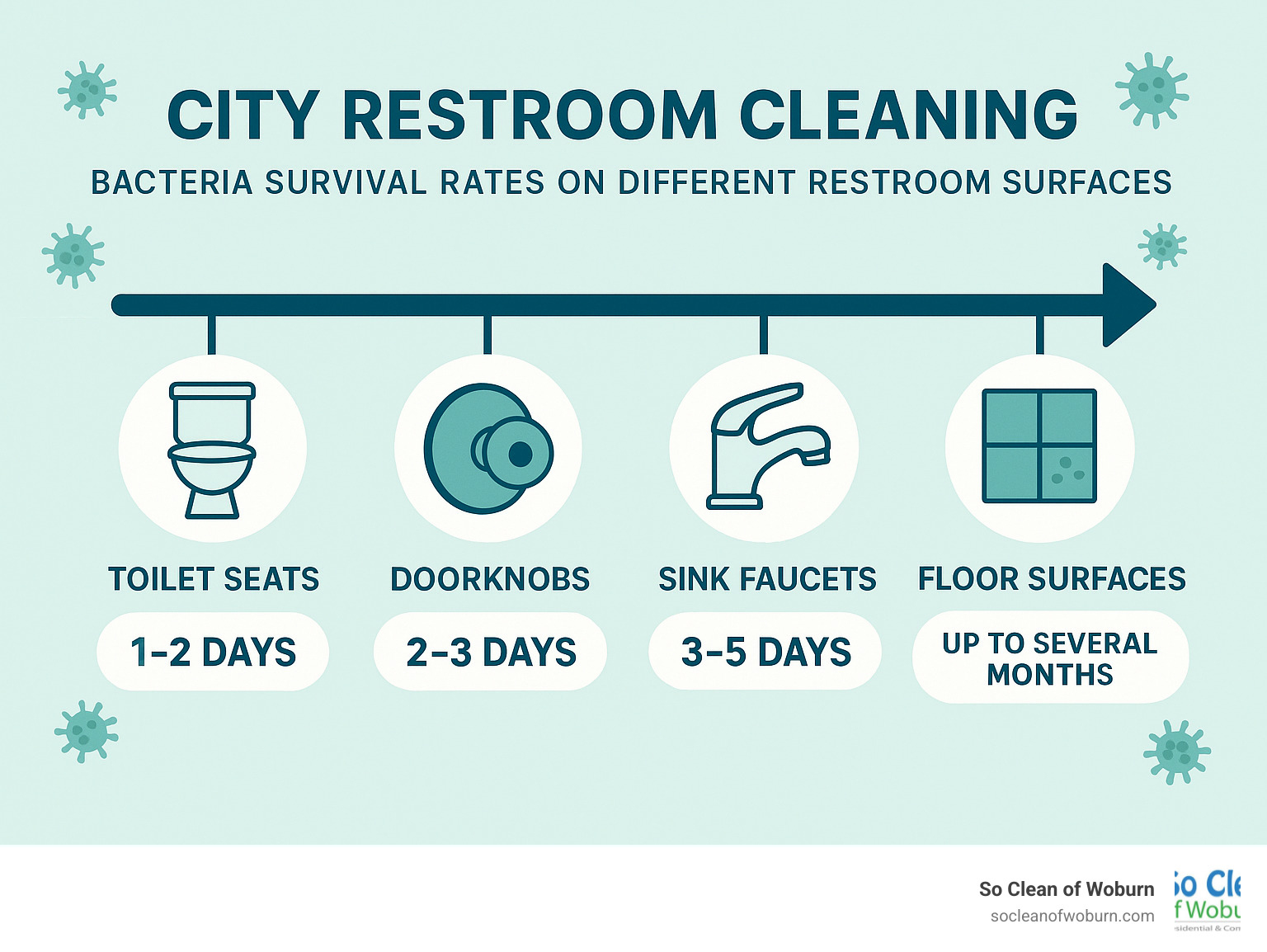
Pathogenic bacteria can survive on restroom surfaces for months, creating silent vectors for disease transmission that affect everyone from tourists to residents to essential workers. For cities looking to maintain vibrant public spaces, investing in consistent, thorough restroom maintenance isn’t optional—it’s a public health imperative.
As one facility manager noted in our research, “Clean restrooms are more than a basic requirement; they reflect respect for individuals in public spaces.”
For city planners and public health officials, addressing restroom cleanliness means confronting a range of challenges from vandalism to high traffic to budget constraints. Yet the return on investment is clear: healthier communities, stronger tourism, and public spaces that truly serve everyone.
Quick look at City Restroom Cleaning:
– Ballfield Restroom Cleaning
– Commercial restroom cleaning services
The Public Health Imperative
When it comes to city restroom cleaning, we’re talking about much more than just keeping things looking nice. Public restrooms can be breeding grounds for harmful bacteria that stick around far longer than most people realize. According to the Centers for Disease Control and Prevention, common bathroom germs like E. coli and Staphylococcus aureus don’t just disappear after a few hours – they can survive on surfaces for days or even months under the right conditions.
Think about this: every time someone flushes an uncovered toilet, millions of tiny water particles shoot into the air and land on nearby surfaces. Without regular, thorough cleaning, these particles can spread illnesses throughout entire communities. It’s not just gross – it’s a genuine public health concern.
Cities that prioritize comprehensive restroom maintenance see real, measurable benefits. Workplaces and schools report fewer absences. Local healthcare systems face fewer cases of preventable illnesses. And perhaps most importantly, residents and visitors feel safer and more comfortable using public spaces.
There’s also the safety factor to consider. Wet bathroom floors are serious slip-and-fall hazards that can lead to injuries and potential lawsuits against municipalities. Regular cleaning and quick responses to spills dramatically reduce these risks for everyone.
How Restroom Hygiene Shapes Community Well-Being
The state of public restrooms affects us on a psychological level too. When people encounter clean, well-maintained facilities, it reduces stress and builds trust in public spaces. As one industry expert put it, “A well-maintained restroom reduces stress and builds trust in public facilities.” This trust is essential for creating vibrant public spaces where people actually want to spend time.
For cities hoping to boost tourism, restroom cleanliness matters more than you might think. Travelers often judge an entire destination based on its public facilities. Bad experiences lead to poor reviews and fewer visitors, while exceptionally clean restrooms can become positive talking points that improve a city’s reputation.
The benefits extend to residents as well. Clean public restrooms send a clear message that city officials value public health and comfort. This contributes to civic pride and community well-being, especially for families with young children, elderly residents, and people with medical conditions who rely on accessible public restrooms.
Why Cities Can’t Ignore 52% of Visitors
That striking statistic bears repeating: 52% of people say a bad restroom experience will make them think twice about returning to a business or avoid it entirely. For cities, this directly impacts the local economy.
When visitors encounter dirty public restrooms, they typically spend less time in public spaces, avoid returning to areas with poor facilities, share negative experiences both in person and online, and develop negative perceptions of the city’s overall cleanliness and safety.
These behaviors have real consequences for local businesses, particularly those in tourism, retail, and hospitality. According to research from Bradley Corporation, businesses that invest in restroom cleanliness see positive returns through increased customer satisfaction and loyalty.
For city leaders, the message is clear: city restroom cleaning isn’t just a maintenance expense—it’s a smart economic development strategy. Clean restrooms encourage longer visits, repeat tourism, and positive word-of-mouth that benefits the entire community.
As one city manager shared with us, “When we upgraded our downtown restroom cleaning schedule and quality, we saw an immediate improvement in visitor dwell time and retail spending. The ROI was unmistakable.”
For more information about environmental surface germs and best cleaning practices, the CDC offers comprehensive guidance that informs our approach at So Clean of Woburn.
Challenges Unique to Urban Facilities
City restroom cleaning in urban environments comes with a special set of problems that you won’t find in your home bathroom or even most business settings. When you think about it, city restrooms might serve hundreds—sometimes thousands—of people every single day without a moment’s break for maintenance.
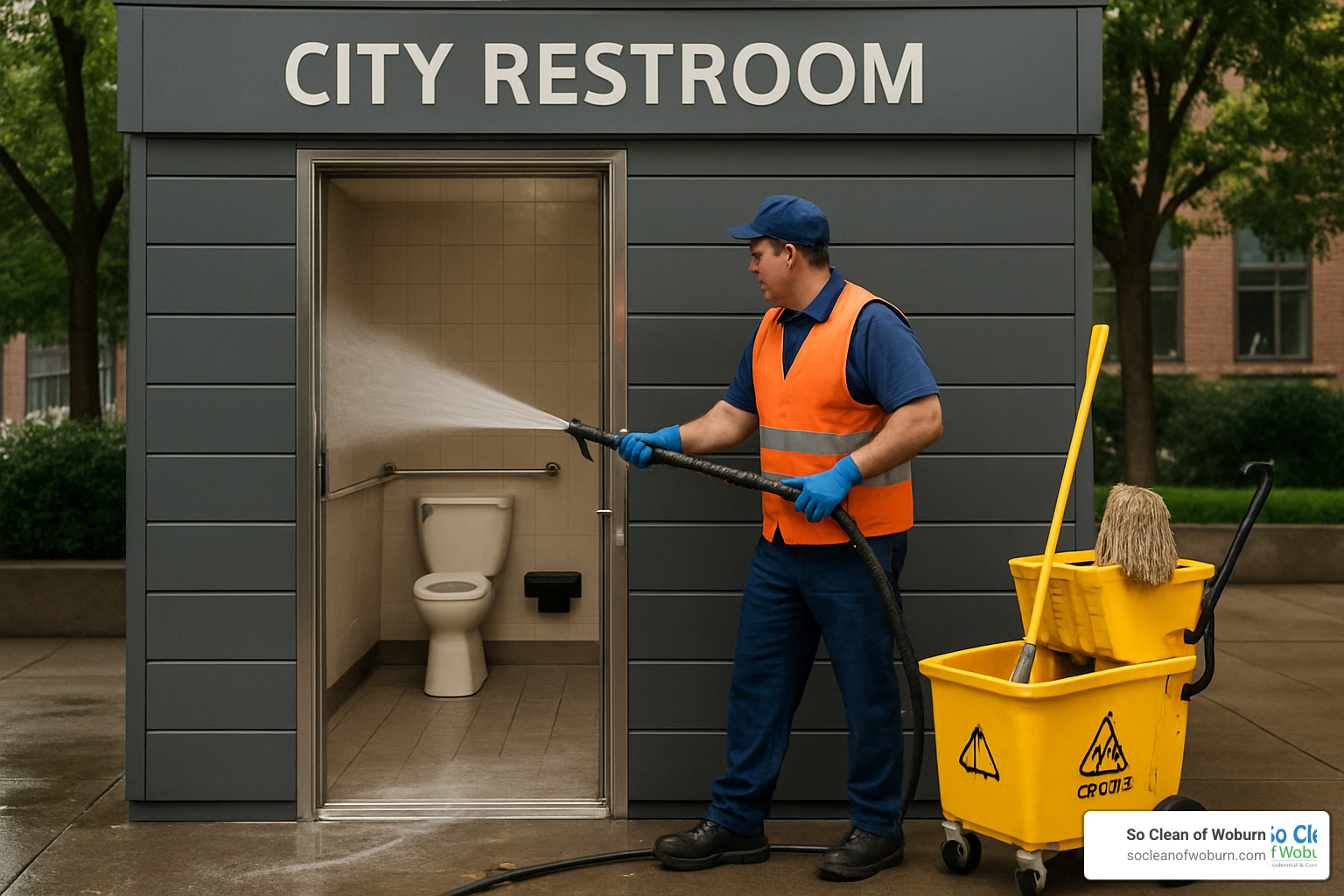
This non-stop foot traffic means everything wears out faster. A soap dispenser that might last years in your home might need replacing after just a few months in a busy downtown facility. The challenges go far beyond just heavy use, though.
Take vandalism, for instance. It’s an unfortunate reality that public restrooms often become canvases for graffiti artists and targets for those who damage fixtures deliberately. Many cities have learned the hard way that investing in vandal-resistant materials isn’t optional—it’s necessary.
Supply theft presents another daily headache. When toilet paper, soap, and paper towels regularly walk out the door, it creates a frustrating cycle: restrooms lack essential supplies, public health suffers, and maintenance budgets stretch even thinner. That’s why you’ll often see those bulky locked dispensers in public facilities—they’re not just an aesthetic choice!
The relationship between homelessness and public restrooms requires particular sensitivity. These facilities often serve as essential resources for people experiencing homelessness—a vital public health service—but this usage pattern requires thoughtful approaches to cleaning and maintenance.
“We’re trying to balance accessibility with sustainability,” shared one Woburn facilities manager. “Everyone deserves access to clean restrooms, but we need systems that can handle diverse usage patterns.”
Budget limitations create perhaps the most persistent challenge. When municipal dollars need to cover everything from education to emergency services, restroom maintenance often finds itself competing for financial attention. The result? Cleaning schedules that don’t match actual needs and maintenance that gets pushed off until problems become too big to ignore.
Many Massachusetts cities also grapple with aging infrastructure. As one Boston facility manager put it, “We’re often dealing with 50-year-old plumbing while trying to meet modern expectations for cleanliness. It’s like trying to run a smartphone app on a calculator.” These outdated systems are more prone to clogs, leaks, and inefficiencies that make maintaining cleanliness an uphill battle.
Accessibility & Inclusivity Barriers
Modern city restroom cleaning must address accessibility concerns that weren’t even on the radar when many facilities were built. The Americans with Disabilities Act (ADA) provides clear guidelines, but compliance varies widely across municipalities.
Accessibility isn’t just about checking regulatory boxes—it’s about ensuring everyone can use these essential public facilities with dignity. This means maintaining clear pathways during cleaning, ensuring grab bars remain securely attached, and keeping accessible stalls free from improper storage or maintenance equipment.
The evolution toward gender-neutral designs presents both opportunities and challenges for maintenance teams. These inclusive spaces better serve transgender and non-binary community members but may require adjusted cleaning protocols and different approaches to user education.
Family-friendly facilities with baby-changing stations need special attention too. These surfaces require frequent disinfection since they serve our most vulnerable little citizens. A parent changing a baby’s diaper shouldn’t have to worry about the cleanliness of the surface they’re using.
In diverse communities throughout Massachusetts, restrooms may need to accommodate different cultural practices and expectations. This might mean providing improved privacy features or ensuring washing facilities for religious observances remain functional and clean.
At So Clean of Woburn, we’ve seen how the most successful programs integrate accessibility considerations into every aspect of operations—from how we schedule our work to which cleaning products we select.
Odor Control in High-Humidity New England
If you’ve lived through a Massachusetts summer, you know our region presents unique challenges when it comes to city restroom cleaning. The combination of high humidity, old buildings, and fluctuating temperatures creates the perfect storm for odor development.
Ventilation challenges plague many older facilities throughout Boston, Cambridge, and Woburn. Systems designed decades ago simply can’t keep up with today’s expectations for air quality. Sometimes, the solution involves upgrading these systems; other times, strategic use of portable air movers can make a significant difference.
Enzymatic cleaners have become essential tools in our odor-fighting arsenal. Unlike traditional disinfectants that simply kill bacteria, these specialized formulas actually break down the organic compounds causing the smell. It’s the difference between masking an odor and eliminating it at the source.
Drain maintenance becomes particularly critical in our humid climate. Those floor drains you barely notice? They can become major odor sources when p-traps dry out or when organic material builds up inside them. Regular flushing with the right products prevents these hidden trouble spots from announcing themselves to everyone who enters.
Managing moisture requires constant vigilance in New England’s variable climate. This means promptly addressing leaks, ensuring surfaces dry properly after cleaning, and sometimes deploying dehumidifiers in particularly problematic areas during the muggiest months.
“In New England, we’re not just cleaning—we’re battling the elements,” notes one of our longtime technicians. “What works in Arizona won’t cut it here. We need approaches specifically designed for our unique environment.”
After years of serving communities throughout Massachusetts, we’ve learned that successful odor control requires addressing both the immediate smells and their underlying causes. It’s not enough to make a restroom smell clean for an hour—the goal is creating systems that maintain freshness even under challenging conditions.
City Restroom Cleaning Best Practices and Smart Solutions
When it comes to keeping public restrooms clean in busy urban areas, there’s a world of difference between simply “cleaning” and truly maintaining healthy, welcoming spaces. At So Clean of Woburn, we’ve refined our approach to city restroom cleaning through years of serving communities across Massachusetts.
The most effective restroom maintenance combines tried-and-true methods with innovative solutions. Touch-free fixtures have become game-changers in public facilities—not just for user comfort, but because they dramatically reduce cross-contamination and typically require less cleaning maintenance than traditional handles and knobs.
Choosing the right cleaning products makes all the difference. We always recommend EPA-approved disinfectants with proven effectiveness against common pathogens. The science matters here—these products have been rigorously tested to ensure they actually reduce disease transmission risk rather than just making surfaces look clean.
Microfiber technology has revolutionized cleaning efficiency. These specialized cloths and mops capture significantly more bacteria and particles than old-school cotton materials. A simple but effective practice we implement is color-coding these tools—red for toilets, blue for sinks, for example—to prevent accidentally spreading germs from one area to another.
One of the most common mistakes we see? Not giving disinfectants enough time to work. Proper dwell time is essential—most disinfectants need 5-10 minutes of contact time to effectively kill pathogens. When staff wipe surfaces immediately after spraying, they’re essentially negating much of the product’s effectiveness.
Many municipalities are pleasantly surprised to learn that environmentally friendly cleaning products have come a long way. Today’s green cleaners often match traditional chemicals in disinfection power while improving air quality and reducing environmental impact—a win-win for both public health and sustainability goals.
For forward-thinking cities, sensor analytics are proving invaluable. Smart restrooms equipped with usage counters and supply monitors help optimize cleaning schedules based on actual foot traffic rather than arbitrary timetables. This data-driven approach ensures resources are allocated efficiently, especially in facilities with variable usage patterns.
Daily City Restroom Cleaning Checklist
A systematic approach to daily maintenance forms the foundation of effective city restroom cleaning. In our work throughout Massachusetts, we’ve found that following a consistent checklist produces the best results.
Every day should begin with thorough trash removal—not just emptying bins, but also cleaning the receptacles themselves and replacing liners. A quick scan for litter on floors and surfaces completes this first essential step.
Restocking essentials comes next. Nothing frustrates restroom users more than empty soap dispensers or toilet paper holders. Our teams check and refill all consumables daily, while also verifying that dispensers are functioning properly—a step that’s often overlooked but prevents future complaints.
High-touch disinfection deserves special attention. Door handles, faucets, flush mechanisms, stall locks, and light switches receive countless touches daily. These surfaces require thorough cleaning and disinfection with appropriate dwell time to effectively break the chain of germ transmission.
Toilet and urinal cleaning involves more than a quick brush. We apply disinfectant to bowls and allow proper contact time before scrubbing thoroughly, paying special attention to often-missed areas like under the rim. All exterior surfaces need disinfection too—toilet seats and the bases of fixtures harbor surprising amounts of bacteria.
Sinks and counters need equal attention, including mirrors and the often-forgotten areas beneath fixtures where moisture collects. Our teams also check for slow drains, addressing minor issues before they become major problems.
Floor care requires working from back to front—starting at the far wall and moving toward the door—to avoid tracking over freshly cleaned areas. This simple technique dramatically improves cleaning effectiveness.
Before leaving, our teams check air fresheners and perform a final visual inspection. This quality control step ensures nothing was missed and all areas meet our cleanliness standards.
Of course, proper personal protective equipment is non-negotiable. Disposable gloves (changed between restrooms), eye protection when handling chemicals, moisture-resistant footwear, and designated cleaning attire protect both staff and facility users.
Weekly & Deep-Clean Playbook for City Restroom Cleaning
While daily maintenance keeps restrooms functional, weekly and periodic deep cleaning prevents long-term issues. New England’s climate creates unique challenges that require specific attention.
Grout cleaning and sealing becomes especially important in our region’s humidity. Tile grout is porous and can quickly harbor bacteria and mold in Massachusetts’ variable climate. Weekly scrubbing with appropriate cleaners and periodic resealing prevents both aesthetic and health concerns.
Calcium and scale removal tackles the mineral deposits that plague many New England facilities due to our water quality. Left unchecked, these deposits not only look unsightly but can permanently damage fixtures. Weekly treatment with appropriate descaling products preserves both function and appearance.
Drain maintenance might seem invisible, but it’s crucial for preventing odors and backups. Floor and sink drains should receive weekly attention with enzymatic cleaners to prevent buildup. Quarterly inspection of drain traps and plumbing connections helps catch potential issues before they escalate into costly problems.
Thorough fixture inspection pays dividends in extended equipment life. Weekly checks of all fixtures, dispensers, and hardware allow for early identification of leaks or damage. As one of our municipal clients noted, “Catching a loose toilet bolt during routine maintenance saved us from a major water damage incident down the road.”
Walls and partitions benefit from weekly attention beyond the spot-cleaning that happens daily. Full cleaning of these surfaces prevents soil buildup and maintains the overall appearance that shapes public perception.
For periodic disinfection, especially after major public events or during flu season, electrostatic spraying technology provides comprehensive coverage. This advanced approach imparts a positive charge to disinfectant droplets, causing them to wrap around surfaces—even reaching areas that might be missed during regular cleaning.
Ventilation systems need monthly attention to prevent dust buildup and improve air quality. In older facilities, annual inspection and cleaning of ductwork may be necessary to maintain proper airflow and odor control.
Leveraging Tech for City Restroom Cleaning Efficiency
Technology is changing city restroom cleaning from a reactive necessity to a proactive, data-driven program. Forward-thinking municipalities are embracing these innovations with impressive results.
IoT occupancy counters provide invaluable usage data that helps optimize cleaning schedules. Rather than cleaning every restroom on the same rigid schedule, facilities can deploy staff based on actual traffic patterns—giving more attention to heavily-used locations while reducing unnecessary cleanings elsewhere.
QR code feedback systems create direct communication channels with users. Simple codes posted in restrooms allow immediate reporting of issues or feedback. As one city manager told us, “We identified and fixed a recurring plumbing issue within days of implementing QR feedback—something that might have gone unreported for months under our old system.”
Smart dispensers eliminate the guesswork from supply management. Connected paper towel, soap, and toilet paper dispensers monitor supply levels and alert staff when refills are needed. This prevents frustrating outages while reducing unnecessary check-ins, making better use of limited staff time.
CMMS (Computerized Maintenance Management Systems) integration brings everything together in a centralized database. These systems track cleaning activities, supply usage, and maintenance issues, improving accountability and helping identify trends that may require intervention.
Data dashboards give facility managers visibility across multiple locations. These consolidated reporting tools highlight problem areas and verify compliance with cleaning standards, making it easier to manage dispersed facilities efficiently.
The investment in these technologies typically pays for itself through reduced labor costs and improved resource allocation. As we’ve seen with our municipal clients throughout Middlesex County, technology doesn’t replace the human touch in city restroom cleaning—it improves it, allowing staff to focus their efforts where they’re most needed.
For more information about implementing effective protocols in your facilities, explore our commercial restroom cleaning services.
Schedules, Budgets & ROI: Making the Case to City Hall
Municipal leaders face tough choices every day about where to allocate limited resources. When it comes to city restroom cleaning, making a compelling case requires more than just appealing to public health—it demands solid numbers and clear return on investment data.
“The hardest part of my job isn’t knowing what needs to be done—it’s convincing budget committees why it matters,” shared one facilities director we work with in Lexington. This challenge resonates with public works departments across Massachusetts.
Based on our partnerships with cities and towns throughout the region, we’ve developed practical frameworks that help translate clean restrooms into language that resonates with budget committees:
A thoughtful frequency matrix makes all the difference in resource allocation. Not every facility needs the same attention—a downtown bus station restroom might require hourly checks and multiple daily cleanings, while a seasonal park facility might need service just once daily. By tiering your approach based on foot traffic and usage patterns, you can deploy resources where they’ll have the greatest impact.
When it comes to staffing, industry benchmarks suggest one dedicated cleaning staff member can properly maintain about 5,000-7,000 square feet of restroom space daily. This calculation helps determine whether your current team is right-sized or stretched too thin to deliver consistent results.
The dollars and cents of city restroom cleaning typically range from $0.25 to $0.60 per square foot, with variables including facility condition, fixture density, and cleaning frequency. This comprehensive cost covers labor, supplies, equipment, and oversight—all essential components of a successful program.
One often-overlooked aspect of ROI is the life-cycle savings from proper maintenance. A toilet that receives regular, proper care might serve your community for 10-15 years, while neglected fixtures often need replacement in just 5-7 years. These replacement costs add up quickly across multiple facilities.
Perhaps most compelling to risk management teams is liability reduction. Clean, well-maintained restrooms significantly reduce slip-and-fall incidents. With the average claim costing municipalities between $30,000 and $50,000, prevention through consistent cleaning isn’t just good public health policy—it’s sound financial management.
| Factor | DIY Municipal Crew | Professional Service |
|---|---|---|
| Initial Cost | Lower hourly wages | Higher per-service cost |
| Training Requirements | Significant municipal investment | Included in service |
| Equipment Costs | City purchases and maintains | Included in service |
| Supply Management | City responsibility | Vendor managed |
| Quality Control | Requires municipal oversight | Third-party verification |
| Liability | Full municipal responsibility | Shared with vendor |
| Staffing Flexibility | Limited by municipal hiring | Scalable as needed |
| Specialized Services | Limited capabilities | Access to specialized equipment |
When Professional Janitorial Services Pay Off
Many Massachusetts municipalities handle routine city restroom cleaning with dedicated in-house staff. However, there are specific situations where bringing in professionals like our team at So Clean of Woburn makes both practical and financial sense.
Professional cleaning companies invest in hospital-grade tools that would be cost-prohibitive for many cities to purchase for occasional use. When your facilities need deep restoration or face stubborn challenges, having access to electrostatic sprayers, high-pressure cleaning systems, and advanced extraction equipment can make all the difference.
Training matters too. Our team receives ongoing education in the latest techniques, products, and safety protocols—expertise that proves particularly valuable when addressing challenging situations like biohazard cleanup or persistent odor issues that have defied in-house solutions.
The flexibility of after-hours service also proves valuable for busy public facilities. Professional teams can work overnight or during low-traffic periods, minimizing disruption while maximizing accessibility. As one Burlington town manager told us, “Having restrooms cleaned while the public isn’t using them has eliminated most of our complaint calls.”
When special events, public health concerns, or seasonal peaks create cleaning surges, professional services offer scalability without the lengthy hiring processes required for municipal employees. This responsiveness helps maintain standards even during challenging periods.
Regulatory compliance represents another advantage. Our team stays current with evolving regulations on chemical handling, bloodborne pathogen protocols, and safety requirements—reducing compliance burdens on already-stretched municipal management teams.
Eco-Friendly Options Without Breaking the Bank
Sustainability doesn’t have to come with premium pricing. Modern city restroom cleaning offers numerous environmentally responsible practices that won’t strain municipal budgets:
Plant-based cleaning products have come a long way. Today’s bio-based cleaners offer disinfection capabilities comparable to traditional chemicals at similar price points. These greener alternatives reduce environmental impact while often improving indoor air quality for both users and maintenance staff.
Water conservation through updated fixtures pays dividends beyond the environmental benefits. Installing water-saving flushometers and sensor-operated faucets reduces both consumption and the cleaning challenges associated with splashing and overflow. The performance of today’s low-flow fixtures vastly outperforms early water-saving attempts that left users frustrated.
Paper reduction strategies can deliver meaningful savings. Converting from paper towels to high-efficiency hand dryers reduces waste and long-term costs, though the initial investment runs higher. Many of our municipal clients find that hybrid approaches offering both options work best in public settings where diverse preferences exist.
Microfiber cleaning systems represent another win-win. These reusable mops and cloths dramatically reduce waste from disposable products while providing superior cleaning performance. Though initial costs exceed traditional methods, the long-term savings and performance benefits make this a wise investment for forward-thinking municipalities.
Concentrated products with appropriate dilution systems reduce packaging waste and transportation emissions while lowering per-use costs—proving that environmental responsibility can align perfectly with fiscal responsibility.
As we’ve seen with our municipal partners throughout Middlesex and Essex Counties, these eco-friendly approaches typically pay for themselves through reduced consumption and improved efficiency. They’re not just good for the planet—they’re good for tight municipal budgets too.
High-Traffic Zones & Special Events
Some of the most challenging city restroom cleaning scenarios occur in high-traffic zones and during special events. These situations demand a special touch and thoughtful planning beyond regular maintenance routines.
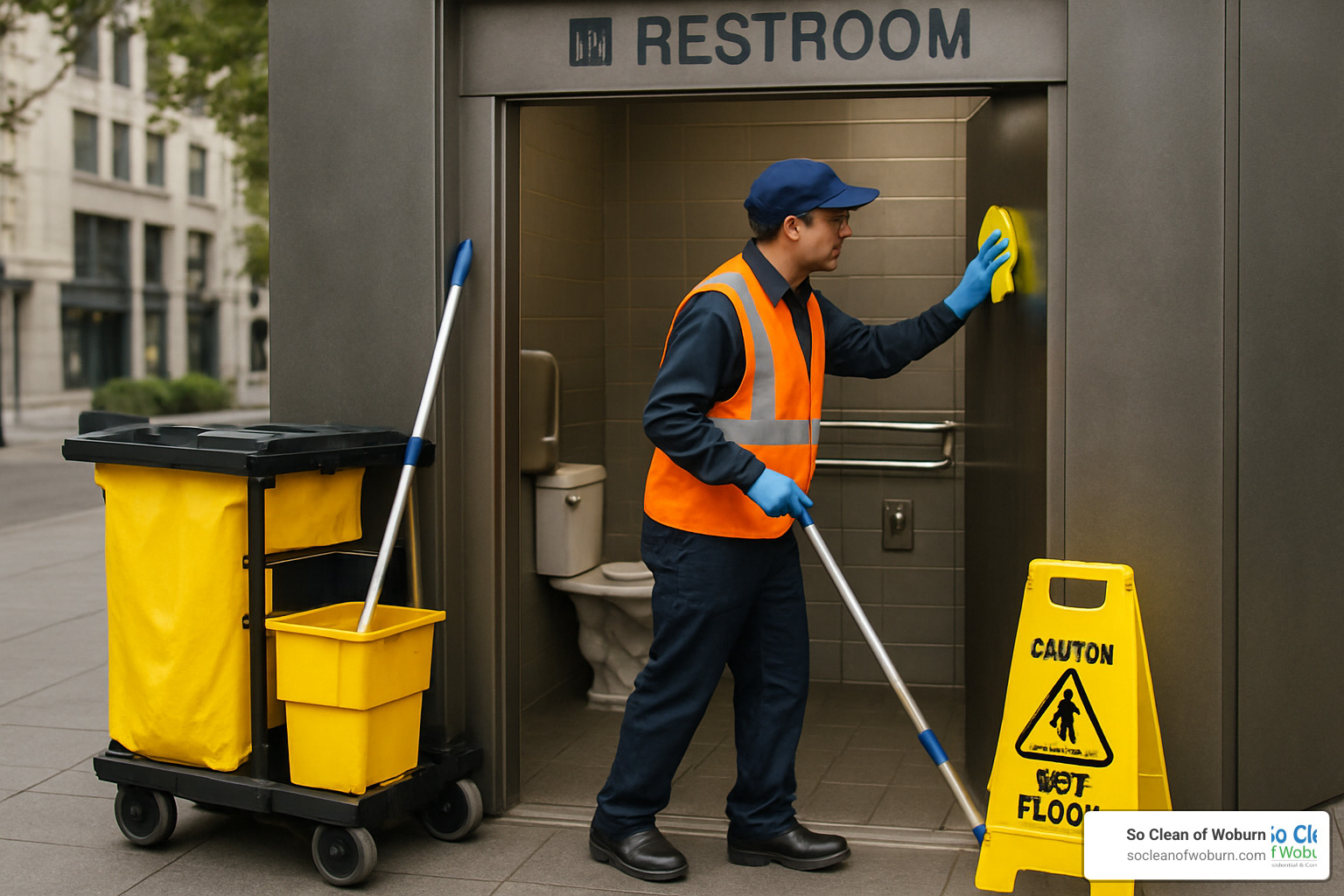
When it comes to ballfields and recreational facilities, the cleaning needs are as dynamic as the games played there. These venues face weekend surges, seasonal fluctuations, and the unique challenge of shower facilities that can quickly become breeding grounds for bacteria if neglected. We’ve found that creating sport-specific schedules aligned with game times ensures that restrooms are freshly cleaned before players and spectators arrive, enhancing everyone’s experience.
Transit hubs present an entirely different challenge – constant foot traffic throughout operating hours means traditional “clean and done” approaches simply don’t work. Instead, a continuous rotation system works best, with cleaning staff moving through different zones based on actual usage patterns rather than rigid timetables. This responsive approach keeps facilities presentable even during rush hours.
Nothing tests a city’s restroom infrastructure quite like festivals and public gatherings. When thousands descend on a park or downtown area, standard facilities can quickly become overwhelmed. The secret to success? A three-phase approach: thorough deep cleaning before the event, continuous maintenance during peak hours, and comprehensive sanitization afterward. For larger events, supplemental portable units are essential – though they bring their own management challenges.
“Having a plan for when things go wrong is just as important as your regular cleaning schedule,” notes one of our experienced team leaders at So Clean of Woburn. This is especially true for emergency response situations like power outages or natural disasters when public restrooms may see unexpected surges in usage. Having established relationships with emergency cleaning services and clear contingency protocols can make all the difference when normal operations are disrupted.
Managing portable and temporary facilities requires special attention to detail. For events without permanent restrooms, you’ll need to consider appropriate unit-to-attendee ratios (typically one unit per 50-100 people), ensure ADA compliance with accessible units (minimum 5% of total), strategically place units for both user convenience and service access, and establish frequent servicing schedules for multi-day events. Don’t forget hand-washing or sanitizing stations – they’re essential companions to portable toilets for maintaining public health.
Throughout our years serving communities like Woburn, Lexington, and Winchester, we’ve learned that successful event restroom management comes down to anticipation and adaptation. The facilities that receive the most compliments aren’t necessarily the fanciest – they’re the ones that remain clean and functional even when put to the test.
Scaling City Restroom Cleaning During Peak Days
When visitor numbers surge during special events or seasonal peaks, municipalities need flexible strategies to scale their city restroom cleaning operations quickly. Based on our experience throughout Massachusetts, several approaches have proven particularly effective.
Temporary staffing augmentation provides the additional hands needed during high-demand periods. Rather than scrambling to find help when an event is announced, forward-thinking cities maintain relationships with staffing agencies or keep a pre-trained pool of part-time workers who can step in with minimal notice. The key is providing basic training in advance so these temporary team members can be effective immediately.
We’ve found that rapid-response cleaning carts strategically positioned throughout event venues can be game-changers. These mobile stations, pre-stocked with essential supplies and tools, allow for quick interventions when issues arise without pulling staff away from their regular cleaning rotations. A spilled drink or paper towel overflow can be addressed in minutes rather than hours.
During peak periods, supplies disappear at astonishing rates. Real-time supply monitoring through digital systems or simply increasing the frequency of manual checks helps prevent the dreaded empty toilet paper dispenser scenario. Some of our municipal clients have found success with simple QR code systems that allow users to report supply outages instantly.
Not all cleaning needs are created equal during busy periods. Developing tiered response protocols helps staff prioritize effectively when multiple issues arise simultaneously. A clear hierarchy – biohazards first, overflows second, general cleanliness third – ensures the most critical problems receive immediate attention.
Clear public communication completes the picture. Simple signage directing users to report issues and setting reasonable expectations about cleaning frequency helps create a partnership between facility managers and users. As one park administrator told us, “When people know we’re actively managing the restrooms, they tend to treat them with more respect.”
Post-Event Recovery and Odor Reset
After the crowds have gone home, thorough restoration of restroom facilities is essential for returning to normal operations. This post-event recovery phase is often overlooked but critically important for facility longevity.
Deep sanitization after major events should go well beyond daily maintenance routines. Every surface needs attention – not just the obvious touchpoints, but also the corners, edges, and hard-to-reach areas that may have accumulated grime during heavy use. Floors require special attention, potentially including extraction cleaning for porous surfaces that may have absorbed liquids. Even walls and ceilings should be inspected and cleaned to remove splatter and airborne contaminants that settled during peak usage.
Persistent odors can linger long after an event ends, particularly in older facilities with porous materials. For these situations, ozone treatments can be remarkably effective when used properly during unoccupied periods. Rather than masking odors with fragrances, ozone eliminates them at the molecular level, leaving behind a truly fresh environment. (Safety note: These treatments must only be conducted when the facility is completely unoccupied, with adequate time for the ozone to dissipate before reopening.)
Heavy use can take a toll on equipment, making fixture audits an essential part of post-event protocols. Our technicians systematically check every faucet, flush mechanism, door latch, and dispenser for damage or malfunction. Addressing these issues promptly prevents small problems from becoming major headaches during subsequent use.
Don’t forget to assess your ventilation system after major events. High usage periods put additional strain on these systems, and inadequate airflow can contribute to lingering odors and moisture problems. Checking and cleaning exhaust fans, replacing filters if necessary, and ensuring proper airflow has been restored should be standard practice.
The final step in post-event recovery is a complete restocking and reset – replacing all consumables and returning equipment to its proper place. This “day one” reset creates a fresh start for regular operations and prevents the facility from carrying the burden of the event into the following days.
“The care you put into post-event recovery directly impacts how quickly a facility deteriorates over time,” explains our operations manager at So Clean of Woburn. “It’s an investment that pays dividends through extended equipment life and reduced long-term maintenance costs.”
For more specialized approaches to athletic facilities, check out our detailed guide to ballfield restroom cleaning that addresses the unique challenges of these high-traffic seasonal venues.
Frequently Asked Questions about City Restroom Cleaning
How often should city restrooms be cleaned and restocked?
When it comes to city restroom cleaning, there’s no one-size-fits-all schedule. The best approach is to let actual usage patterns guide your cleaning frequency, not just follow an arbitrary calendar.
That said, here’s what we typically recommend to our municipal clients in Woburn and surrounding communities:
For those busy transit station and popular park restrooms, you’ll want cleaning checks every 2-4 hours with thorough cleaning at least three times daily. The constant foot traffic in these spaces demands constant attention!
Medium-traffic facilities like municipal buildings and libraries generally need full cleaning once or twice daily, with quick spot checks every 4-6 hours. This balanced approach keeps things presentable without overextending resources.
For seasonal or low-traffic facilities, daily cleaning during operating hours is usually sufficient, though this can be adjusted based on actual conditions.
Restocking should happen during each cleaning cycle, with extra checks during peak times. We’ve seen great results with municipalities that have installed smart dispensers to monitor supply levels—they’re game-changers for preventing those embarrassing toilet paper outages that citizens remember long after they’ve occurred!
What makes the difference between adequate and excellent restroom maintenance? In our experience serving communities throughout Massachusetts, it’s the willingness to adapt cleaning schedules based on real data rather than rigid timetables.
What supplies and equipment are essential for effective cleaning?
Having the right tools makes all the difference in city restroom cleaning. Think of it as having the right ingredients for a recipe—missing just one can compromise the entire result.
For cleaning supplies, start with EPA-registered disinfectants appropriate for different surfaces. These are your frontline defense against pathogens. You’ll also need specialized products like glass cleaners for mirrors, toilet bowl cleaners that address both cleaning and descaling, neutral floor cleaners that won’t damage finishes, and effective odor control products (especially important in high-humidity New England!).
Equipment needs start with color-coded microfiber cloths and mops—this simple color-coding prevents cross-contamination between different areas of the restroom. Don’t forget practical items like extension poles for reaching high surfaces, wet floor signs to prevent accidents, properly sized trash receptacles, toilet brushes, plungers, and appropriate personal protective equipment for your staff.
For those periodic deep cleans that keep facilities in top shape, you’ll want access to more specialized equipment. Electrostatic sprayers provide comprehensive disinfection by wrapping surfaces with charged disinfectant particles. Pressure washers can be lifesavers for outdoor facilities or areas with stubborn soiling. Extraction equipment helps with deep cleaning porous surfaces, while ozone generators (used only when facilities are unoccupied) can eliminate even the most persistent odors.
We’ve found through our work with municipalities across Massachusetts that investing in quality supplies and equipment pays for itself many times over. Better tools mean more efficient cleaning, which translates to lower labor costs and happier citizens.
How can users report issues or provide feedback in real time?
Creating easy ways for citizens to report restroom issues transforms your city restroom cleaning program from reactive to proactive. Today’s technology offers several user-friendly options that can dramatically improve responsiveness.
QR code reporting systems have become our favorite recommendation for municipal clients. Simply post a QR code inside each restroom that links to a simple feedback form. When scanned, these codes can automatically route reports to the right maintenance staff based on the problem type. We’ve seen response times cut in half after implementing these systems in several Middlesex County facilities!
For communities with diverse populations, text-based reporting provides accessibility for those without smartphones. Short-code texting systems allow users to report issues via simple SMS messages, with automated responses confirming their report was received.
City-specific mobile apps often include features for reporting various maintenance issues, including restroom problems. The advantage here is integration with existing work order systems for seamless response tracking.
Don’t forget the value of traditional methods, though. Posting cleaning schedules with contact information and providing old-fashioned comment cards still serves an important purpose, particularly for older residents who might not accept digital solutions.
One simple practice that builds tremendous public trust is visible staff check-in logs. These posted logs showing when staff last checked the facility demonstrate accountability and reassure users that maintenance is actively managed.
In our years serving communities throughout Woburn and the Greater Boston area, we’ve found the most successful feedback systems combine multiple approaches. This ensures all citizens—regardless of technological comfort—can easily report issues, while providing clear accountability for response. After all, a clean public restroom isn’t just about sanitation—it’s about showing residents you care about their everyday experiences in your community.
Conclusion
The case for better city restroom cleaning goes far beyond just keeping things tidy. Clean, well-maintained public restrooms are a powerful statement about how a city values public health, accessibility, and the well-being of everyone who lives in or visits the community.
When city leaders sit down to make tough budget decisions, investing in proper restroom maintenance offers clear and measurable returns:
Public restrooms that receive proper care help reduce the spread of disease, cutting down on healthcare costs that affect the entire community. They also minimize slip-and-fall incidents that could lead to costly liability claims. Well-maintained facilities simply last longer too – from plumbing fixtures to floor tiles, everything performs better and needs replacement less often when it’s properly cleaned and cared for.
Perhaps most importantly, clean restrooms change how people feel about public spaces. When visitors find clean, functional facilities, they stay longer, spend more, and come back again. This translates directly into stronger local businesses and a more vibrant community.
In our years serving communities like Woburn, Cambridge, and Lexington, we’ve seen what makes city restroom cleaning programs succeed. The best programs don’t follow rigid schedules – they adapt based on actual usage data. They invest in proper training for cleaning staff, provide quality equipment and supplies, and create clear accountability for maintaining standards.
At So Clean of Woburn, we understand the unique challenges facing New England’s municipal facilities. Our Massachusetts winters create specific cleaning needs, while our historic buildings often present maintenance challenges that require specialized approaches. We develop custom cleaning solutions that respect both the unique character of each facility and the budget realities facing local governments.
Clean public restrooms aren’t a luxury – they’re a necessity for healthy, inclusive communities. When a city prioritizes this essential service, it demonstrates a genuine commitment to creating public spaces that truly work for everyone.
For more information about how So Clean of Woburn can support your municipal cleaning needs, from comprehensive janitorial services to specialized apartment cleaning service, contact our team today. We’re proud to serve communities throughout Middlesex and Essex Counties with customized cleaning solutions that make a real difference in public health and community pride.