

Why Clean Church Pews Matter for Your Congregation
The best way to clean church pews involves identifying your wood finish first, then using gentle, finish-appropriate cleaners with proper technique. Here’s the quick overview:
For Hard Finishes:
– Dust weekly with microfiber cloth
– Clean monthly with 1 tbsp mild detergent per 3 gallons water
– Wipe with grain using wrung-out cloth
– Dry immediately to prevent damage
For Oil Finishes:
– Use triple-cloth method (soap, rinse, dry)
– Apply mild soap solution
– Rinse with clean damp cloth
– Condition if needed
Both Types:
– Test products on hidden areas first
– Avoid bleach, alcohol, and excessive moisture
– Disinfect with vinegar-water-dish soap solution
Your church pews see hundreds of hands, bodies, and belongings every week. They’re touched more than door handles and used longer than most furniture in your building. Without proper care, pews become breeding grounds for germs and allergens while losing their welcoming appearance.
Regular pew maintenance isn’t just about looks—it’s about stewardship and creating a healthy worship environment. Clean pews last decades longer than neglected ones, saving your congregation thousands in replacement costs.
The challenge? Most church volunteers don’t know the difference between cleaning and disinfecting, or which products won’t damage their specific wood finish. Use the wrong cleaner once, and you might strip years of protective coating.
This guide walks you through everything from identifying your pew’s finish to handling emergency spills, so your sanctuary stays beautiful and hygienic for generations.
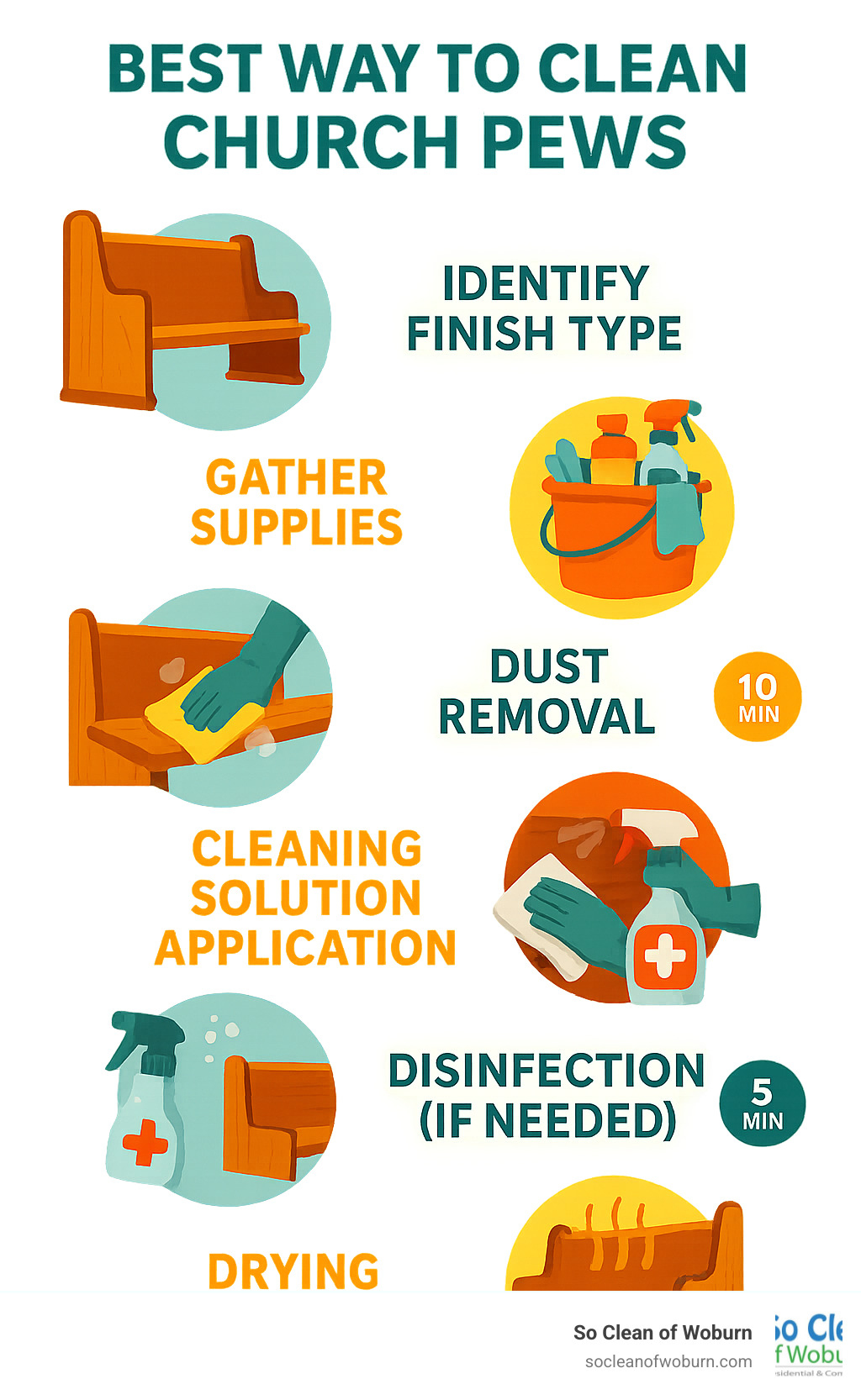
Why Regular Pew Care Matters
Think about it—your church pews get more action than most furniture pieces ever will. Every Sunday, dozens or even hundreds of people slide in and out, rest their arms, place their belongings, and sometimes even take a quick nap during the sermon (we won’t tell!). Kids with sticky fingers, adults with coffee cups, and everyone bringing in dust and allergens from outside.
Body oils from hands and arms gradually break down protective finishes on wooden pews. Meanwhile, dust settles into every crevice and combines with any polish residue to create those stubborn black films you’ve probably noticed on neglected church furniture. Without regular care, your beautiful sanctuary seating becomes a breeding ground for germs and allergens.
But here’s the thing—clean pews make powerful first impressions. When visitors walk into your sanctuary, those pews are among the first things they notice. Are they welcoming and well-maintained, or do they look tired and neglected? Clean, comfortable seating shows that your congregation cares about creating a respectful worship environment.
Most facility directors we work with in the Greater Boston area schedule deep cleaning for church pews once a month, with routine maintenance before and after each service or special event. This isn’t just busywork—it’s smart stewardship that extends the life of expensive church furniture while keeping your congregation healthy.
At So Clean of Woburn, we’ve helped churches across Massachusetts create welcoming spaces that honor both their congregations and their buildings’ history. Proper maintenance makes all the difference. More info about church services
Cleaning, Sanitizing & Disinfecting—What’s the Difference?
Here’s where many well-meaning volunteers get confused. These three terms aren’t interchangeable, and using the wrong approach can either leave germs behind or damage your pew finish.
Cleaning removes the visible stuff—dirt, dust, fingerprints, and grime using soap or detergent. It physically removes some germs but doesn’t kill them. Think of it as clearing the stage before the real action begins.
Sanitizing reduces bacteria to safe levels (99.9% reduction) using mild chemical solutions like vinegar-based mixtures. It’s gentler than disinfecting but still effective for routine maintenance.
Disinfecting brings out the heavy artillery—killing bacteria, viruses, and fungi using stronger chemicals. EPA-registered disinfectants need specific contact times (called “dwell time”) to work effectively. Usually 10-15 seconds minimum.
Here’s the crucial part: cleaning always comes first. Disinfectants can’t penetrate through layers of dirt and body oils, so you’re essentially wasting your time and potentially damaging the wood if you skip the cleaning step.
How Often Should You Tackle Each Task?
The best way to clean church pews follows a simple schedule that prevents problems before they start.
Weekly dry dusting with microfiber cloths keeps surface debris from building up. This takes maybe 15 minutes for a small sanctuary and prevents that dusty, neglected look.
Monthly wet cleaning with appropriate wood solutions removes body oils and deeper grime that dry dusting can’t handle. This is when you’d vacuum pew cushions with upholstery attachments too.
Annual polishing restores protective coatings following manufacturer instructions. Think of this as your pews’ yearly spa treatment—it keeps them looking beautiful and protected.
As-needed quick cleaning handles life’s little surprises: spills during coffee hour, crayon masterpieces from the children’s service, or extra sanitizing during flu season in your community.
Identify Your Wood & Finish Before You Start
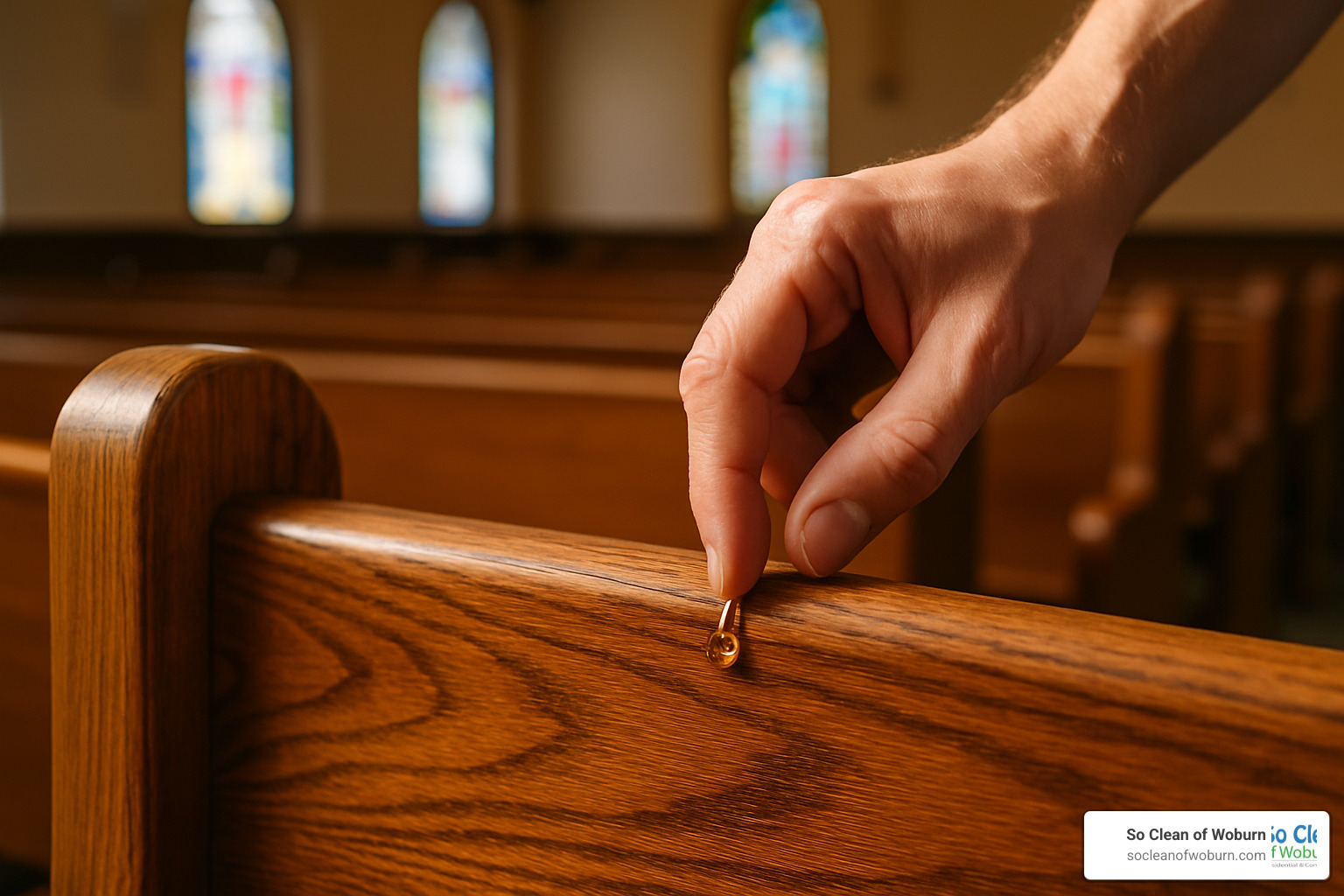
Here’s a truth that might surprise you: the most expensive pew-cleaning mistake happens before you even start cleaning. It’s using the wrong product for your wood finish. One well-meaning volunteer with the wrong cleaner can strip years of protective coating in minutes.
The good news? Identifying your pew’s finish takes just a few simple tests, and knowing what you’re working with makes the best way to clean church pews much clearer.
Most church pews fall into two categories: hard finishes (like polyurethane or lacquer) or oil finishes (like tung oil or linseed oil treatments). Hard finishes create a protective barrier on top of the wood, while oil finishes soak into the wood grain itself.
The water-bead test gives you quick answers. Find a hidden spot—maybe under a pew seat or along the back edge—and place a small drop of water there. If the water beads up like it would on a car hood, you’ve got a hard finish. If it gradually absorbs into the wood, you’re dealing with an oil finish or worn protective coating.
For a more definitive answer, try the boiled linseed oil test. Apply a tiny amount to that same inconspicuous area. Hard finishes will cause the oil to bead up and sit on the surface. Oil finishes will absorb it right into the wood.
Most church pews built after 1980 have hard finishes—they’re designed for durability and heavy use. Older pews, antique pieces, or recently refinished woodwork often feature oil-based treatments that need gentler care.
Why does this matter so much? Because wood species and finish type determine everything—from which cleaning products won’t damage your pews to how often you need to condition them. Oak pews with polyurethane finishes can handle stronger cleaning solutions than pine pews with oil finishes.
Products That Love Your Finish (and Those That Don’t)
Once you know your finish type, choosing the right products becomes straightforward. Hard finishes can handle mild dish detergent (about 1 tablespoon per 3 gallons of water), pH-neutral wood cleaners, and silicone-free furniture polish. Even diluted white vinegar solutions work well for sanitizing without damage.
Oil finishes prefer gentler treatment. Murphy’s Oil Soap (properly diluted according to package directions) works beautifully, along with specialized oil-based wood cleaners. When these finishes start looking dry, a light application of boiled linseed oil can restore their protective qualities.
But here’s what you should never use on any church pews: bleach or chlorine-based cleaners will deteriorate finishes and void any warranties. Alcohol-based products can permanently damage wood. Silicone polishes contaminate the finish, making future repairs nearly impossible. And please, never use pressurized equipment like power washers—they force water into joints and wood grain, causing swelling and splitting.
Glass cleaners containing ammonia might seem harmless, but they can cloud and damage protective coatings over time. When in doubt, test any new product on that hidden spot first.
The Best Way to Clean Church Pews: Step-by-Step Guide
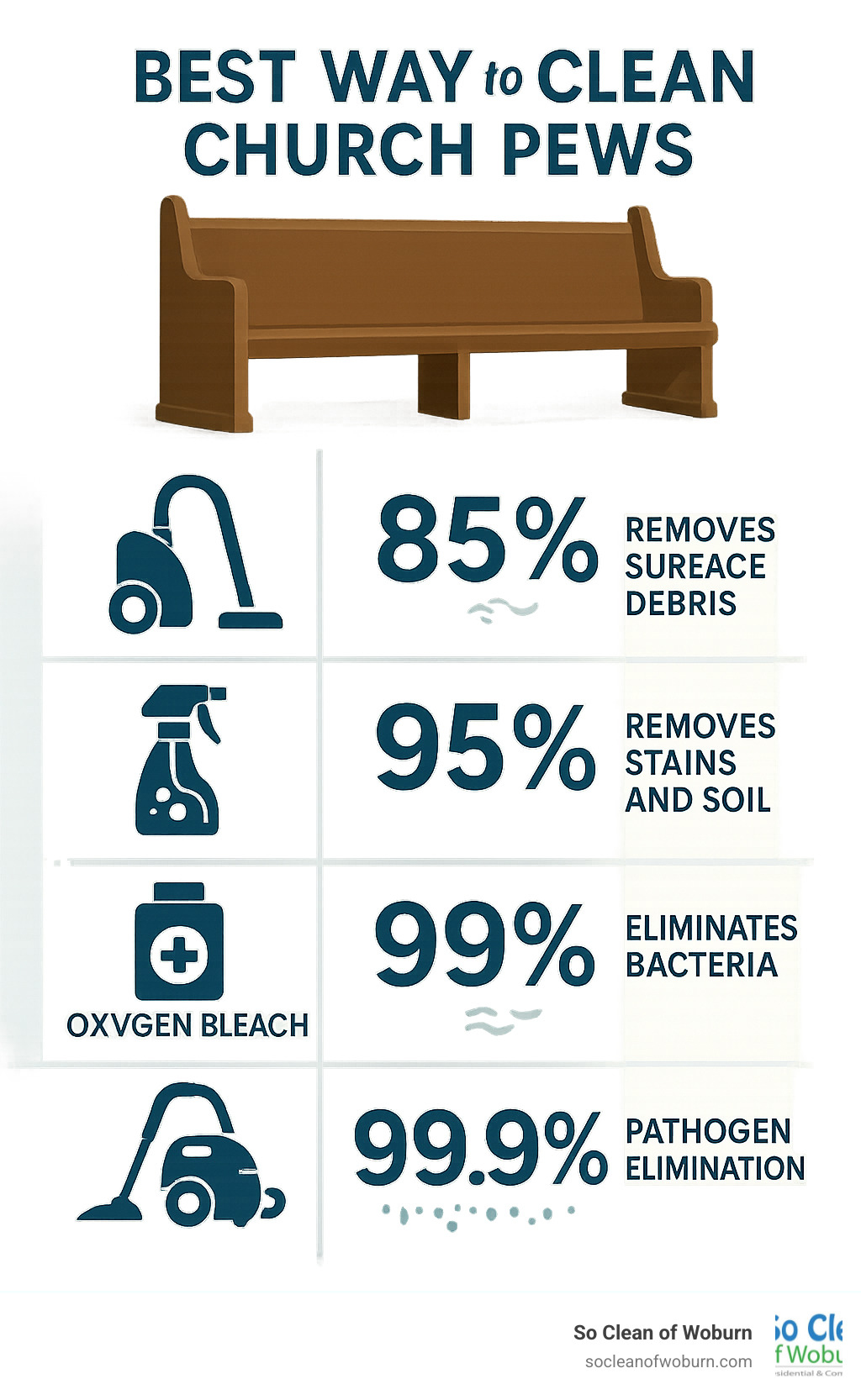
Here’s the truth about pew cleaning: the best way to clean church pews depends entirely on your finish type, but the workflow stays the same. Professional steam cleaning can eliminate up to 99.9% of bacteria from fabric surfaces, but wooden components need a gentler touch that matches their specific finish.
Think of pew cleaning like cooking—you need the right recipe for your ingredients. Use a hard-finish method on oil-finished wood, and you’ll strip away protective coatings. Try oil-finish techniques on polyurethane, and you’ll leave streaky residue that attracts more dirt.
The good news? Once you know your finish type, the actual cleaning process is straightforward. Work methodically, use soft tools, keep moisture low, and always wipe with the wood grain. Quick spill response prevents permanent damage, while regular maintenance keeps your pews looking beautiful for decades.
| Hard Finish Steps | Oil Finish Steps |
|---|---|
| Dust with microfiber | Dust with microfiber |
| Mix 1 tbsp detergent : 3 gal water | Prepare mild soap solution |
| Wring cloth until barely damp | Use triple-cloth method |
| Wipe with grain direction | Clean, rinse, dry sequence |
| Dry immediately | Check for conditioning needs |
Best Way to Clean Church Pews With a Hard Finish
The best way to clean church pews with polyurethane or lacquer finishes starts with understanding that less is more. These durable finishes protect the wood underneath, but they’re not invincible.
Start by dusting thoroughly with lint-free microfiber cloths. Work with the wood grain, never against it—this simple rule prevents micro-scratches that dull the finish over time.
Next, mix your cleaning solution: 1 tablespoon of mild detergent in 3 gallons of warm water. This ratio gives you effective cleaning power without over-wetting the wood. Water is wood’s enemy when it sits too long.
Dip your cloth in the solution and wring it until it’s barely damp. If you can squeeze water out of it, it’s too wet. Wipe following the wood grain direction, rinsing your cloth frequently in clean water to avoid spreading dirt around.
The final step is crucial: follow immediately with a dry microfiber cloth to remove all moisture. This prevents water spots and protects the finish from damage. Your pews should look clean and dry within minutes.
Best Way to Clean Church Pews With an Oil Finish
Oil finishes require more patience but reward you with that warm, natural wood glow. The best way to clean church pews with oil finishes is the triple-cloth method—it sounds fancy, but it’s just organized common sense.
First cloth handles the cleaning. Apply your mild soap solution with a damp cloth, working with the grain. Oil finishes absorb moisture more readily than hard finishes, so work in small sections.
Second cloth does the rinsing. Use a separate cloth dampened with plain water to remove soap residue. This step prevents buildup that can make your pews look cloudy or sticky over time.
Third cloth provides the drying. Immediately dry the surface with a clean, dry cloth. Don’t let moisture sit on oil finishes—they’re more vulnerable to water damage than their hard-finish cousins.
After everything’s dry, do the finger-touch test for residue. If the wood feels sticky or looks dull, you might need to apply a small amount of appropriate wood conditioner to restore that natural luster.
Disinfecting Without Damage
Disinfecting church pews doesn’t require harsh chemicals that damage finishes. Mix 1 cup white vinegar, 1 cup water, and 5 drops of dish soap for a natural solution that kills germs without harming wood.
If you prefer commercial products, choose bleach-free disinfecting wipes, but follow this critical timing rule: allow 10-15 seconds of air drying, then immediately wipe dry with a clean cloth. Leaving moisture on wood longer risks finish damage, especially on oil-treated surfaces.
The key is understanding that disinfectants need contact time to work, but wood finishes need quick drying to stay protected. It’s a balancing act, but these timing guidelines keep both goals achievable.
Scientific research on oxygen bleach effectiveness confirms it’s safer than chlorine bleach for both wood and fabric components, making it an excellent choice for mixed-material pews.
Stain, Wax & Gum Emergencies
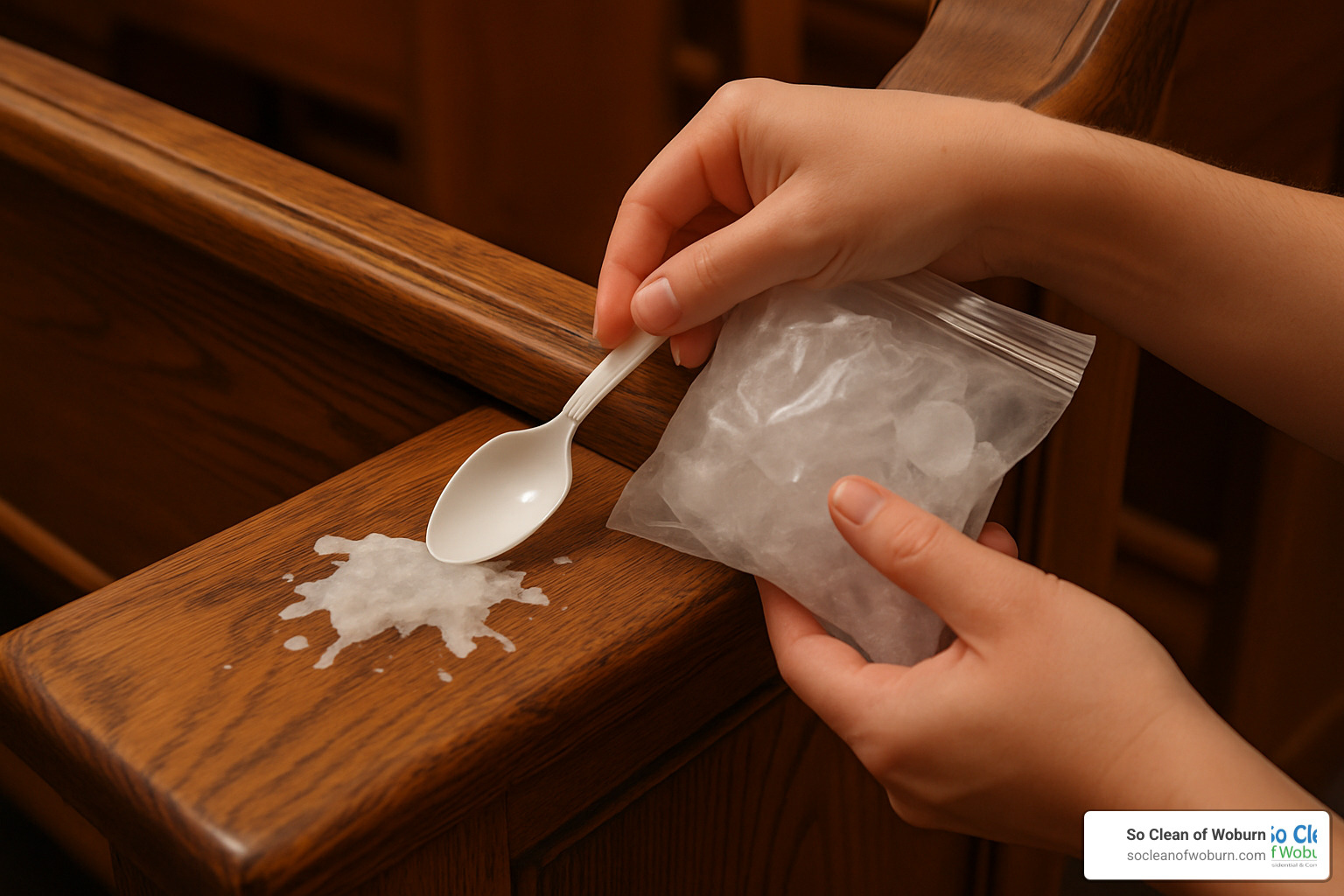
Emergency spills happen in every church—usually right before the biggest service of the year. Here’s how to handle the most common disasters without panicking.
Candle wax responds beautifully to the freeze-and-flake method. Place ice and salt in a sealed bag over the wax for 10 minutes to harden it completely. Gently flake off the hardened wax with a plastic spoon, then vacuum up the debris. For any residue left on the finish, use mineral spirits sparingly on a soft cloth.
Crayon marks from enthusiastic young artists need patience, not force. Start by scrubbing gently with a terry cloth and your regular wood cleaner. For stubborn marks, test WD-40 on an inconspicuous spot first, then clean the area thoroughly and apply wax if your finish type requires it.
Coffee spills demand immediate action—the longer they sit, the deeper they penetrate. Blot immediately with paper towels, working from outside the spill toward the center to prevent spreading. Use your diluted soap solution following the same techniques as regular cleaning, then dry completely before applying any polish.
The secret to all emergency cleaning is staying calm and working systematically. Most “disasters” are completely fixable if you respond quickly with the right techniques.
Cushions & Upholstery Care
Church pew cushions work harder than most furniture in your building. They support congregants for hours during services, absorb everything from coffee spills to children’s snacks, and collect allergens that can make worship uncomfortable for sensitive members.
Vacuuming pew cushions with an upholstery attachment at least once a month keeps them looking fresh and reduces allergens that settle deep into fabric fibers. HEPA-filter vacuums are worth the investment—they capture the microscopic particles that standard filters miss, creating a healthier environment for everyone.
Before you reach for any cleaning solution, take a moment to check the fabric cleaning codes. These little letters (usually found on labels or manufacturer websites) can save you from costly mistakes:
W means water-based cleaners only—perfect for most modern church fabrics. S indicates solvent-based cleaners only, which you’ll rarely encounter in church settings. WS gives you flexibility to use either water or solvent-based products. X means vacuum only—no wet cleaning allowed.
Most church cushions fall into the W or WS categories, making them relatively easy to maintain with the right approach.
More info about Boston Church Cleaning Services
Deep-Clean Routine for Pew Cushions
The best way to clean church pews includes giving cushions the attention they deserve. Start by vacuuming thoroughly with both upholstery and crevice attachments—you’d be amazed what hides between cushions and in corner seams.
For W or WS fabrics, apply water-based spray evenly across the surface, working in manageable sections so the cleaner doesn’t dry before you can work with it. Agitate gently with a soft brush to help the solution penetrate fabric fibers without damaging the weave.
The magic happens during the 5-minute dwell time—this lets cleaning agents break down soil and stains that simple wiping can’t touch. Resist the urge to rush this step, especially on heavily used cushions.
Finish by blotting with clean cloths to absorb moisture, then allow complete air drying. Opening windows or running fans speeds the process and prevents that musty smell that comes from trapped moisture.
Disinfect & Deodorize Soft Seating
Sometimes cleaning isn’t enough—especially during flu season or after events where food was served. Fabric sanitizer designed for upholstery provides the germ-killing power you need without the harsh chemicals that damage fabric.
Oxygen bleach mixed according to package directions offers natural disinfection that won’t bleach colors like chlorine products. It’s particularly effective on organic stains and odors that seem to return no matter how often you clean.
For persistent odors, try the baking soda treatment: sprinkle it generously on cushions, let it sit for 15 minutes to absorb smells, then vacuum thoroughly. This simple trick lifts light stains naturally while neutralizing everything from coffee spills to that mysterious “old building” smell.
Preventive Maintenance, Environment & Professional Help
Think of your church pews like a classic car—with the right preventive care, they’ll serve your congregation beautifully for decades. But ignore the warning signs, and you might face expensive repairs or complete replacement much sooner than expected.
Environmental control makes the biggest difference in how long your pews last. Wood is a living material that responds to its surroundings. When humidity swings wildly or temperatures fluctuate, your pews expand and contract like they’re breathing. Over time, this movement loosens joints and creates those annoying creaks during quiet prayer moments.
Keep humidity between 40-60% if possible. We know not every church has perfect climate control, but even small improvements help. Simple humidity monitors from the hardware store can alert you to problem periods.
UV light is wood’s silent enemy. Those beautiful stained glass windows might be bathing your sanctuary in gorgeous light, but direct sunlight gradually fades finishes and fabrics. Installing UV-filtering window films protects your investment without blocking the beauty.
The golden rule for spills: act fast. Coffee, juice, or melted candle wax becomes exponentially harder to remove after it sets. Keep basic cleaning supplies in an accessible spot so volunteers can respond immediately during services.
Here’s a simple trick many churches miss: rotate removable cushions periodically. Just like flipping mattresses, this distributes wear evenly and can double their lifespan.
When professional refinishing becomes necessary, expect costs from $6-$14 per linear foot for wooden surfaces and $8-$20 per linear foot for fabric work in the Greater Boston area. Quality restoration work often costs less than you’d think, especially compared to full pew replacement.
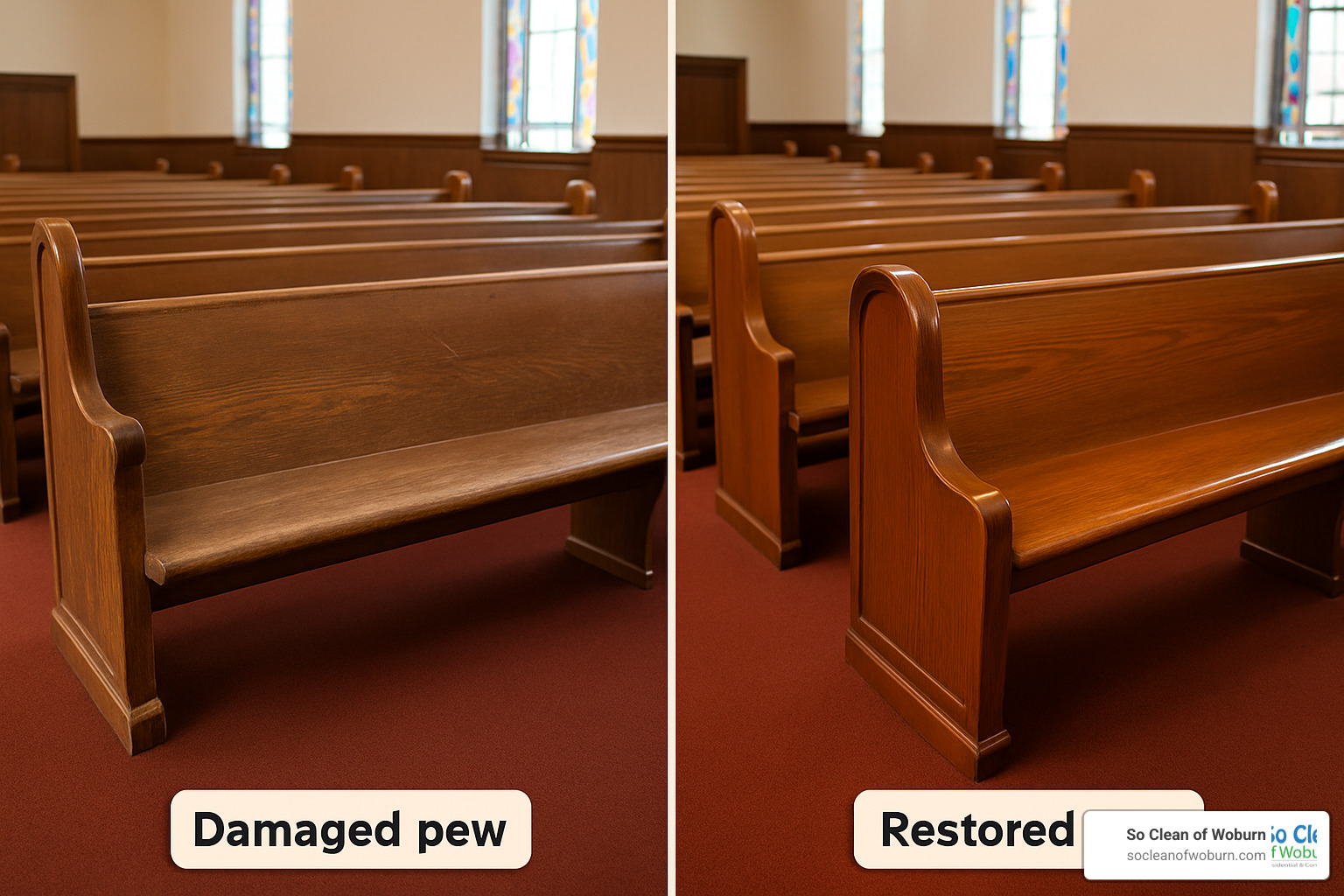
Red Flags That Mean “Call the Pros”
Some problems are beyond the best way to clean church pews at home. Loose joints or wobbly sections need professional carpentry skills—trying to fix them yourself often makes things worse.
When protective finish wears down to bare wood, regular cleaning becomes ineffective and potentially harmful. You’ll see dull patches or areas where water soaks in instead of beading up. At this point, the wood needs professional refinishing to prevent permanent damage.
Persistent odors that won’t budge often signal deeper problems like moisture damage or mold growth. These issues require professional assessment and specialized treatment that goes far beyond surface cleaning.
Large damage areas from extensive wax spills, water damage, or unfortunately, vandalism typically exceed what volunteers can handle safely. Professional restoration often salvages pews that initially look beyond repair.
At So Clean of Woburn, we’ve helped churches throughout Middlesex County and Essex County determine when professional intervention actually saves money compared to ongoing DIY struggles. Sometimes a one-time professional treatment sets you up for years of successful maintenance. More info about Church Cleaning Services Near Me
Frequently Asked Questions About Cleaning Church Pews
How do I test a new cleaning product safely?
Testing new products might seem like an extra step, but it’s the best way to clean church pews without costly mistakes. Choose a hidden spot—the back edge of a pew or underneath a seat works perfectly.
Apply a small amount of your chosen product and let it sit for 24 hours. This waiting period reveals problems that might not show up immediately, like slow discoloration or finish softening.
Check for any texture changes, color shifts, or cloudiness in the finish. If the wood looks different in any way, that product isn’t safe for your pews. When in doubt, stick with proven mild detergents and pH-neutral cleaners.
Will disinfecting pews stop flu or COVID-19 spread?
Disinfecting church pews definitely helps reduce virus transmission, especially after crowded services or community events. But here’s the reality: viruses spread primarily through person-to-person contact, not surfaces.
The CDC emphasizes that while surface cleaning matters, it’s not your main defense against illness. Think of pew disinfection as one layer of protection alongside good ventilation and encouraging sick congregants to stay home.
Steam cleaning at 160°F for 3 minutes effectively kills most viruses on fabric surfaces. For wooden components, stick with vinegar-based solutions or bleach-free wipes that won’t damage your finish while still providing antimicrobial benefits.
Can I use household bleach on pew cushions or wood?
This is probably the most common mistake we see at So Clean of Woburn. Never use household bleach on church pews—not on wood, not on fabric, not anywhere.
Chlorine bleach destroys wood finishes and can void your furniture warranties. On fabrics, it breaks down fibers and strips color, even from “colorfast” materials. We’ve seen beautiful pew cushions ruined by well-meaning volunteers who thought bleach meant “extra clean.”
Oxygen bleach is your friend instead. It disinfects effectively while being gentle on both wood and fabric. Always check fabric care labels first—some materials can’t handle any bleach products, even the gentler oxygen versions.
When you’re unsure about any cleaning decision, professional help costs less than replacing damaged pews. Sometimes the smartest move is calling in experts who know exactly which products work with your specific materials.
Conclusion
Your church pews tell a story—not just of worship and community, but of care and stewardship. When you know the best way to clean church pews for your specific wood finish and upholstery, you’re investing in both your congregation’s health and your sanctuary’s future.
Think about it: those beautiful wooden surfaces that welcome hundreds of worshippers each week can last for generations with proper care. Weekly dusting keeps surface debris from building up, monthly deep cleaning removes the oils and grime that gradually break down protective finishes, and annual polishing restores that warm glow that makes your sanctuary feel truly welcoming.
But here’s what we’ve learned from working with churches across Middlesex County and Essex County—sometimes the most loving thing you can do is ask for help. When your volunteer team faces structural issues, persistent odors, or finish damage that goes beyond surface cleaning, professional services ensure your sacred space gets the expert attention it deserves.
At So Clean of Woburn, we’ve seen how proper pew maintenance transforms worship spaces throughout the Greater Boston area. Clean pews aren’t just about looking good—they’re about creating an environment where people feel genuinely welcomed and cared for. When someone walks into your sanctuary and sees well-maintained pews, they’re experiencing your congregation’s heart for hospitality before the service even begins.
Your pews are more than furniture—they’re part of your ministry. Taking care of them well means you’re taking care of the people who will sit in them for years to come. More info about church cleaning services near you