Why Natural Mold Cleaners Make the Smart First Move
Natural mold cleaner solutions can effectively tackle most household mold problems without exposing your family to harsh chemicals. Here are the top 5 natural ingredients that kill mold:
- White vinegar – Kills 82% of mold species, including black mold
- Baking soda – Kills mold and absorbs moisture to prevent regrowth
- Hydrogen peroxide (3%) – Antifungal and antibacterial oxidizer
- Tea tree oil – Potent natural fungicide that kills spores
- Lemon juice – High acidity breaks down mold structure
Mold isn’t just unsightly – it’s a health hazard that can trigger allergies, asthma, and respiratory problems. As one homeowner finded, “The thought of finding a build-up of fungi growth in your bathtub is probably enough to send shivers down your spine.”
But here’s the good news: you don’t need toxic chemicals to win the war against mold. Natural cleaners are just as effective as commercial products, safer for your family and pets, and cost a fraction of the price.
Why go natural? Commercial mold cleaners often contain harsh chemicals that can irritate your lungs and skin. Natural alternatives work by targeting mold at the cellular level – vinegar’s acetic acid penetrates porous surfaces, baking soda absorbs the moisture mold needs to survive, and hydrogen peroxide oxidizes mold cells.
This guide will show you exactly how to make and use these natural solutions, when DIY is enough, and when to call professionals for larger infestations.
Understanding Mold: The Unwanted Houseguest
Think of mold as that uninvited guest who shows up to your party and just won’t leave. Molds are actually a type of fungus that’s been around far longer than humans – and they’re surprisingly good at what they do.
Here’s how these tiny troublemakers work: mold reproduces by releasing microscopic airborne spores that float around everywhere, both inside and outside your home. These spores are incredibly tough little survivors – they can handle extreme temperatures and even survive in space! When they finally land somewhere cozy with the right conditions, that’s when the real party begins.
How mold grows is actually pretty simple, but understanding it helps you fight back. Those floating spores need three things to turn into visible mold colonies: moisture, a food source (like wood, drywall, or even dust), and warmth. When they get all three, they settle in and start growing into those fuzzy, discolored patches we all recognize.
Moisture sources are everywhere in our homes – leaky pipes, steam from hot showers, condensation around windows, or even just high humidity. Common household locations where mold loves to set up camp include your bathroom (especially around the shower and on tiles), basements, under kitchen sinks, near dishwashers, in laundry rooms, and anywhere plumbing might be acting up.
Now, here’s where things get serious. The health risks of exposure to mold aren’t just about aesthetics. Many people experience allergies like sneezing, runny noses, and itchy eyes when mold is present. For those with asthma, exposure can trigger dangerous attacks with coughing, wheezing, and breathing difficulties. Others report persistent headaches, skin rashes, and fatigue. The health effects of mold exposure can range from mild annoyance to serious respiratory problems.
So why choose natural solutions when dealing with this fungal foe? It’s really about protecting your family while still getting the job done. Traditional chemical cleaners like bleach release harsh fumes that can irritate your lungs and pollute your indoor air. They’re also risky around kids and pets, and they’re not exactly kind to the environment either.
Natural mold cleaner alternatives work just as effectively by targeting mold at the cellular level, but without the toxic side effects. Avoiding harsh chemicals means you can breathe easy while you clean – literally. Plus, natural solutions are gentler on your surfaces and wallet too. If you’re interested in maintaining a chemical-free home environment, our Non-Toxic Cleaning Products services can help you achieve that healthy balance.
The bottom line? You don’t need to choose between a clean home and a healthy one. Natural solutions give you both.
Your Arsenal: The 5 Most Effective Natural Mold Cleaners
Think of mold as that uninvited guest who just won’t leave. The good news? You don’t need a hazmat suit or industrial-strength chemicals to show it the door. Your kitchen pantry likely holds everything you need to wage war against this unwelcome visitor.
These natural mold cleaner ingredients aren’t just gentler alternatives – they’re legitimate powerhouses with serious fungicidal and antibacterial properties. What makes them so effective? They work at the cellular level, disrupting mold’s ability to survive and reproduce, while being safe enough that you won’t worry about your kids or pets being around during cleaning.
How Vinegar Works as a Natural Mold Cleaner
White distilled vinegar might smell like a pickle factory, but it’s absolutely ruthless when it comes to mold. The secret weapon here is acetic acid – a mild but mighty compound that can kill 82% of mold species, including that scary black mold everyone worries about.
Here’s what makes vinegar special: unlike bleach that just bleaches away the color (making you think the mold is gone), vinegar actually penetrates porous surfaces like wood and drywall. It gets down into those tiny cracks and crevices where mold likes to hide, making it truly effective on black mold and other stubborn varieties.
We’ve seen homeowners use it successfully on everything from shower grout to basement walls. The smell fades quickly, but the mold-killing power lasts.
The Power of Baking Soda
Baking soda is like the Swiss Army knife of natural cleaning – it does a little bit of everything, and it does it well. As a mild abrasive, it physically scrubs away mold stains without scratching delicate surfaces. But that’s just the beginning.
This humble white powder actually kills mold on contact, then goes a step further by absorbing moisture from the surrounding area. Since mold needs moisture to survive, you’re essentially starving it out. Plus, baking soda naturally deodorizes, getting rid of that musty smell that makes you wrinkle your nose.
The best part? It helps prevent regrowth by creating an environment where mold simply can’t thrive. It’s like having a bouncer at the door of your bathroom tiles.
Hydrogen Peroxide: The Antifungal Oxidizer
Don’t underestimate that brown bottle of 3% solution sitting in your medicine cabinet. Hydrogen peroxide is a triple threat – it’s antifungal, antibacterial, and works as an oxidizing agent that literally breaks down mold at the molecular level.
Think of it as nature’s bleach, but safer. It has natural bleaching properties that help remove those unsightly mold stains, making your surfaces look brand new again. Unlike harsh chemical bleaches, hydrogen peroxide breaks down into water and oxygen, so you’re not left with toxic residues.
Tea Tree Oil: A Potent Natural Fungicide
A little bottle of tea tree oil might cost more than the other ingredients, but trust us – it’s worth every penny. Derived from Melaleuca alternifolia (try saying that three times fast!), this essential oil packs serious punch with its potent antifungal properties.
Scientific research confirms that tea tree oil is a potent antifungal agent, capable of not just killing mold spores but actually preventing them from coming back. It works as a natural deterrent, creating an environment where mold simply doesn’t want to grow.
The bonus? Your home will smell like a spa instead of a cleaning supply closet.
Lemon Juice: The Acidic Cleanser
Fresh lemons bring more to the table than just vitamin C. The citric acid in lemon juice creates a high acidity environment that mold absolutely hates. This natural acid breaks down mold structure, making it easier to scrub away even stubborn colonies.
Lemon juice works double duty as a natural disinfectant, killing bacteria and other microorganisms that might be hanging around with the mold. And let’s be honest – after a cleaning session, who doesn’t want their home to smell like fresh citrus instead of harsh chemicals?
It leaves a fresh scent that actually makes cleaning feel a little less like a chore and a little more like aromatherapy.
How to Make and Use Your Natural Mold Cleaner: Recipes & Methods
Ready to put these powerful natural mold cleaner ingredients to work? Let’s roll up our sleeves and get into the nitty-gritty of creating and applying these solutions. Each method has its own strengths, and knowing which one to use where can make all the difference in your mold-fighting success.
Step-by-Step Guide for a Vinegar Solution
White vinegar is our go-to natural mold cleaner for good reason – it’s simple, effective, and requires zero mixing. Here’s how to harness its power:
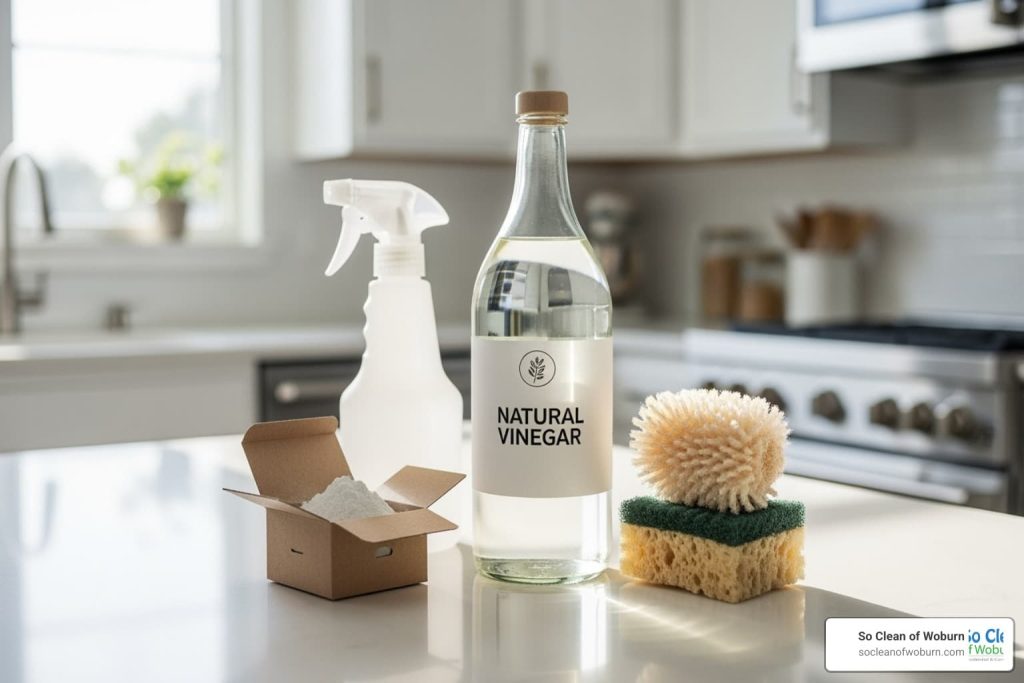
The Recipe: Pour undiluted white distilled vinegar directly into a clean spray bottle. That’s it! The full-strength acid is what gives mold the knockout punch it deserves.
The Application Process: Start by generously spraying the moldy surface until it’s completely saturated – don’t be shy with it. Now comes the hardest part: waiting. Let that vinegar sit and work its magic for at least one hour. For particularly stubborn spots, you can even leave it overnight.
After your patience pays off, grab a stiff brush or abrasive sponge and scrub the area thoroughly. The mold should come away much easier now. Finish by wiping the area clean with a damp cloth. Pro tip: Spray a light coat of vinegar and let it air dry to help prevent future mold growth.
Where It Works Best: This versatile solution tackles both porous and non-porous surfaces beautifully. It’s perfect for bathroom tiles, shower stalls, kitchen countertops, painted walls, and even inside appliances like dishwashers and washing machines.
Creating a Baking Soda Paste and Spray
Baking soda brings two weapons to the mold fight – scrubbing power and moisture absorption. You’ll want to make both a paste and a spray for maximum effectiveness.
The Recipes: For the paste, mix baking soda with just enough water to form a thick, spreadable consistency. For the spray, dissolve 1/4 tablespoon of baking soda in 1 cup of water in a spray bottle. Give it a good shake until everything dissolves.
Using the Paste: Apply this thick mixture directly to mold stains, especially in grout lines where mold loves to hide. Let it sit for 10-15 minutes, then scrub vigorously with a brush. The mild abrasive action helps lift stubborn stains while the alkalinity kills the mold. Rinse thoroughly with water when you’re done.
Using the Spray: This lighter version works wonderfully for preventative care or tackling light mold growth. Spray it on surfaces and either wipe clean or leave a thin layer to dry – that residue will continue absorbing moisture and deterring mold.
Best Applications: Baking soda shines on grout, tile, sinks, and other hard surfaces. It’s also your secret weapon for deodorizing areas where mold has left that telltale musty smell behind.
Applying Hydrogen Peroxide Safely
Hydrogen peroxide is like nature’s bleach – powerful but requiring a bit more caution. The 3% solution you find at any pharmacy is perfect for mold removal.
The Simple Recipe: Pour 3% hydrogen peroxide directly into a clean, opaque spray bottle. (The opaque part matters – light breaks down hydrogen peroxide, making it less effective.)
The Application Method: Spray the moldy surface until it’s fully saturated, then watch for the satisfying bubbling action – that’s the hydrogen peroxide breaking down the mold at the cellular level. Let it work for about 10 minutes, then scrub with a brush or sponge and wipe the surface dry.
Important Safety Note: Here’s where we need to talk about hydrogen peroxide’s natural bleaching properties. Always do a patch test on an inconspicuous area first, especially on colored surfaces like fabrics or painted walls. You don’t want to solve your mold problem only to create a discoloration problem!
Comparing Natural Cleaners by Surface Type
Choosing the right cleaner for your specific surface can make the difference between success and frustration. Vinegar works beautifully on both non-porous surfaces like tile, glass, and countertops, as well as porous materials like drywall, wood, and grout. Just avoid using it on natural stone surfaces like marble, as the acid can cause etching.
Baking soda excels on non-porous surfaces where you need scrubbing power, and it’s gentle enough for most porous surfaces too. The main caution here is making sure you rinse thoroughly – nobody wants a chalky residue left behind.
Hydrogen peroxide handles both surface types effectively, but bleaching caution we mentioned. It’s particularly powerful on porous surfaces where other cleaners might not penetrate as deeply.
Tea tree oil (mixed with water at about 10-20 drops per cup) works on all surface types and leaves a pleasant scent, but use it sparingly – a little goes a long way, and it can be pricey.
Lemon juice brightens and disinfects non-porous surfaces beautifully, and its natural acidity works well on porous surfaces too. Just like vinegar, avoid it on natural stone.
The key to natural mold cleaner success is matching your method to your surface and being patient with the process. These gentle solutions work just as effectively as harsh chemicals – they just need a little more time to do their magic.