

The Unsung Heroes of Every Clean Space
Janitors are the backbone of every clean, safe, and functional building – from the office where you work to the school your children attend. These dedicated professionals ensure that spaces remain hygienic, organized, and welcoming for everyone who enters.
Quick Facts About Janitors:
- Primary Role: Clean and maintain buildings, ensuring safety and sanitation
- Work Settings: Offices, schools, hospitals, industrial facilities, and residential buildings
- Key Responsibilities: Cleaning, waste management, minor repairs, and supply maintenance
- Alternative Names: Custodians, building cleaners, or maintenance workers
- Median Salary: $29,790 per year in the US, with hourly wages ranging from $13-$50
- Education Required: No formal degree needed – most learn through on-the-job training
The word “janitor” comes from the Latin word “ianitor,” meaning “doorkeeper” – and in many ways, modern janitors still serve as guardians of the spaces we inhabit. They work behind the scenes, often during non-business hours, to create the clean environments we rely on every day.
While many people see only the surface-level cleaning tasks, professional janitors handle far more than just mopping floors. They’re responsible for maintaining building systems, ensuring safety compliance, managing cleaning supplies, and even performing basic repairs. Their work directly impacts productivity, health outcomes, and the overall success of the organizations they serve.
From the school custodian who ensures children learn in a healthy environment to the office janitor who maintains professional spaces for business success, these professionals play a critical role in our daily lives – even when we don’t notice them at work.
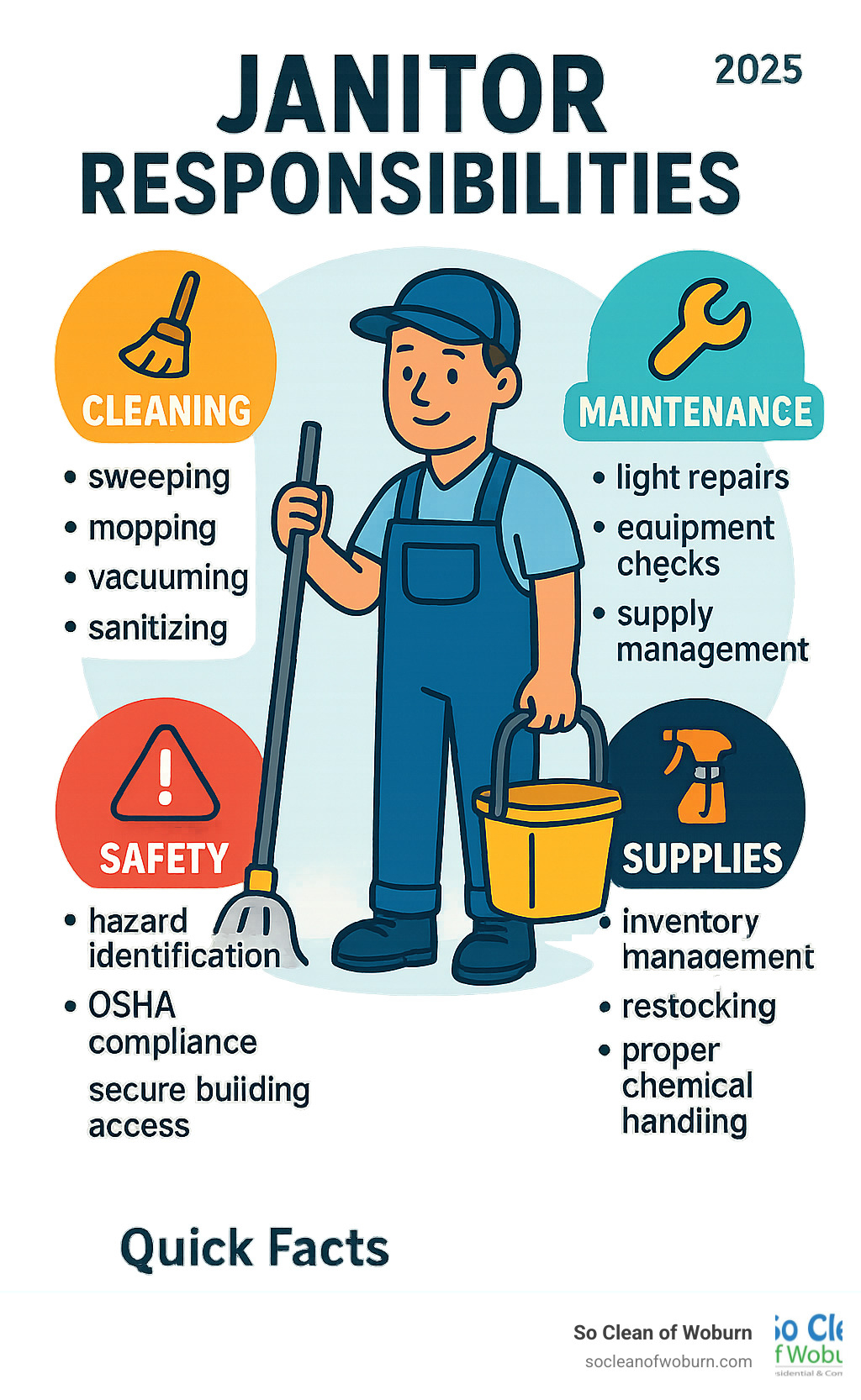
Terms related to Janitors:
The Daily Grind: A Janitor’s Core Duties and Responsibilities
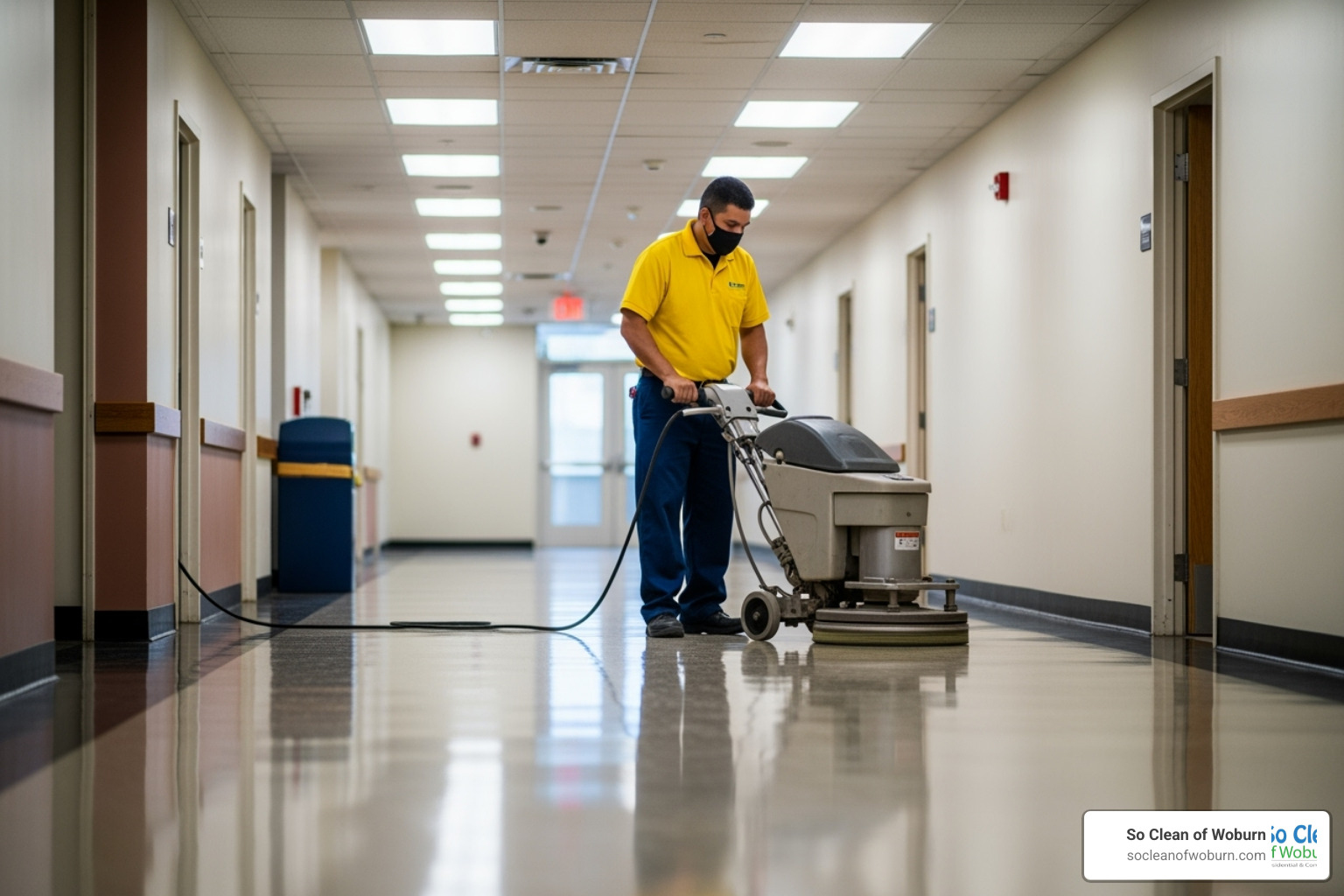
Ever wonder what janitors actually do all day? Their work goes far beyond pushing a mop around – these professionals juggle dozens of responsibilities that keep buildings running smoothly and safely.
A typical day for a janitor involves general cleaning tasks, surface maintenance, waste management, and restroom sanitation. But that’s just the beginning. They also handle supply management, perform minor repairs, and operate specialized equipment that most of us have never even seen.
Think of janitors as the Swiss Army knife of building maintenance. One moment they’re polishing floors to a professional shine, and the next they’re troubleshooting a temperamental air conditioning unit or restocking paper towels in the break room.
The scope of their work varies dramatically depending on the building size and type. A school custodian might focus heavily on sanitizing classrooms and cafeterias, while an office janitor spends more time maintaining conference rooms and reception areas.
More info about Floor Cleaning Services
More info about Commercial Restroom Cleaning Services
Routine Cleaning Tasks
The foundation of janitorial work revolves around consistent, systematic cleaning that keeps spaces looking their best. These aren’t random tasks – they follow carefully planned schedules based on foot traffic, usage patterns, and health requirements.
Sweeping and mopping happen daily in high-traffic areas, while vacuuming focuses on carpeted spaces and upholstered furniture. Dusting might seem simple, but it requires attention to detail – from ceiling fans to baseboards, nothing gets overlooked.
Window cleaning and trash disposal are ongoing responsibilities that directly impact how visitors perceive a building. Clean windows let in natural light and create a welcoming atmosphere, while proper waste management prevents odors and maintains sanitation standards.
The pandemic changed everything when it comes to disinfecting high-touch surfaces. Door handles, elevator buttons, light switches, and handrails now get sanitized multiple times daily. This extra layer of protection has become a permanent part of most janitorial routines.
Common cleaning supplies used by janitors:
- Industrial vacuum cleaners and floor polishing machines
- Mops, brooms, and microfiber cloths
- Disinfectants, sanitizers, and all-purpose cleaners
- Glass cleaners and specialized floor treatments
- Trash bags, recycling containers, and protective equipment
- Safety gear including gloves and protective eyewear
Modern janitors work with professional-grade equipment that’s far more powerful than household versions. That floor polisher in the image above? It can transform a dull hallway into a gleaming showcase in minutes.
Maintenance and Safety Protocols
Here’s where janitors really shine – they’re often the first to spot problems before they become expensive disasters. Basic repairs like replacing lightbulbs or unclogging drains might seem minor, but they prevent bigger headaches down the road.
Smart janitors know when to fix something themselves and when to call in specialists. They’ll tackle loose door handles, adjust HVAC settings, and handle minor plumbing issues. But they’re also trained to recognize when a problem needs professional attention – and reporting major issues quickly can save building owners thousands of dollars.
Adhering to OSHA standards isn’t just about following rules – it’s about protecting everyone in the building. Professional janitors receive extensive training on using cleaning chemicals safely, wearing proper protective equipment, and marking potential hazards with warning signs.
Securing buildings often falls to janitors, especially those working evening or overnight shifts. They’re responsible for locking doors and windows, checking that security systems are active, and ensuring the building is safe for the next day’s occupants.
The safety training never stops. Janitors learn about proper chemical handling, equipment operation, and emergency procedures. They understand which cleaning products can’t be mixed together, how to lift heavy objects without injury, and what to do if they encounter a hazardous situation.
Please view the CDC’s website for more info on cleaning and disinfection
The Janitorial Landscape: Where They Work and What They Do
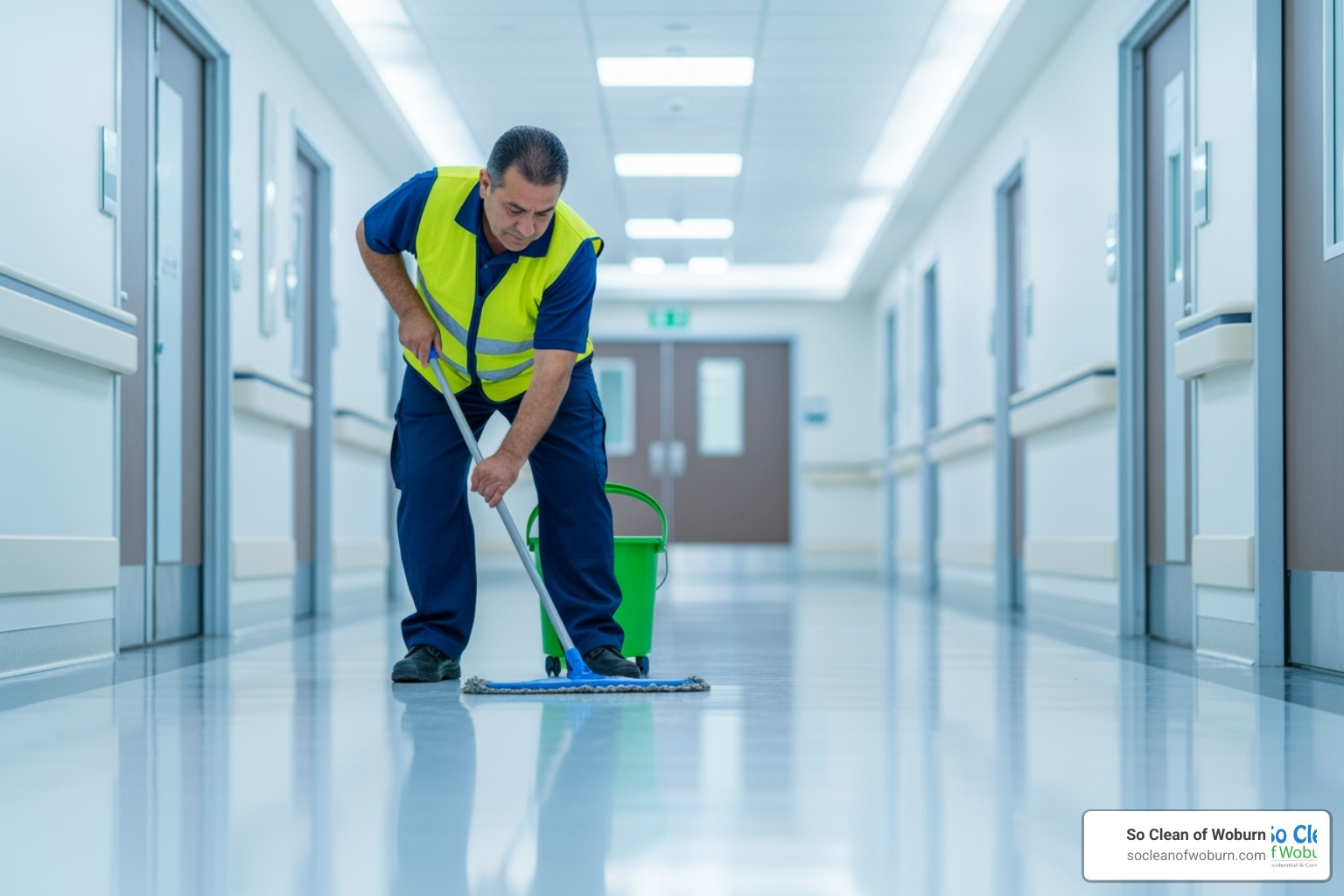
Walk into any building – whether it’s your office, your child’s school, or your doctor’s office – and you’ll see the handiwork of janitors. These skilled professionals adapt their expertise to countless different environments, each with its own unique challenges and requirements.
The world of janitorial work is incredibly diverse. Commercial buildings need that polished, professional look that impresses clients and keeps employees productive. Educational institutions require cleaning that prioritizes child safety while handling the chaos that hundreds of students can create. Healthcare facilities demand strict infection control that can literally save lives. Industrial settings involve heavy-duty cleaning around machinery and potentially hazardous materials. Even residential buildings like apartment complexes rely on janitors to maintain common areas and building systems.
What makes this profession so interesting is how janitors must become chameleons, adapting their skills and approaches to fit each environment perfectly. A janitor cleaning a law office approaches their work very differently than one maintaining a manufacturing plant.
More info about Office Cleaning
More info about Cleaning Services for Medical Offices
Common Workplaces for Janitors
Office janitors are the invisible heroes who transform busy workspaces overnight. They typically work after business hours, ensuring that employees arrive to spotless desks, gleaming conference rooms, and fully stocked break rooms. Their biggest challenge? Managing high-traffic areas like lobbies and ensuring minimal disruption to any late-working employees.
School custodians juggle indoor and outdoor responsibilities, often becoming beloved figures in their communities. Beyond classroom cleaning, they might shovel snow, maintain playgrounds, and coordinate with teachers around academic schedules. The seasonal nature of their work means summers filled with deep cleaning and maintenance projects.
Hospital environmental service workers – as they’re professionally known in healthcare settings – follow incredibly strict protocols to prevent infections. They work around the clock in 24-hour environments, handling everything from patient rooms to surgical suites. Their specialized waste disposal procedures and disinfection protocols require extensive training.
Industrial cleaners tackle some of the toughest cleaning challenges, working around machinery and potentially hazardous substances. They need additional safety training and must understand manufacturing processes to clean effectively without disrupting operations. It’s demanding work, but it often pays well due to the specialized skills required.
The beauty of janitorial work lies in this variety. Whether someone prefers the quiet professionalism of office cleaning or the technical challenges of industrial work, there’s a niche that fits their personality and skills.
More info about Commercial Property Cleaning Services
Specializations in Janitorial Services
As the cleaning industry has evolved, many janitors have finded that specializing in specific areas can lead to better pay and more interesting work. These specializations reflect how professional the field has become.
Floor care specialists are the artists of the janitorial world. They understand the nuances of different flooring materials – from delicate hardwood that needs gentle care to industrial tile that requires heavy-duty treatment. Their work involves floor stripping, waxing, deep carpet cleaning, and refinishing. It’s satisfying work that produces visible, dramatic results.
Window cleaners often work on both interior and exterior glass surfaces, sometimes using specialized equipment for high-rise buildings. This specialization requires additional safety training and equipment certification, but it offers the unique satisfaction of literally bringing light into people’s workspaces.
Green cleaning experts represent the future of the industry. They focus on environmentally sustainable practices, using eco-friendly products and methods that protect both human health and the environment. As more organizations prioritize sustainability, this specialization has become increasingly valuable.
Post-construction cleanup crews handle the challenging work of changing construction sites into move-in ready spaces. They remove construction debris, eliminate dust and residue, and prepare spaces for occupancy. It’s intensive work that requires stamina, but it offers the rewarding experience of being part of bringing new spaces to life.
These specializations show how janitors can build rewarding careers by developing expertise in areas that match their interests and strengths. Whether someone enjoys the precision of floor care or the environmental focus of green cleaning, there’s room to grow and excel.
More info about our specialized Janitorial Services
Building a Career: Skills, Salary, and Outlook for Janitors

If you’re considering a career as a janitor, you’re looking at one of the most stable and essential professions out there. The janitorial field offers something that’s increasingly rare in today’s job market: genuine job security and opportunities for growth without requiring a college degree.
Janitors are considered essential workers, and recent events have only reinforced how crucial their role is in keeping our communities healthy and safe. The COVID-19 pandemic particularly highlighted the importance of professional cleaning services, leading to increased demand and better compensation in many areas.
What makes this career path especially appealing is the clear progression opportunities. You can start as an entry-level cleaner and work your way up to team leader, supervisor, or facility manager. Many successful janitors eventually start their own cleaning businesses or develop specialized skills that command premium rates.
The best part? You don’t need years of schooling to get started. Most employers provide on-the-job training, and you can begin building valuable skills from day one.
According to the United States Bureau of Labor Statistics, this is the career outlook
Essential Skills and Qualities for Professional Janitors
Success in the janitorial profession isn’t just about knowing how to clean – it requires a unique blend of technical know-how, personal qualities, and professional skills that make the difference between an average cleaner and a valued team member.
Attention to detail is perhaps the most crucial skill. Professional janitors develop an eye for spotting areas that need attention, from scuff marks on baseboards to fingerprints on glass doors. This skill separates good cleaners from great ones and directly impacts how building occupants perceive the quality of work.
Time management becomes second nature to experienced janitors. They learn to efficiently complete extensive cleaning routines within tight timeframes, often working around business hours or school schedules. The ability to prioritize tasks and work systematically makes the difference between finishing on time and falling behind.
Physical stamina is essential, as the work involves being on your feet for extended periods, lifting supplies, and performing repetitive motions. However, don’t let this discourage you – most people build up their endurance naturally as they gain experience.
Reliability might seem obvious, but it’s what employers value most. Buildings depend on consistent cleaning schedules, and janitors who show up consistently and complete their work to expected standards quickly become indispensable to their employers.
Problem-solving skills come into play daily. Whether it’s figuring out how to remove a stubborn stain, determining why a machine isn’t working properly, or deciding how to handle an unexpected mess, successful janitors think on their feet and find solutions.
Communication skills are more important than you might expect. Janitors need to report maintenance issues clearly, interact professionally with building occupants, and coordinate with other staff members. The ability to communicate effectively can open doors to supervisory roles.
The ability to work independently is crucial since janitors often work with minimal supervision, especially during evening or weekend shifts. Employers need to trust that work will be completed properly even when no one is watching.
Salary and Job Outlook for Janitors
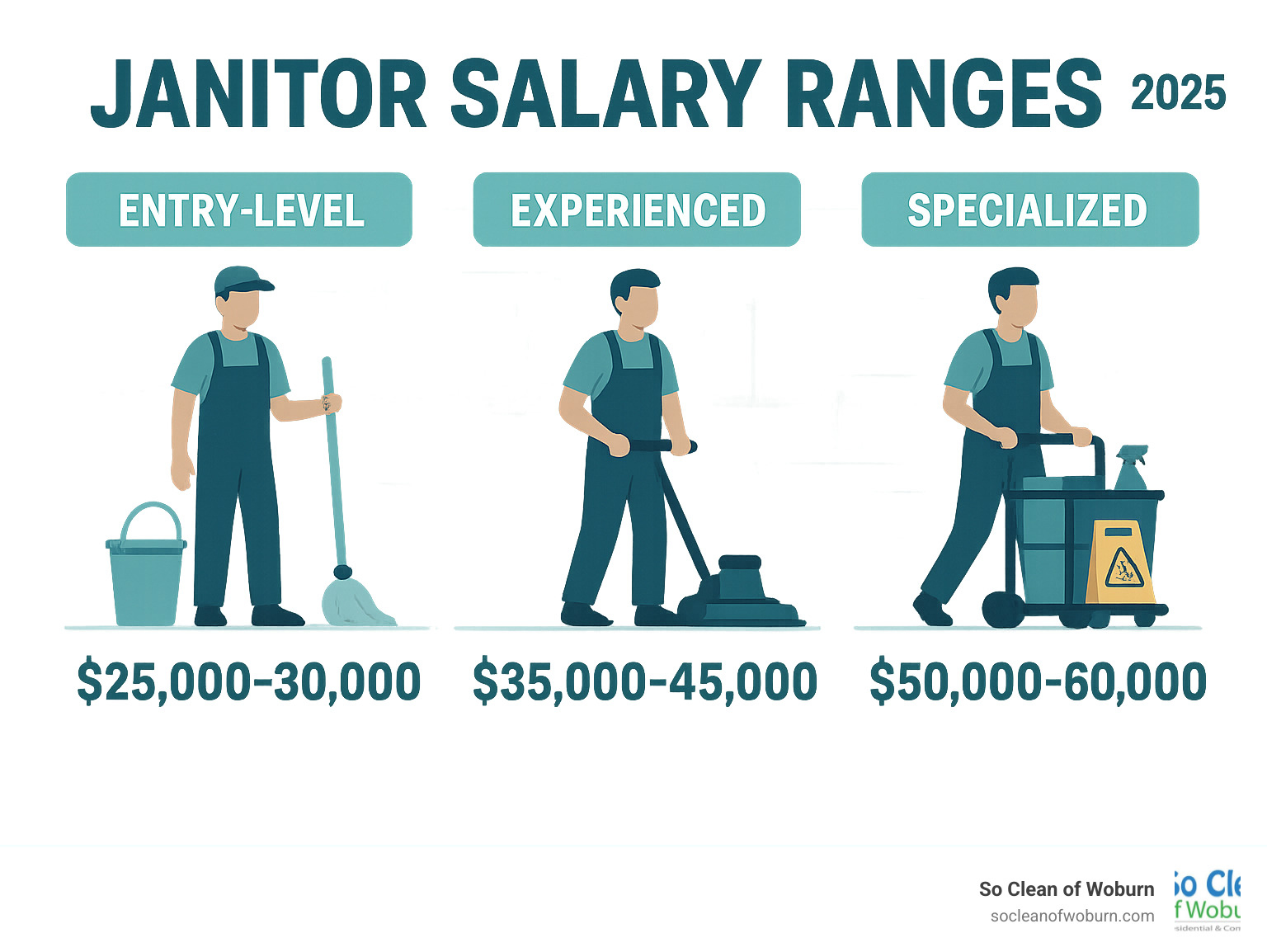
The financial picture for janitors is more promising than many people realize. While starting wages may be modest, there’s real potential for growth, especially for those who develop specialized skills or take on additional responsibilities.
In Massachusetts and New Hampshire, janitors can expect to earn between $13 to $50 per hour, depending on their experience level and specialization. Entry-level positions typically start around $13-15 per hour, while experienced janitors often earn $17-22 per hour. Those who move into supervisory roles or develop specialized skills can command $22-30 per hour or more.
Experience plays a major role in determining pay. Janitors who have been in the field for several years and have proven their reliability often see steady wage increases. Many employers recognize the value of retaining experienced staff and offer regular raises to prevent turnover.
Location within Massachusetts and New Hampshire significantly impacts earning potential. Janitors working in the Greater Boston area typically earn higher wages than those in rural areas, reflecting the higher cost of living and increased demand for services.
Specialization can dramatically boost earning potential. Janitors who become floor care specialists, learn green cleaning techniques, or develop expertise in post-construction cleanup often earn premium rates. Some specialized roles can pay $30-50 per hour or more.
The type of facility also influences compensation. Healthcare facilities and industrial settings often pay more than standard office buildings due to the specialized knowledge and additional safety requirements involved.
Job security in this field is exceptional. Cleaning services are essential regardless of economic conditions, making this one of the most recession-proof careers available. The Bureau of Labor Statistics projects steady growth in janitorial positions, driven by an expanding economy and increased awareness of the importance of clean, healthy environments.
The COVID-19 pandemic has created even more opportunities for skilled janitors. Many employers have added additional sanitization protocols and increased cleaning frequencies, creating more positions and often better pay for qualified professionals.
More info about what to look for in Professional Janitorial Services
The Critical Importance of a Clean Environment
Think about the last time you walked into a sparkling clean office versus one that looked neglected. The difference was probably striking – and it affected how you felt about that business immediately. That’s the power of professional janitors and the clean environments they create.
The work these professionals do goes far beyond making spaces look nice. Clean environments directly boost productivity, improve health outcomes, and can make or break a business’s success. When you understand these connections, you’ll see why hiring professional janitorial services isn’t just an expense – it’s one of the smartest investments any organization can make.
Research consistently shows that clean workspaces make people more productive and happier. Employees in well-maintained environments report higher job satisfaction, lower stress levels, and better focus throughout the day. On the flip side, cluttered or dirty spaces create distractions and drag down performance. It’s amazing how much a clean desk and fresh-smelling office can improve someone’s entire workday.
The health benefits are even more impressive. Professional janitors don’t just clean – they help prevent the spread of infectious diseases through proper sanitization techniques. They improve indoor air quality by removing dust and maintaining ventilation systems properly. Their careful floor care prevents slip-and-fall accidents, while thorough cleaning eliminates allergens that can trigger respiratory issues. Plus, proper waste management keeps pests away – nobody wants to deal with that problem.
From a business perspective, the impact is huge. First impressions matter tremendously, and clean facilities immediately signal to clients, customers, and visitors that you’re professional and detail-oriented. Your brand reputation depends partly on how well-maintained your spaces look. Employees also prefer working in clean, comfortable environments and are more likely to stick around when their workplace feels cared for.
Clean, organized spaces simply work better. When everything is in its place and surfaces are spotless, workflows run smoother and operations are more efficient. It’s easier to find what you need, meetings feel more professional, and everyone can focus on their actual work instead of being distracted by mess.
Here’s something many people don’t realize: professional cleaning directly impacts property values. Well-maintained buildings command higher rents, attract better tenants, and hold their value over time. Neglected properties deteriorate quickly and become increasingly expensive to restore. Whether you own or lease, investing in quality janitorial services protects your investment.
More info on how cleaning improves property value
Understanding the difference between Cleaning vs. Disinfecting
Frequently Asked Questions about the Janitorial Profession
People often have questions about what it’s really like to work as a janitor. Let’s clear up some common misconceptions and provide straight answers about this essential profession.
Do you need a college degree to be a janitor?
The short answer is no – you don’t need a college degree to become a janitor. Most employers don’t even require a high school diploma, though having one definitely helps when you’re applying for positions. This makes janitorial work accessible to people from all educational backgrounds.
Most janitorial training happens right on the job. New employees learn proper cleaning techniques, safety protocols, and facility-specific procedures by working alongside experienced staff. You’ll pick up everything from the best way to mop different types of floors to how to safely handle cleaning chemicals.
That said, pursuing additional education and certifications can really boost your career prospects. Many community colleges offer custodial training programs that cover advanced techniques and business skills. You can also earn certifications in specialized areas like green cleaning, floor care, or hazardous material handling.
Some educational paths that can improve your janitorial career include earning OSHA safety certifications, completing specialized equipment training, or getting building maintenance trade certifications. These credentials can lead to higher-paying positions and supervisory roles.
What is the difference between a janitor, a custodian, and a housekeeper?
This is a common question, and the lines can be blurry. Janitors and custodians are essentially the same job – both clean and maintain commercial or public buildings. The choice of title often comes down to regional preferences or what the organization likes to call the position.
Schools tend to use “custodian” more often, while office buildings might prefer “janitor.” Some facilities use “environmental services” or “maintenance staff.” Don’t get hung up on the title – the work is very similar regardless of what it’s called.
Housekeepers are different because they typically work in private homes, hotels, or residential facilities. Their focus is on domestic cleaning tasks and creating comfortable living spaces rather than maintaining commercial buildings.
The key distinction is really about where you work. Janitors and custodians focus on commercial, educational, or public buildings, while housekeepers work in private residences or hospitality settings. Maintenance workers might include janitorial duties but emphasize repairs and building systems more heavily.
What are the typical working hours for a janitor?
Here’s something that surprises many people: janitors often work when everyone else has gone home. Most janitorial work happens during non-business hours to avoid disrupting regular operations. This means you’ll likely work evenings, nights, or weekends.
Evening shifts typically run from 5 PM to 1 AM, perfect for cleaning offices after the business day ends. Night shifts might go from 10 PM to 6 AM, allowing time for deep cleaning and maintenance tasks. Many janitors also work weekends when buildings are less occupied.
Some facilities need early morning cleaning from 4 AM to 12 PM to prepare spaces before business hours. Others use split shifts that combine morning and evening hours based on the building’s needs.
You’ll find both full-time positions offering 40 hours per week with benefits and part-time opportunities ranging from 15-30 hours weekly. Many janitors appreciate the flexibility that comes with non-traditional hours – it allows them to handle family responsibilities during regular business hours or pursue other interests.
Seasonal work can increase your hours during busy times like back-to-school cleaning or holiday preparation. Some positions are on-call, meaning your hours vary based on what the facility needs.
The non-traditional schedule isn’t for everyone, but many janitors find it works well with their lifestyle and family commitments.
Conclusion: Appreciating the Professionals Who Keep Our Spaces Safe and Clean
Janitors are truly the unsung heroes of our daily lives, working tirelessly behind the scenes to create the clean, safe, and healthy environments we depend on. Every time you walk into a spotless office lobby or your child enters a gleaming classroom, you’re witnessing the dedication of these essential professionals who’ve already been hard at work long before you arrived.
These skilled workers are so much more than people who simply mop floors and empty trash cans. They’re the building guardians who notice when something’s not quite right, the safety monitors who spot potential hazards before accidents happen, and the maintenance technicians who keep facilities running smoothly. They’re also our frontline health protectors, especially in a world where proper sanitization has become more critical than ever.
What makes janitors truly remarkable is their ability to adapt to completely different environments while maintaining the highest standards. The same attention to detail that keeps an office building professional and welcoming also ensures that hospitals remain sterile and schools stay healthy for learning. They master specialized techniques, work with complex equipment, and maintain professionalism even when tackling the messiest situations.
The COVID-19 pandemic really opened our eyes to just how essential these professionals are. While many of us worked from home, janitors continued showing up every day to sanitize and maintain the facilities that kept our society functioning. They adapted to new cleaning protocols, learned about improved disinfection methods, and took on additional responsibilities to keep everyone safe.
For anyone considering a career in this field, the opportunities are genuinely exciting. You’ll find stable employment that’s recession-proof, potential for advancement into supervisory or specialized roles, and the deep satisfaction that comes from making a real difference in people’s lives every single day. Plus, with the growing recognition of how important professional cleaning is, career prospects and compensation continue to improve.
Here in the Greater Boston area, we at So Clean of Woburn are proud to carry on this tradition of excellence. We understand that behind every clean space is a dedicated professional who takes genuine pride in their work. Our team brings the same commitment and expertise to every home and business we serve throughout Massachusetts and New Hampshire, providing customized cleaning solutions that create healthier, more productive environments for everyone.
Whether you’re a business owner who needs reliable janitorial services or someone thinking about joining this rewarding profession, janitors make our daily lives better through their unwavering commitment to excellence. They deserve our appreciation, respect, and recognition for the vital role they play in keeping our world clean and safe.
Learn more about our comprehensive apartment cleaning services