The Critical Role of Specialized Cleaning in Healthcare Settings
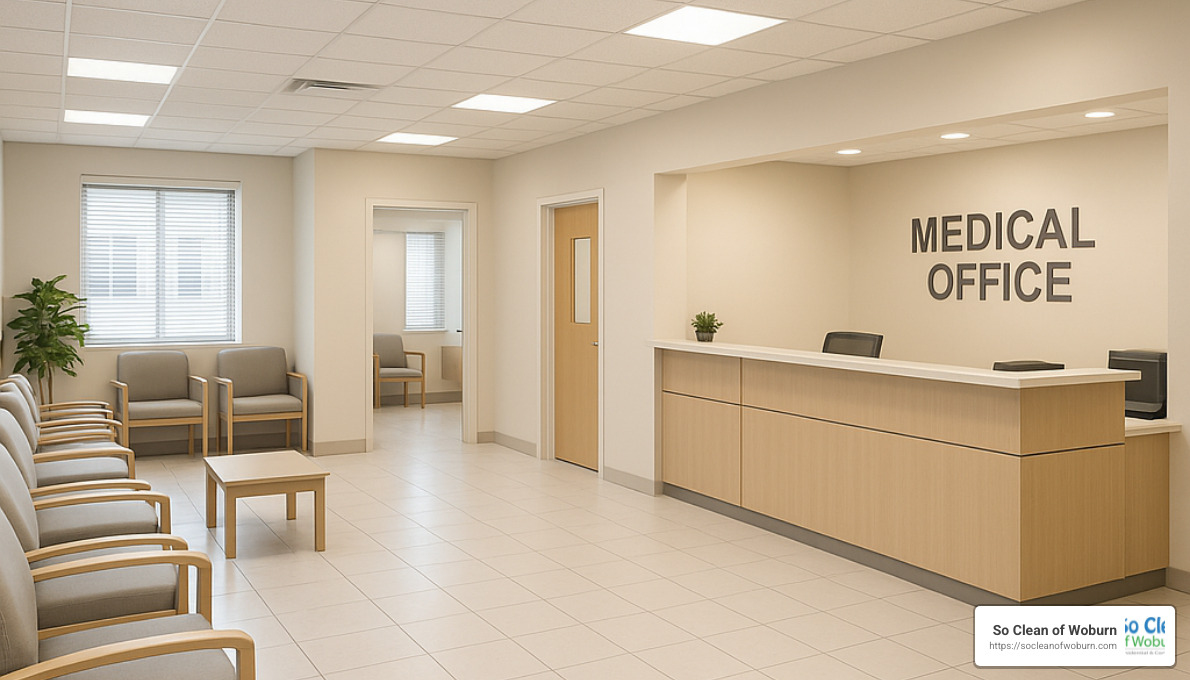
When you walk into a medical office, that first impression matters more than you might think. That spotless reception area isn’t just for show—it’s your first clue that you’re in capable hands. As a patient, you instinctively trust practices that prioritize cleanliness, and for good reason.
Cleaning services for medical offices are a whole different ballgame compared to regular commercial cleaning. These specialized programs address the unique demands of healthcare environments where the stakes are incredibly high. After all, we’re talking about spaces where people come to heal, not to pick up new germs!
Healthcare professionals frequently observe that patients visibly relax when entering a pristinely maintained medical facility. That sense of trust is priceless—and it starts before they even speak to a healthcare provider.
What makes medical cleaning so different? It’s not just about making things look nice. It’s about creating an environment that actively fights infection, meets strict regulatory guidelines, and protects everyone who walks through the door—from the most vulnerable patients to the hardworking staff.
Here’s what you really need to know about professional medical cleaning:
- Hospital-grade disinfection targets dangerous pathogens that regular cleaners might miss
- Specialized training ensures cleaning staff understand cross-contamination risks unique to healthcare
- Regulatory compliance with OSHA, CDC and HIPAA standards protects your practice legally
- Strategic scheduling means high-touch surfaces get multiple cleanings daily, while exam rooms are thoroughly disinfected between each patient
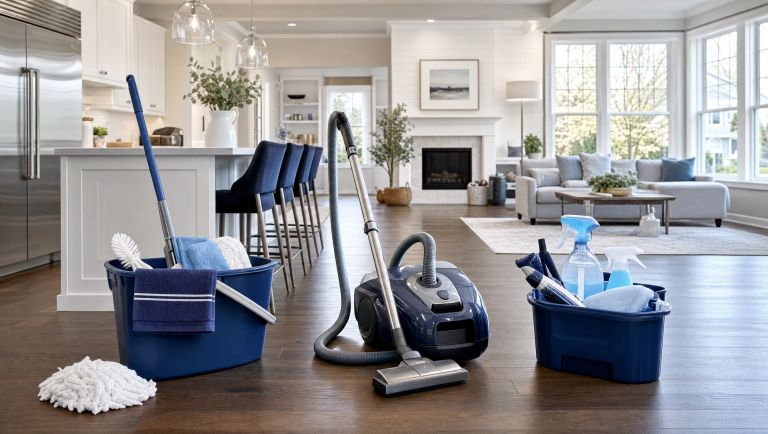
- Specialized equipment including HEPA filtration systems and color-coded microfiber cleaning tools prevent cross-contamination
The reality is sobering: healthcare-associated infections affect roughly 1 in 31 hospital patients daily across America. These aren’t just statistics—they’re people whose recovery is compromised by preventable infections. Professional cleaning services for medical offices play a crucial role in reducing these risks.
Whether you run a cozy family practice in Woburn, a busy dental office in Boston, or a specialty clinic in New Hampshire, proper medical cleaning isn’t a luxury—it’s essential preventive medicine. And in healthcare, prevention is always the best medicine.
At So Clean of Woburn, we understand that when it comes to medical facilities, cleaning isn’t just a service—it’s a responsibility. Our team approaches each healthcare environment with the perfect blend of scientific precision and genuine care that your patients and staff deserve.
Cleaning Services for Medical Offices: What Makes Them Different?
When you walk into a doctor’s office, that fresh, clean scent isn’t just for show. Behind that spotless appearance lies a world of difference between regular cleaning and what medical facilities require. Cleaning services for medical offices go far beyond the “mop and shine” approach that works for most commercial spaces.
Healthcare environmental services experts consistently emphasize that the perception of clean is more essential now than ever and can significantly impact the patient’s experience. But here’s the truth – in medical settings, what looks clean to our eyes might still harbor invisible threats to vulnerable patients.
This isn’t just about appearances. Inadequate cleaning in healthcare environments creates serious liability issues and puts both patients and healthcare workers at risk. That’s why medical cleaning focuses first and foremost on infection control, using specialized disinfectants and protocols that standard janitorial services simply aren’t equipped to handle.
Definition of cleaning services for medical offices
Cleaning services for medical offices are specialized programs designed specifically for healthcare environments where patient safety is paramount. Think of them as cleaning with a medical degree – they’re built around preventing disease transmission rather than just making spaces look nice.
These services incorporate aseptic cleaning techniques that prevent germs from spreading between different areas of your facility. They include terminal cleaning protocols for exam rooms, ensuring thorough disinfection between each patient visit. Staff are trained in the specialized handling of medical waste and potentially infectious materials – something regular cleaners aren’t equipped to manage.
What truly sets medical cleaning apart is its documentation systems. Unlike standard cleaning, every task is tracked and recorded to ensure compliance with healthcare regulations. This creates an audit trail that proves your facility is maintaining proper standards – crucial for both patient safety and regulatory inspections.
The goal extends far beyond visual cleanliness. Medical cleaning aims to achieve microbial-level hygiene that actively reduces the number of pathogens in your environment and prevents disease transmission – something your patients may not see but will definitely benefit from.
How medical cleaning differs from standard commercial cleaning
The difference between standard cleaning and medical-grade cleaning is like comparing a bicycle to an ambulance – both get you places, but they serve very different purposes and operate at different standards.
Training and Expertise
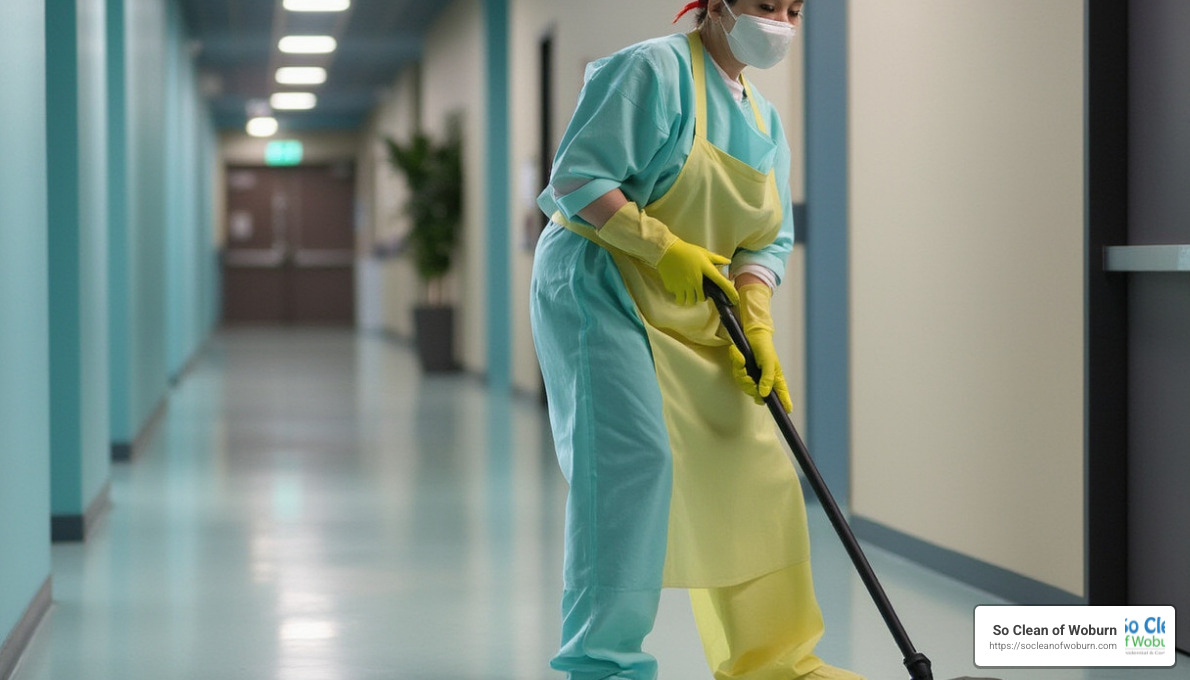
Medical cleaning staff don’t just learn how to clean – they learn why and what they’re protecting against. They receive specialized training in bloodborne pathogen handling and proper PPE usage. They understand the different levels of medical waste and how to safely manage each type. Many hold certifications in healthcare-specific cleaning methodologies that regular commercial cleaners simply don’t have.
Equipment and Materials
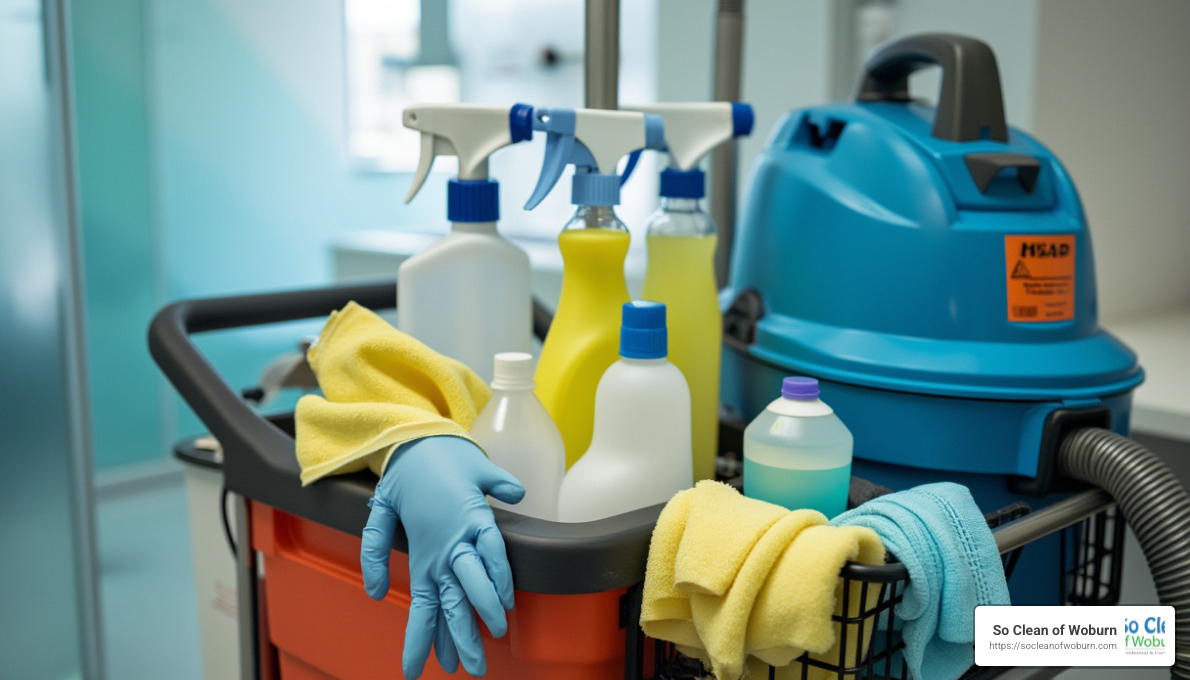
The tools make a huge difference too. Medical cleaning uses HEPA-filtered vacuums that capture 99.97% of airborne particles – crucial for protecting patients with respiratory conditions. Color-coded microfiber cloth systems prevent cross-contamination between areas (you definitely don’t want the bathroom cloth used in exam rooms!).
Instead of standard cleaning products, medical cleaning relies on hospital-grade EPA-registered disinfectants proven effective against a broad spectrum of pathogens. Different areas within your facility – exam rooms, laboratories, waiting areas – each require specialized tools and approaches to ensure proper sanitation.
Regulatory Oversight
Perhaps the biggest difference is the regulatory knowledge required. Industry professionals with healthcare expertise frequently note that ordinary cleaning services may put hospitals and medical offices at risk by not understanding strict healthcare regulations.
Medical cleaning staff must understand and follow guidelines from OSHA, CDC, and HIPAA. They need to maintain compliance with Joint Commission standards for healthcare environments. They must keep detailed documentation for infection control purposes and understand biohazard handling regulations that don’t apply to regular commercial spaces.
At So Clean of Woburn, we understand these critical differences. Our medical cleaning teams bring specialized knowledge and equipment to every healthcare facility we serve throughout Greater Boston and New Hampshire. We know that in healthcare environments, cleaning isn’t just about appearance – it’s about creating a safe healing environment where patients can receive care without additional health risks.
Why Specialized Medical Cleaning Is Critical to Patient Safety
When it comes to healthcare environments, cleanliness isn’t just about making a good impression—it’s a matter of life and health. The impact of proper cleaning goes straight to the heart of patient outcomes, staff wellness, and your facility’s reputation.
Infection control and HCAHPS impact
Healthcare-associated infections (HAIs) pose a serious threat that affects roughly 1 in 31 hospital patients daily. Professional cleaning services for medical offices serve as your frontline defense by breaking the infection chain in several important ways.
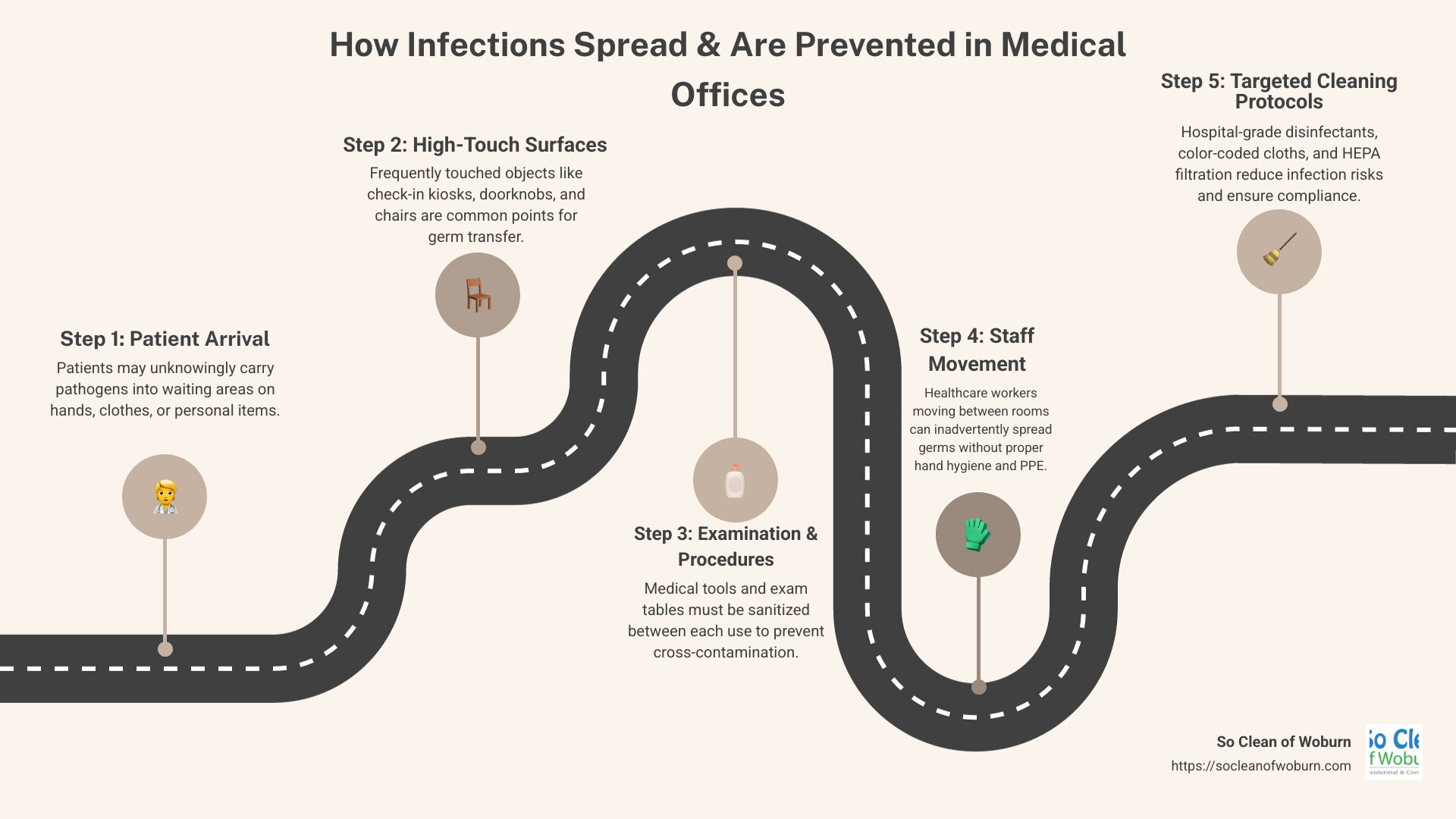
Think about all the high-touch surfaces in your medical office—doorknobs, exam tables, check-in counters, restroom fixtures—each one a potential transfer point for harmful pathogens. Proper cleaning dramatically reduces this pathogen load, eliminating the reservoirs where bacteria and viruses multiply and thrive.
Healthcare environmental services specialists have documented how proper cleaning protocols can transform a facility’s infection rates. When specialized cleaning protocols are implemented at medical facilities, patient infection complaints can drop significantly in just a few months.
This infection control directly impacts your Hospital Consumer Assessment of Healthcare Providers and Systems (HCAHPS) scores. Patients notice cleanliness—or its absence—immediately upon entering your facility. Those perceptions shape their entire experience and, ultimately, your bottom line.
The connection between cleanliness and business success is clear in the numbers:
– Facilities using specialized cleaning programs consistently report lower infection rates
– Higher HCAHPS scores lead to better reimbursement rates from Medicare and Medicaid
– Improved cleanliness ratings often result in stronger patient retention and more referrals
Practice managers across Massachusetts consistently report that professional cleaning services don’t just keep facilities looking professional—they keep survey scores high and patients coming back.
Environmental benefits of professional protocols
Beyond fighting infections, professional cleaning services for medical offices create a healthier overall environment that supports healing and wellness.
Air quality improvements make a difference patients can feel, even if they can’t see them. HEPA filtration removes invisible airborne particles, allergens, and some pathogens that can compromise respiratory health. For patients with conditions like asthma or COPD, this cleaner air creates a dramatically more comfortable experience.
Allergen management becomes particularly important in New England, where seasonal allergies affect so many patients. Regular deep cleaning removes accumulated allergens from surfaces and textiles throughout your facility. Proper carpet extraction eliminates deeply embedded contaminants that standard vacuuming misses, while systematic cleaning prevents mold and mildew growth in our region’s often humid climate.
Chemical safety is another critical benefit that professional services provide. Trained specialists use properly diluted cleaning chemicals to maximize effectiveness while minimizing exposure risks. This protects not just your patients but your valuable staff as well.
Medical facilities that switch to specialized medical cleaning services frequently report remarkable differences. Staff members with sensitive airways typically experience fewer sick days, and patients often comment on how fresh the office feels.
The scientific research on effective disinfection practices continues to evolve, and professional cleaning services stay current with these developments. They understand that a truly clean medical environment doesn’t just prevent infection—it creates a healing space that supports recovery and wellness for everyone who walks through your doors.
A clean medical office isn’t just a nice-to-have—it’s essential medicine for your patients, staff, and practice health.
Key Areas, Products & Frequencies: The Daily-to-Annual Playbook
Effective medical office cleaning requires a strategic approach that addresses different areas according to their risk level and usage patterns. Here’s a comprehensive breakdown of what needs to be cleaned, how often, and with what products.
| Area | Daily Tasks | Weekly Tasks | Monthly Tasks | Products |
|---|---|---|---|---|
| Waiting Areas | Disinfect chairs, doorknobs, light switches; vacuum floors; empty trash | Clean walls and baseboards; dust vents | Deep clean upholstery; treat carpets | Hospital-grade disinfectant, HEPA vacuum |
| Exam Rooms | Terminal cleaning between patients; disinfect all surfaces; restock supplies | Deep clean floors; sanitize cabinets | Clean walls and ceilings; inspect for damage | EPA-registered disinfectants, disposable wipes |
| Restrooms | Clean and disinfect all surfaces; restock supplies; mop floors | Descale fixtures; deep clean partitions | Clean vents and light fixtures; check for leaks | Quaternary disinfectants, color-coded tools |
| Laboratories | Disinfect counters and equipment; clean sinks; dispose of biohazards | Clean walls and cabinets; check storage areas | Deep clean under fixed equipment; maintenance checks | Lab-specific disinfectants, specialized tools |
| Staff Areas | Clean tables and counters; disinfect high-touch surfaces; empty trash | Clean appliances; sanitize cabinets | Deep clean floors and upholstery | Food-safe disinfectants, microfiber tools |
Cleaning schedule for critical zones
Critical zones in medical facilities need extra attention – these are the areas where germs spread fastest and patient safety is most at risk.
When it comes to check-in and reception areas, we’re talking about the first impression your patients get. These busy hubs need special care throughout the day. Counters, pens, and credit card machines should be wiped down after each patient interaction – not just at the end of the day. Those shared signature pads? They’re basically germ highways without proper cleaning! At So Clean of Woburn, we train our teams to sanitize seating throughout the day, especially after visibly soiled, and to empty trash bins before they’re overflowing (usually twice daily at minimum).
Experienced cleaning specialists consistently observe that reception areas may look spotless but can be teeming with bacteria on payment pads and pens. These items pass through dozens of hands daily and need frequent attention.
Nurse stations and clinical work areas are command centers where cross-contamination can easily occur. Computer keyboards and phones should be disinfected during shift changes, not just once daily. Medication preparation surfaces need cleaning before each use – patient safety depends on it! Any shared equipment deserves a quick wipe-down between users. At day’s end, these areas need terminal cleaning to reset for tomorrow.
For surgical and procedure suites, there’s simply no room for error. These high-risk environments require terminal cleaning between each patient procedure, following specific protocols based on what type of procedure was performed. Our teams use EPA-registered disinfectants with proper dwell times (that’s how long the surface stays wet to actually kill germs). After the last procedure each day, we perform deep cleaning, with weekly intensive cleaning of floors, walls, and ceilings.
Recommended products & equipment lineup
Having the right tools makes all the difference between a clean that just looks good and a clean that actually protects patients. Here’s what we bring to medical facilities:
The backbone of any medical cleaning program is EPA-approved disinfectants. We don’t just use whatever’s on sale! For general surfaces, quaternary ammonium compounds work well for everyday germs. When faster kill times are needed, hydrogen peroxide-based products come into play. For those tough bugs like C. difficile, bleach solutions are still the gold standard. And for delicate electronics? We use specialized alcohol-based products that disinfect without damaging equipment.
Our cleaning teams arrive with an arsenal of essential equipment designed specifically for healthcare environments. The humble microfiber cloth gets a major upgrade in medical settings – we use color-coded systems to prevent cross-contamination (no using the bathroom cloth in an exam room!). Our HEPA-filtered vacuums capture 99.97% of particles, not just pushing dust around. We’ve ditched old-school mops that spread dirty water in favor of no-dip flat mops that stay clean throughout use.
For those hard-to-reach nooks and crannies, our electrostatic sprayers provide comprehensive coverage, wrapping disinfectant around surfaces for complete germ-killing power. In particularly high-risk areas, we may even employ UV-C light devices as an additional layer of protection.
Some areas need specialized tools – disposable wipes for single-use applications, autoclavable cleaning tools for surgical areas that can be sterilized between uses, extendable dusters for high surfaces, and steam cleaners for deep-cleaning grout and other porous surfaces.
At So Clean of Woburn, we’re committed to using non-toxic cleaning products that balance powerful disinfection with environmental responsibility. We understand that a truly clean medical facility needs to be safe for everyone – patients, staff, and our cleaning teams alike.
Industry experts consistently emphasize that the right products make all the difference. Using hospital-grade disinfectants with proper application techniques means we’re not just cleaning for appearance – we’re creating a safer healing environment.
Compliance, Certifications & Documentation You Can’t Ignore
Let’s face it – medical facilities swim in a sea of regulations. It’s not just about getting things clean; it’s about meeting exacting standards that protect everyone who walks through your doors. At So Clean of Woburn, we’ve learned that staying on top of these requirements isn’t just good practice – it’s essential.
Medical facility managers often share stories about offices that thought their regular commercial cleaner was sufficient, only to be shocked during inspections by how many compliance issues they had. The right cleaning services for medical offices would have prevented all of that stress.
Medical cleaning isn’t just about shiny surfaces – it’s about creating a documented trail of compliance that protects your facility, your staff, and most importantly, your patients.
Training and certification benchmarks
When it comes to medical cleaning, not just anyone with a mop will do. Professional cleaning services for medical offices should have staff trained specifically for healthcare environments.
The gold standard includes Certified Surgical Cleaning Technician (CSCT) credentials for staff working in surgical areas. These professionals understand the critical nature of maintaining sterility in these high-risk environments. Similarly, Association for the Healthcare Environment (AHE) training shows commitment to healthcare-specific cleaning protocols.
Beyond these certifications, your cleaning team should have OSHA Bloodborne Pathogen training – this isn’t optional in medical settings. This ensures they understand how to safely handle potentially infectious materials without creating cross-contamination risks.
What really separates the professionals from the amateurs is their commitment to ongoing education. Healthcare cleaning isn’t static – new pathogens emerge, protocols evolve, and cleaning technologies advance. Your cleaning team should receive regular updates on best practices, with documented proof of this continuing education.
Quality assurance shouldn’t be an afterthought, either. Look for services that use objective testing methods like ATP monitoring (which measures biological residue on surfaces) and fluorescent marking (which verifies that all surfaces were actually cleaned, not just wiped down). These verification methods ensure you’re getting genuinely clean surfaces, not just the appearance of cleanliness.
Waste disposal & biohazard management best practices
One of the trickiest aspects of medical office cleaning is handling what others would rather not think about – medical waste and biohazards. This isn’t just about tidiness; it’s about safety and legal compliance.
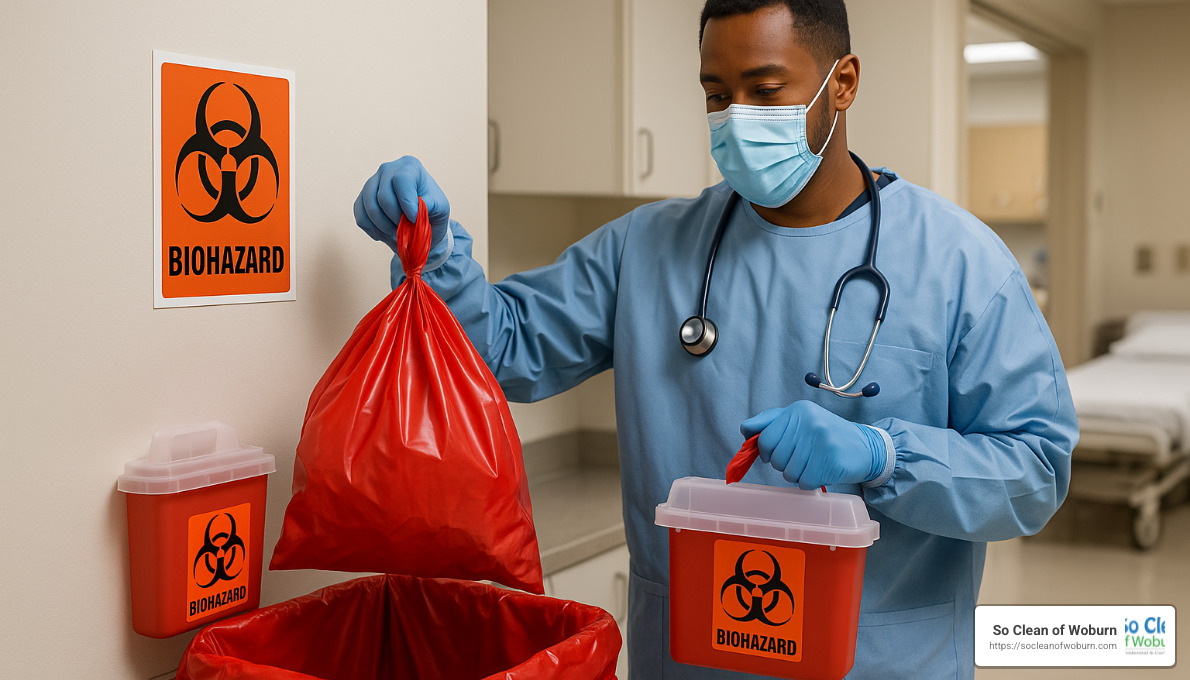
Red bag waste segregation requires meticulous attention to detail. These bright red bags aren’t just for show – they signal biohazardous materials that require special handling. Your cleaning service should be well-versed in properly identifying which materials belong in red bags, ensuring they’re properly sealed, and storing them securely away from public areas until proper disposal.
Sharps management deserves special attention. Nothing sends shivers down the spine quite like the thought of an improper needlestick. Professional cleaning services for medical offices should follow rigorous protocols for inspecting sharps containers, replacing them before they’re overfilled, and documenting each container change.
Healthcare administrators consistently observe that the difference between a good medical cleaning service and a great one often comes down to how they handle the details of waste management. It’s not the glamorous part of the job, but it’s where patient safety really begins.
Compliance with the EPA’s Resource Conservation and Recovery Act (RCRA) adds another layer of requirements. This regulation governs how hazardous waste must be identified, segregated, contained, and disposed of. Your cleaning team should maintain detailed documentation of all waste disposal, creating that all-important audit trail that protects your facility.
Personal protective equipment (PPE) isn’t just a COVID-era concern in medical settings – it’s always been fundamental to safe cleaning practices. According to OSHA guidelines on personal protective equipment, cleaning staff must use appropriate barriers based on exposure risk. This means different PPE for different tasks – from gloves when handling waste to full gowns, masks and eye protection when cleaning areas with high contamination risk.
At So Clean of Woburn, we believe compliance shouldn’t keep you up at night. Our teams are thoroughly trained in all aspects of medical cleaning regulations, so you can focus on what matters most – caring for your patients.
Hiring the Right Partner: Evaluating Professional Cleaning Services for Medical Offices
Finding the perfect cleaning partner for your medical facility isn’t just about getting the lowest price—it’s about finding a team that understands the unique challenges of healthcare environments. As you evaluate potential partners, this decision directly impacts your patients’ safety and your staff’s ability to provide quality care.
Benefits of outsourcing cleaning services for medical offices
Medical practice managers consistently report how outsourcing their cleaning needs has transformed their operations. The feedback from healthcare facilities is clear – once they hire professionals, their teams can finally focus on what they do best—caring for patients. The relief is typically immediate and noticeable.
The financial benefits are substantial too. Rather than managing cleaning staff, purchasing equipment, and staying current on changing regulations, outsourcing creates predictable costs without the headaches. You’ll eliminate employee benefits expenses, training investments, and equipment maintenance headaches in one fell swoop.
But perhaps the most valuable benefit is accessing specialized knowledge. Cleaning services for medical offices bring trained professionals who understand the nuances of healthcare environments. They arrive with established protocols specifically designed for different medical settings—from family practices to surgical centers.
This expertise translates directly to reduced liability. Professional cleaning companies carry appropriate insurance coverage and maintain thorough documentation systems that support your regulatory requirements. If an infection control concern arises, you’ll have an experienced partner to help address it properly.
Dental office managers throughout Massachusetts frequently note that having professionals handle cleaning means they sleep better at night. They know infection control protocols are being followed consistently, which protects both patients and practices.
Cleaning services for medical offices checklist
When you’re ready to find your cleaning partner, this practical checklist will help you identify a qualified provider:
Start with scope clarity. The best cleaning partnerships begin with crystal-clear expectations. Your potential provider should offer detailed protocols for each area of your facility and customize cleaning frequencies to your specific needs. Make sure they clearly outline where their responsibilities begin and end, especially in relation to your clinical staff’s cleaning duties. And don’t forget to ask about their emergency response capabilities—how quickly can they handle biohazard spills or unexpected contamination events?
Look for measurable performance standards. Quality providers welcome accountability. Ask how they measure their effectiveness—do they use objective testing methods like ATP swabs or fluorescent marking? Request examples of their quality inspection forms and reporting procedures. The best partners will have established feedback mechanisms and regular performance reviews built into their service model.
Prioritize communication protocols. Even the best cleaning program falls apart without good communication. Ensure you’ll have a designated point person for daily operations and clear escalation procedures for urgent situations. Ask about their documentation practices—how will cleaning records be maintained and shared? Regular performance review meetings should be standard practice.
At So Clean of Woburn, our janitorial services include specialized medical cleaning programs custom to healthcare facilities throughout Greater Boston and New Hampshire. We understand that medical environments face unique challenges, from strict regulatory requirements to the heightened importance of infection control.

When you partner with a local company like ours, you get more than just cleaning—you get a team that understands your community and is invested in your success. Our clients appreciate that we’re just a phone call away, ready to respond to their needs with the flexibility that only a local partner can provide.
Frequently Asked Questions about Medical Office Cleaning
How often should each area be cleaned and disinfected?
When it comes to medical facilities, cleaning isn’t a one-size-fits-all schedule. Different areas need different levels of attention based on their risk and usage patterns.
For high-touch surfaces like door handles, light switches, and reception counters, you’ll want cleaning multiple times throughout the day. These surfaces see constant contact and can quickly become transmission points for germs.
Exam rooms require terminal cleaning between each patient—no exceptions. This thorough disinfection process helps prevent cross-contamination between patients who might be seeing your providers for entirely different conditions.
Your waiting areas need complete cleaning daily, with regular spot cleaning as patients come and go. This is where your sickest patients often spend the most time!
Infection control specialists consistently emphasize that high-touch areas in healthcare settings should be cleaned multiple times per day to prevent infection. It’s not just about looking clean—it’s about breaking the chain of transmission.
Restrooms in medical facilities should receive full cleaning at least twice daily, with quick checks every 2-3 hours to ensure they remain sanitary and well-stocked. Staff break rooms need daily attention plus spot cleaning as needed—after all, your team deserves a clean space to recharge.
For specialized areas like procedure rooms, terminal cleaning between patients is essential, followed by deep cleaning at the end of each day. Floors in clinical areas should be mopped daily (more if visibly soiled), while carpeted areas need daily vacuuming and monthly deep cleaning to remove embedded contaminants.
The right frequency ultimately depends on your specific practice—patient volume, types of procedures performed, and facility size all play important roles in determining your ideal cleaning schedule.
What products are safe yet effective in healthcare settings?
Finding the sweet spot between powerful disinfection and safety is crucial in medical environments. You need products that kill pathogens without harming patients, staff, or equipment.
EPA-Registered Disinfectants form the backbone of any medical cleaning program. Look specifically for products on the EPA’s List N that demonstrate effectiveness against a broad spectrum of pathogens. Pay special attention to kill claims for healthcare-associated infections—these should match the specific risks in your facility.
One often-overlooked factor is contact time (also called dwell time). The most powerful disinfectant won’t work properly if it’s wiped away too quickly. Professional cleaning services for medical offices understand these nuances and train their staff accordingly.
Cleaning experts frequently note that many facilities make the mistake of using hospital-grade products incorrectly. A product that needs 10 minutes of wet contact time can’t be sprayed and immediately wiped dry if you want full pathogen elimination.
When considering safety, look for products with low VOC emissions that won’t trigger respiratory issues in sensitive patients. Products should also be non-corrosive to protect your valuable medical equipment and surfaces.
For practices interested in greener alternatives, several effective options exist:
– Hydrogen peroxide-based disinfectants offer powerful cleaning with fewer harsh chemicals
– Citric acid formulations provide natural disinfection for appropriate surfaces
– Thymol-based products derived from thyme oil can be effective against many pathogens
– Electrolyzed water systems create powerful disinfectants on-site from salt, water, and electricity
When used correctly, hospital-grade disinfectants can eliminate 99.9% of harmful bacteria and viruses. The key is ensuring proper application—including adequate coverage and respecting those all-important dwell times.
What certifications should cleaning staff hold?
Would you let someone without medical training treat your patients? Of course not! Similarly, cleaning staff working in healthcare environments need specialized training and certifications to properly protect your facility.
At minimum, cleaning personnel should hold these essential certifications:
– OSHA Bloodborne Pathogen training teaches proper handling of potentially infectious materials
– Hazard Communication Standard certification ensures understanding of chemical safety
– Personal Protective Equipment (PPE) training covers proper use and disposal of protective gear
– Medical waste handling certification addresses safe management of regulated waste
For facilities with specialized needs, additional credentials become important. Surgical centers should look for staff with Certified Surgical Cleaning Technician (CSCT) credentials, while hospitals benefit from cleaners holding Certified Healthcare Environmental Services Technician (CHEST) certification.
Training directors in the healthcare cleaning industry consistently emphasize the significant difference between a general cleaner and a trained healthcare environmental services professional. Medical cleaning specialists understand not just the ‘how’ but the ‘why’ behind critical protocols.
Certification isn’t a one-and-done process, either. Professional cleaning services for medical offices should provide their teams with annual recertification in critical areas and continuing education on emerging pathogens and evolving best practices.
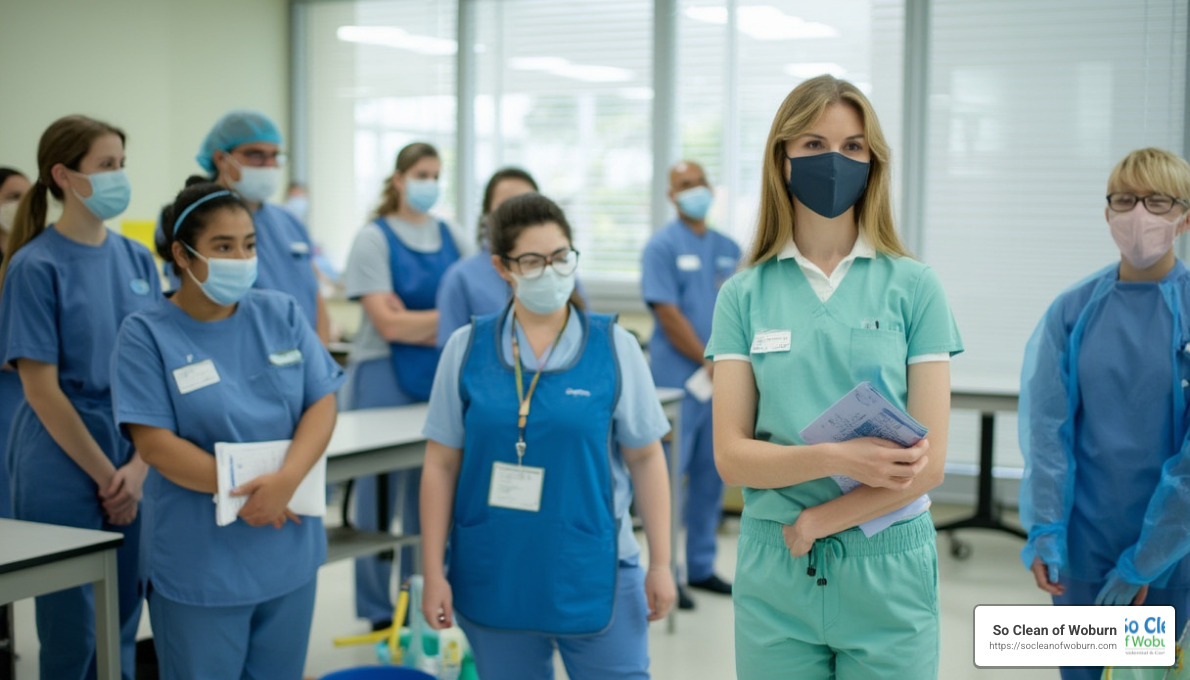
At So Clean of Woburn, we invest heavily in comprehensive training specific to medical facility cleaning. Our team members understand both the technical aspects of disinfection and the critical role they play in your infection control program. This deeper knowledge translates into more effective cleaning and better protection for your patients and staff throughout Greater Boston and New Hampshire.
Conclusion
When it comes to healthcare environments, cleanliness isn’t just a preference—it’s a necessity that directly impacts patient outcomes. Professional cleaning services for medical offices bridge the gap between standard janitorial work and the specialized sanitization your facility requires to keep everyone safe.
Throughout this guide, we’ve explored how medical cleaning differs from conventional approaches, from the specialized training and hospital-grade disinfectants to the stringent protocols that prevent cross-contamination. We’ve seen how proper cleaning directly contributes to infection prevention, regulatory compliance, and ultimately, patient confidence in your practice.
Think about it—every exam room, waiting area, and high-touch surface in your facility represents both an opportunity to impress patients and a potential infection control challenge. The right cleaning partner transforms these challenges into strengths that showcase your commitment to exceptional care.
At So Clean of Woburn, we’ve built our reputation by understanding the unique needs of medical facilities throughout Greater Boston and New Hampshire. Our team approaches each healthcare environment with the knowledge that what we do matters—not just for appearances, but for the well-being of everyone who walks through your doors.
We offer customized, affordable medical-grade cleaning solutions that keep your facility not just looking clean, but genuinely safe. Our approach combines powerful disinfection with eco-friendly practices, creating healing environments where patients feel comfortable and staff can focus on providing care rather than worrying about cleanliness.
Whether you run a cozy family practice, a busy dental office, or a specialized surgical center, we tailor our services to your specific needs. Our fully-trained team stays current with evolving standards and best practices, ensuring your facility always meets or exceeds regulatory requirements.
Ready to experience the difference that professional medical cleaning can make? For more information about our comprehensive office cleaning services and how we can support your healthcare facility, reach out today. We’re here to be your partner in creating the clean, safe environment your patients deserve and your staff needs to deliver exceptional care.