

Why Choose an Eco-Friendly Approach to Mold?
Biodegradable mold cleaner options offer a safer, effective way to tackle mold without exposing your family to harsh chemicals. Your best eco-friendly choices include:
- Citrus-based cleaners with d-Limonene for hard surfaces
- Enzyme-based solutions that break down mold at its source
- Hydrogen peroxide cleaners for deep penetration into porous materials
- Vinegar-based products that kill over 80% of mold species
- Multi-enzyme formulas safe for fabrics and around pets
Choosing the right mold cleaner is crucial. Traditional bleach-based cleaners create toxic fumes and only whiten surface mold, leaving the roots to regrow quickly.
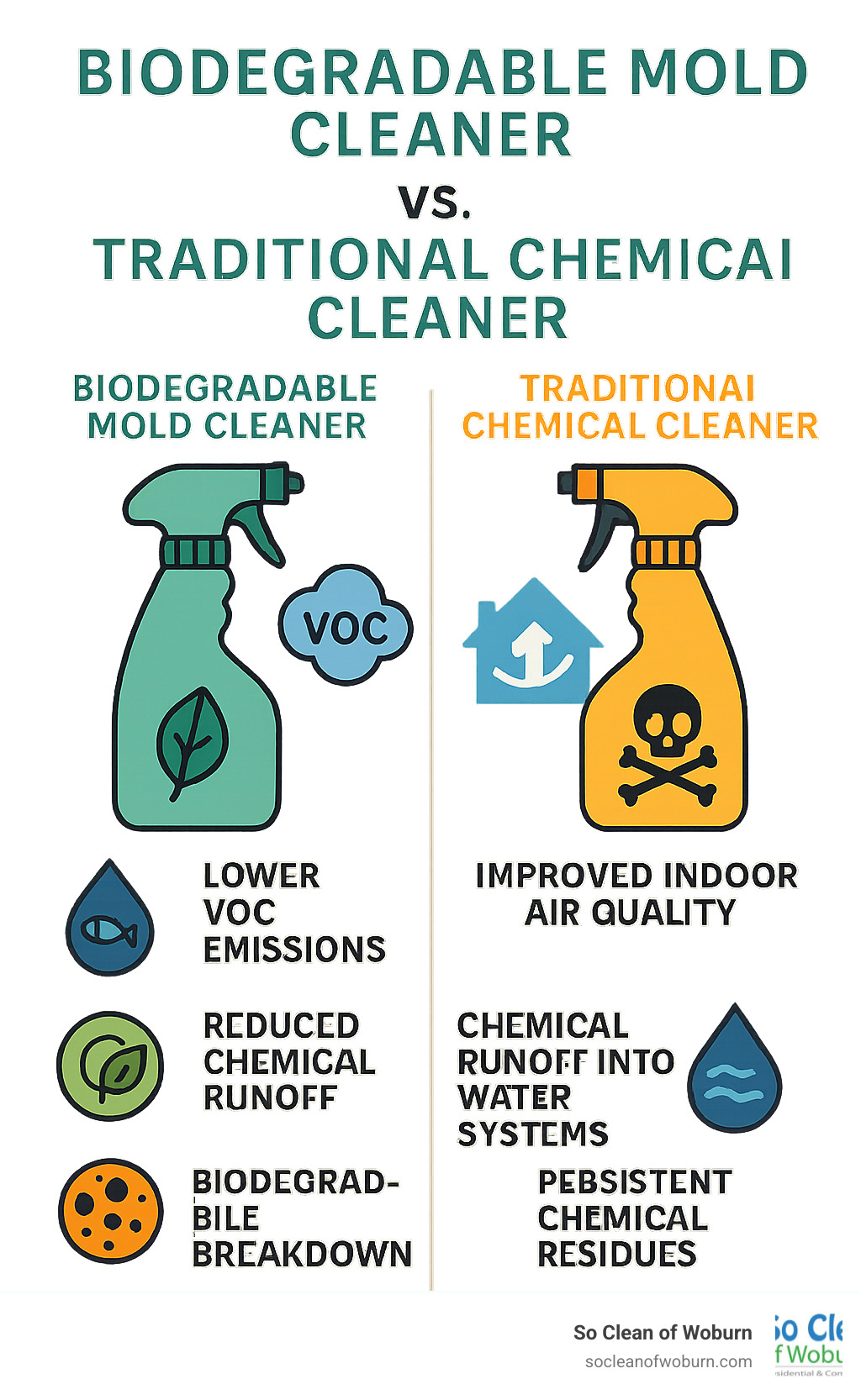
The health benefits are clear. Biodegradable cleaners reduce chemical exposure and limit harmful substances released into the environment. They contain fewer volatile organic compounds (VOCs) than conventional cleaners, improving indoor air quality.
These cleaners also break down naturally without creating micro-toxins or water pollution, making them safer for your family, pets, and the planet.
Biodegradable options also offer peace of mind. You can clean effectively without worrying about lingering chemical residues in your Massachusetts or New Hampshire home.
The Science Behind How Biodegradable Mold Cleaners Work
When you find mold in your home, you’re dealing with a living organism spreading mold spores through your indoor air. Understanding how biodegradable mold cleaner products work explains why they’re often more effective than traditional bleach-based solutions.
Mold is resilient. It sends out microscopic spores that float through the air to find new places to grow. On porous surfaces like drywall or wood, they dig in deep with root-like hyphae. On non-porous surfaces like tile or glass, mold is easier to remove.
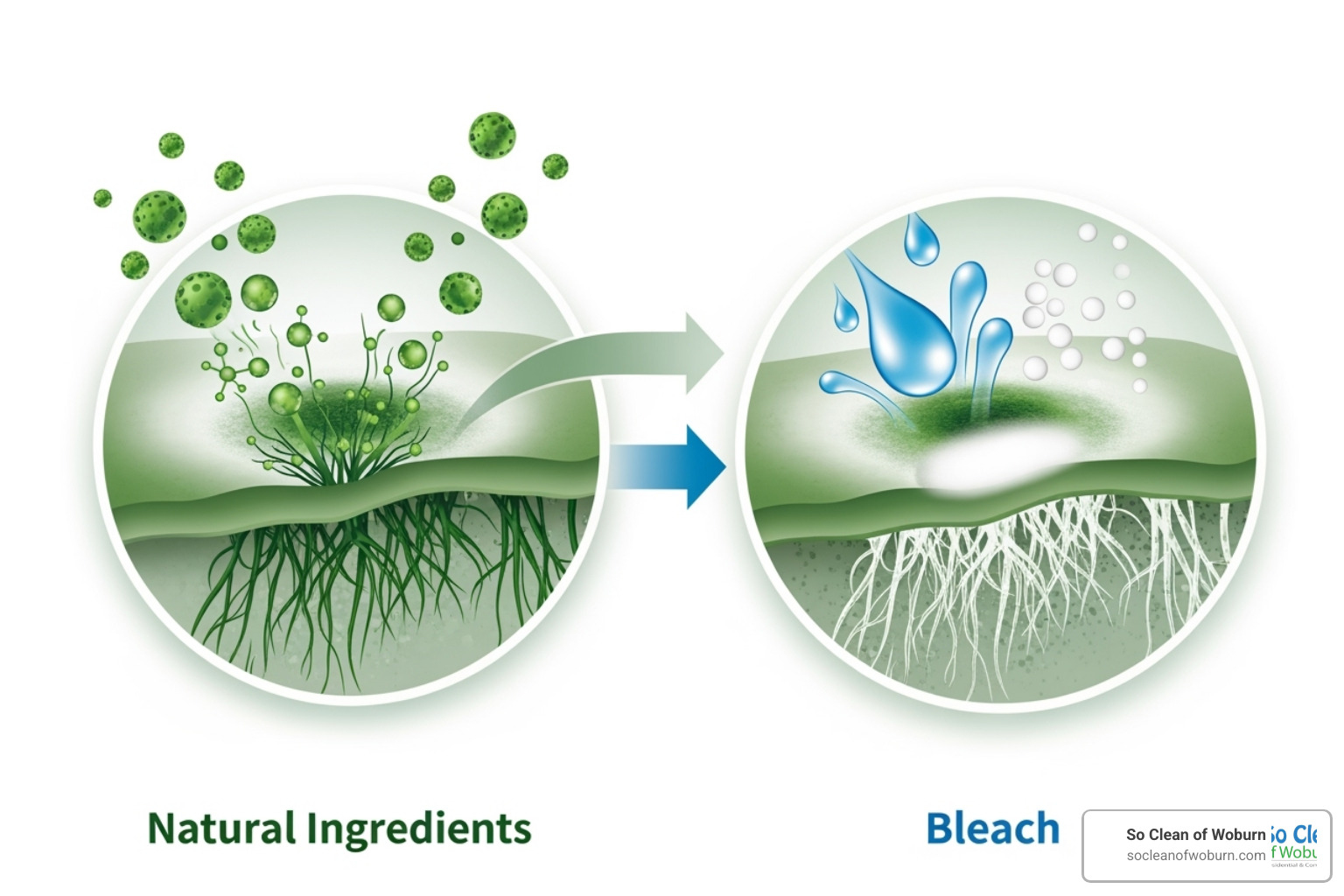
Here’s where the science gets interesting. Traditional bleach only works on the surface level – it whitens what you can see but leaves the roots alive and ready to regrow. Biodegradable mold cleaners take a completely different approach.
Enzymatic action is a fascinating mechanism. Enzymes are designed to break down organic matter. Multi-enzyme formulas “digest” mold at a cellular level, dismantling the visible growth and root system. This eliminates the stain and the odor-causing compounds that create musty smells.
Oxidative cleaning provides another powerful weapon against mold. Hydrogen peroxide-based cleaners create a bubbling action when they contact mold, releasing oxygen that lifts contamination from surfaces and breaks down the mold’s cellular structure. This bubbling effect helps the cleaner penetrate deeper into porous materials than bleach ever could, reaching those hidden root systems.
Acidic breakdown offers a third approach that’s both simple and effective. Natural acids like those found in white vinegar disrupt mold’s ability to grow and thrive. The mild acidity actually changes the environment around the mold, making it impossible for the organism to survive. This method works on over 80% of common mold species found in homes.
Plant-based solvents add yet another layer of effectiveness. Citrus extracts containing d-Limonene don’t just smell fresh – they act as powerful natural solvents that dissolve the greasy residues often associated with mold growth. These compounds can penetrate surfaces and lift contaminants in ways that harsh chemicals simply can’t match.
The real beauty of these natural mechanisms lies in their thoroughness. While bleach might make your bathroom look clean temporarily, biodegradable mold cleaners actually eliminate the problem at its source, breaking down naturally without leaving harmful residues behind.
A Roundup of the Best Types of Biodegradable Mold Cleaner
Finding the right biodegradable mold cleaner doesn’t have to be overwhelming. Think of it like choosing the right tool for the job – each type has its own strengths, and understanding them will help you tackle mold problems more effectively while keeping your Massachusetts or New Hampshire home safe.
Plant-Based & Citrus Extract Cleaners
Citrus oil cleaners harness d-Limonene, a natural compound in citrus peels, to create effective mold removers.
These cleaners work by dissolving the greasy, oily substances that mold often clings to. The degreasing properties of d-Limonene make quick work of mold on hard surfaces like bathroom tiles, kitchen countertops, and sealed wood surfaces. They also leave behind a pleasant scent that smells clean, not like harsh chemicals.
These citrus-based solutions break down the mold’s structure while removing residue that could attract new growth. They’re especially effective on hard surfaces where other cleaners might leave a film.
Enzyme-Based Biodegradable Mold Cleaner Solutions
Enzyme cleaners are where science meets nature. These multi-enzyme formulas contain proteins that “eat” organic matter like mold.
What sets enzyme cleaners apart is their ability to tackle both the visible mold and the odor elimination that comes with it. Unlike masking agents, enzymes break down the odor-causing compounds at their source. This makes them incredibly safe for fabrics – you can use them on curtains, upholstery, and carpets without worrying about damage.
For pet owners, this is particularly good news. These cleaners are safe for pets and won’t create toxic fumes that could harm your furry family members. The biological action continues working even after you’ve finished cleaning. For more insights into keeping your cleaning routine pet-friendly, explore our guide to Non-Toxic Cleaning Products.
Hydrogen Peroxide-Based Cleaners
Hydrogen peroxide acts as an oxidizing agent, creating a distinctive bubbling action when it contacts mold. These bubbles aren’t just for show; they physically lift mold particles and break down the cellular structure anchoring it to surfaces.
The deep penetration capability of hydrogen peroxide makes it particularly valuable for porous materials. While bleach sits on surfaces and whitens what it touches, hydrogen peroxide reaches into wood grain and grout lines where mold roots hide.
As a natural disinfecting agent, hydrogen peroxide kills not just mold but also bacteria and viruses. It’s significantly safer than chlorine bleach because it breaks down into water and oxygen. This makes it especially effective on wood and grout where you need both cleaning power and material safety.
Acetic Acid (Vinegar) & Other Natural Acid-Based Cleaners
White vinegar contains acetic acid that disrupts mold’s ability to survive. It’s remarkably cost-effective and can handle most residential mold problems.
The DIY potential here is enormous. You can use undiluted white vinegar directly on mold, let it sit for an hour, then scrub away. For smaller spots, lemon juice with its natural acid content works beautifully, especially when you want to brighten surfaces while you clean.
Vinegar is impressive because it kills most mold species—over 80% effective. As a natural disinfectant, it removes visible mold and helps prevent regrowth by creating an inhospitable environment for mold.
Tea tree oil mixed with vinegar creates an even more potent combination, though the scent might be stronger than some prefer. The beauty of these natural acid-based solutions is their simplicity and safety. For more ideas on incorporating these natural solutions into your cleaning routine, check out our comprehensive guide to Eco-Friendly Cleaning Products.
Comparing Biodegradable Cleaners to Bleach and Harsh Chemicals
When mold shows up, your first instinct might be to grab the bleach. But while bleach might make mold stains disappear, it’s often just a clever trick.
Think of bleach as makeup for mold. It’s fantastic at removing color, which is why those dark stains vanish. But on porous surfaces like wood, drywall, or grout, bleach can’t penetrate deep enough to kill the mold’s roots. It essentially gives the visible mold a bleach job, leaving the underlying structure alive and ready for a comeback. This means you might find yourself in a frustrating cycle of cleaning the same spots repeatedly.
Biodegradable mold cleaner solutions work differently. Instead of just whitening the surface, they penetrate porous materials and break down mold at its source. Hydrogen peroxide cleaners bubble deep into wood and grout, while enzyme-based solutions digest the organic matter mold feeds on. Tea tree oil and other plant-based ingredients can soak into fabrics and porous surfaces, providing lasting protection.
The health differences are eye-opening. Bleach releases toxic chlorine gas fumes that can irritate your respiratory system, especially if you have asthma or allergies. Mixing bleach with other common cleaners like ammonia or vinegar can create dangerous chemical reactions. These traditional cleaners often pack other harsh ingredients like formaldehyde and phosphates that contribute to poor indoor air quality.
In contrast, biodegradable options release significantly fewer volatile organic compounds (VOCs). Many are formulated to be non-toxic and hypoallergenic, making them safe to use around children, pets, and anyone with chemical sensitivities. You won’t need to evacuate the house or hold your breath while cleaning.
Environmentally, the difference is stark. When you rinse bleach and harsh chemicals down the drain, they persist in our water systems, harming aquatic life. Biodegradable cleaners break down naturally into harmless substances, reducing water pollution and your ecological footprint. Many are even gray water and septic tank safe.
| Feature | Biodegradable Mold Cleaners | Bleach (Sodium Hypochlorite) |
|---|---|---|
| Effectiveness on Porous Surfaces | Penetrates deeply to kill mold roots (hydrogen peroxide, tea tree oil, enzymes) | Primarily whitens surface; often doesn’t kill mold roots within porous materials |
| Safety (Fumes/VOCs) | Significantly lower VOCs, non-toxic, minimal harsh fumes. Safer for indoor air quality | Releases toxic fumes (chlorine gas), high VOCs. Can cause respiratory and skin irritation |
| Environmental Impact | Biodegradable; breaks down into harmless substances; reduces water pollution | Harmful to aquatic life; persists in environment; creates toxic byproducts when mixed |
| Stain Removal vs. Killing Mold | Kills mold AND removes stains by breaking down organic matter | Primarily removes visible stains by bleaching; often leaves mold alive to regrow |
For families in Massachusetts and New Hampshire who want a truly clean and healthy home, switching to biodegradable solutions isn’t just better for your family’s well-being – it’s better for the planet too. Learn more about how we create a Healthy Home Cleaning environment that supports both your family and the environment.
Smart Shopping: How to Identify and Use Eco-Friendly Mold Removers
Shopping for a biodegradable mold cleaner can be confusing with so many products claiming to be “green.” Some companies use misleading marketing terms, a practice called “greenwashing.” With a few simple tips, you’ll become a pro at spotting the real deal and using it effectively.
Reading the Label: Certifications to Trust
Product certifications are like a seal of approval from experts. When you see these labels, you know an independent party has tested the product and confirmed its claims.
EPA Safer Choice is your gold standard. When the Environmental Protection Agency puts their stamp on a cleaning product, you can trust it’s been reviewed for safety and contains ingredients that are genuinely safer for your family and the environment.
Green Seal certification means the product has met strict environmental standards from an independent, non-profit organization.
For cleaning products with USDA Organic ingredients, you’re getting the same quality standards that apply to organic food. It’s a great bonus when you see it.
Beyond certifications, look for clear ingredient lists. A truly effective biodegradable mold cleaner will proudly display terms like “chlorine-free,” “ammonia-free,” and “phosphate-free.” A long list of unpronounceable chemicals on a “natural” product is a red flag.
Many quality biodegradable cleaners come as concentrates, which is a great sign. These products pack more cleaning power into less packaging, reducing environmental impact and often providing better value.
The EPA provides excellent guidance on identifying greener cleaning products that we highly recommend.
Cost vs. Value: Are Biodegradable Mold Cleaners Worth It?
Yes, some biodegradable cleaners cost a bit more upfront, but they’re often the smarter financial choice in the long run.
You can expect to pay anywhere from $5 to $40 for a quality biodegradable mold cleaner, with most in the $10-20 range. Concentrated formulas stretch much further, making the cost per use surprisingly reasonable.
The real value comes from what you’re not paying for later. Harsh chemicals like bleach can damage and discolor surfaces, leading to costly repairs. Biodegradable cleaners are gentler on tiles and wood, helping preserve your home’s value.
Then there’s the health factor. By choosing safer products, you’re potentially reducing your family’s risk of respiratory issues and skin irritation linked to chemical exposure. You can’t put a price on breathing easier in your own home.
The environmental benefits extend beyond your front door, contributing to cleaner waterways and healthier ecosystems in Massachusetts and New Hampshire.
For more insights on creating a healthier home environment, explore our Green House Cleaning services.
Best Practices for Mold Removal and Prevention
Having the right biodegradable mold cleaner is just the beginning. Using it correctly and preventing mold from returning is where the real magic happens.
Safety always comes first. Gear up with rubber gloves, a breathing mask, and safety goggles, especially for larger moldy areas. Open windows and doors for good airflow. Even with gentler cleaners, protection is smart.
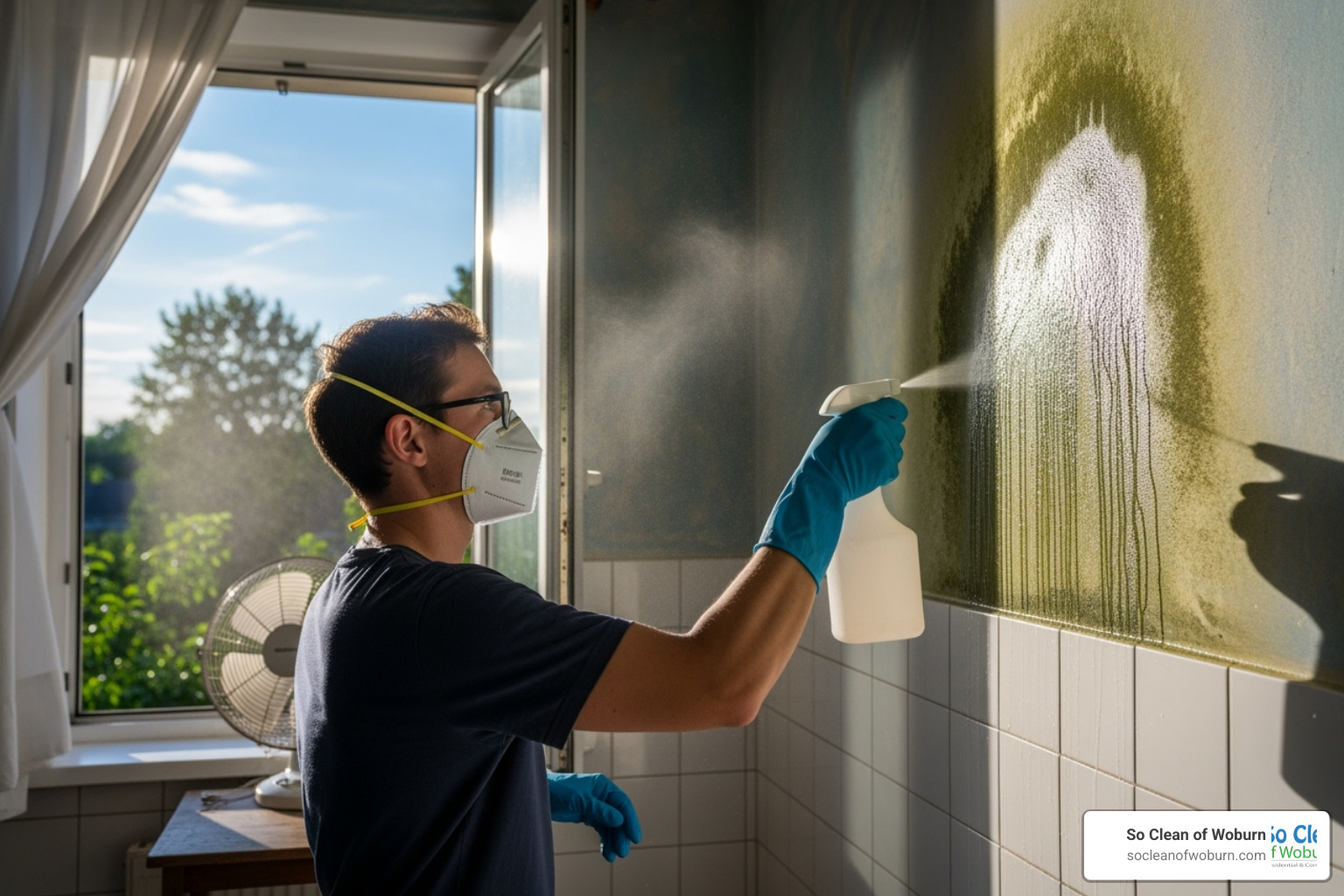
Before you spray, find and fix the moisture source. This is crucial – mold can’t survive without water. Look for leaky pipes, poor ventilation, or water damage. Mold can start growing in just four days after water exposure, so act fast.
When applying your cleaner, saturation is key. Spray the solution generously on the affected area. Most of these products need “dwell time” to work. Enzyme-based cleaners might need 15-60 minutes, while vinegar works best with at least an hour of contact time.
After the waiting period, scrub away the loosened mold with a brush. For stubborn spots, a paste of baking soda and water adds scrubbing power. Wipe everything clean with a damp cloth, then dry the area completely.
Prevention is your best friend. Control humidity with dehumidifiers in damp areas. Fix leaks the moment you spot them. Work biodegradable mold cleaners into your regular cleaning routine, especially in high-risk spots like shower corners and basement walls.
Keep surfaces dry after cleaning, and don’t let damp towels pile up. With these habits, you can maintain a fresh, healthy, mold-free home.
Frequently Asked Questions about Biodegradable Mold Cleaners
We get a lot of questions from homeowners across Massachusetts and New Hampshire who are curious about making the switch to safer cleaning solutions. Here are the most common questions we hear about biodegradable mold cleaner options:
Are biodegradable cleaners as effective as bleach on mold?
This is probably our most frequently asked question, and the answer might surprise you. Biodegradable mold cleaners are often more effective than bleach, especially on porous surfaces where mold really likes to dig in deep.
Here’s the thing about bleach – it’s great at making mold look gone because it bleaches away the dark stains. But on porous materials like wood, drywall, or grout, bleach typically just sits on the surface. The mold’s root system (called hyphae) stays alive underneath, ready to pop back up in a few weeks. It’s like painting over rust instead of actually treating it.
Biodegradable cleaners work differently. They contain active ingredients like hydrogen peroxide, natural enzymes, or acids (like the acetic acid in vinegar) that actually penetrate into porous materials and break down the mold at its source. Hydrogen peroxide, for example, creates that satisfying bubbling action that helps lift mold from deep within surfaces. White vinegar is effective against over 80% of mold species and can reach places bleach simply can’t.
Plus, you won’t be dealing with toxic fumes or worrying about your family breathing in harsh chemicals. Your indoor air quality stays healthier, and you get better results – it’s really a win-win situation.
Can I make my own effective biodegradable mold cleaner at home?
Absolutely! Some of the most effective mold fighters are probably sitting in your kitchen right now. We love recommending DIY solutions because they’re budget-friendly, safe, and surprisingly powerful.
White vinegar is your best friend here. Spray it undiluted directly onto the moldy area and let it sit for at least an hour. Don’t worry about the smell – it fades quickly, and you’ll be amazed at how well it works. For tougher jobs, you can make a paste with baking soda and water (about a 50/50 ratio works great). The baking soda adds gentle scrubbing power and helps absorb those musty odors.
Hydrogen peroxide from your medicine cabinet is another powerhouse. Use the standard 3% solution, spray it on, wait about 15 minutes, then wipe away. The bubbling action you’ll see is actually the peroxide breaking down the mold’s cellular structure.
For something a bit more specialized, try tea tree oil – mix 2 teaspoons with two cups of water in a spray bottle. It’s incredibly effective against fungi, though keep it away from kids and pets since it can be harmful if swallowed. Lemon juice works well for smaller spots thanks to its natural acid content, and grapefruit seed extract (about 10 drops in a cup of water) creates a solution that not only kills existing mold but can help prevent it from coming back.
These homemade solutions cost pennies compared to store-bought cleaners, and you know exactly what’s in them. Plus, you can feel good about what you’re using in your home.
When should I call a professional for a mold problem in my Massachusetts home?
While biodegradable mold cleaners are fantastic for everyday mold issues, there are definitely times when it makes sense to bring in the pros. We’ve seen it all here in the Greater Boston area, from minor bathroom mold to serious water damage situations.
Size matters when it comes to mold. The EPA recommends professional help if you’re dealing with an area larger than 10 square feet – that’s roughly a 3×3 foot patch. When mold covers that much space, it usually means there’s a bigger moisture problem that needs expert assessment and specialized equipment to fix properly.
Health concerns should never be ignored. If anyone in your household is experiencing respiratory issues, persistent allergies, or other symptoms that started around the same time you noticed mold, it’s time to call professionals. Some people are much more sensitive to mold exposure than others, and it’s not worth risking your family’s health.
Black mold deserves special attention. If you’re looking at fuzzy, dirt-like black growth, especially in areas that have been wet, don’t take chances. While not all black mold is the infamous “toxic black mold,” it’s safer to have professionals identify what you’re dealing with and handle the removal safely.
Flood damage is almost always a professional job. Mold can start growing within just four days after water damage, and once it gets established after a flood, it usually requires specialized drying equipment and techniques to prevent widespread growth throughout your home.
Finally, if mold keeps coming back despite your best efforts with biodegradable cleaners, that’s a clear sign there’s an underlying issue that needs professional diagnosis. We have the tools and expertise to find hidden moisture sources and ensure the mold is gone for good.
For serious mold situations in Woburn, the Greater Boston area, or anywhere in Massachusetts and New Hampshire, we’re here to help create a truly healthy environment for your family.
Conclusion: A Healthier Home Starts with Smarter Cleaning Choices
Making the switch to a biodegradable mold cleaner isn’t just about following the latest eco-friendly trend – it’s about making a genuinely smart choice for your family’s wellbeing and our shared environment. Think about it: every time you clean with harsh chemicals, you’re not just removing mold, you’re also introducing potentially harmful substances into the air your loved ones breathe.
The beauty of biodegradable cleaners lies in their ability to actually solve the mold problem rather than just hiding it. While bleach might make that unsightly black spot disappear from view, biodegradable mold cleaner solutions get to work breaking down the mold at its roots. This means you’re not just getting a temporary cosmetic fix – you’re getting lasting results that help prevent the mold from staging a comeback.
Your family’s health matters. When you choose enzyme-based cleaners, hydrogen peroxide solutions, or even simple white vinegar, you’re dramatically reducing your household’s exposure to volatile organic compounds and toxic fumes. This is especially important if you have children, pets, or family members with respiratory sensitivities. The peace of mind that comes from knowing your cleaning routine isn’t compromising anyone’s health? That’s priceless.
Environmental responsibility starts at home. Every bottle of biodegradable cleaner you choose over conventional chemicals is a vote for cleaner waterways and healthier ecosystems. These products break down naturally without leaving harmful residues that can persist in our environment for years. It’s a simple way to make a positive impact that extends far beyond your front door.
At So Clean of Woburn, we’ve seen how the right cleaning approach can transform homes throughout the Greater Boston area. Our commitment to healthy home cleaning means we understand that truly clean spaces shouldn’t come with a side of chemical exposure. Whether you’re dealing with a stubborn mold problem in your Woburn bathroom or need comprehensive cleaning services across North Shore, Essex County, or Middlesex County, we believe in solutions that protect both your family and the planet.
The evidence is clear: biodegradable cleaners offer superior effectiveness, improved safety, and genuine environmental responsibility. They represent a smarter approach to home maintenance – one that recognizes that a truly clean home is also a healthy home.
Ready to experience the difference that thoughtful, eco-friendly cleaning can make? Your family deserves a home that’s not just spotless, but genuinely safe and healthy too.

Learn more about our Green Cleaning Services Near You.