

Why Understanding Cleaning Chemicals Matters for Your Health and Safety
Cleaning chemicals are specialized formulations designed to remove dirt, kill germs, and maintain sanitary conditions in homes and workplaces. With over 1,700 different cleaning chemical products available for commercial and industrial use, understanding what you’re using becomes essential for both effectiveness and safety.
What are cleaning chemicals?
– Acids (pH <7): Remove mineral deposits, rust, and soap scum
– Alkalis (pH >7): Break down grease and organic matter through saponification
– Oxidizing agents: Bleach stains and kill microorganisms
– Surfactants: Lower surface tension to lift dirt and grime
– Solvents: Dissolve oil-based soils without water
Why they matter for busy professionals:
– Save time with targeted cleaning power
– Protect family health by eliminating harmful bacteria
– Prevent costly damage from using wrong products
– Create healthier indoor air quality when chosen properly
The science behind cleaning isn’t just about scrubbing harder – it’s about chemical reactions that break molecular bonds holding dirt to surfaces. However, exposure to cleaning supplies containing VOCs and other toxic substances can contribute to chronic respiratory problems, allergic reactions, and headaches. This makes understanding labels, proper dilution, and safe handling practices crucial for protecting your Massachusetts or New Hampshire home.
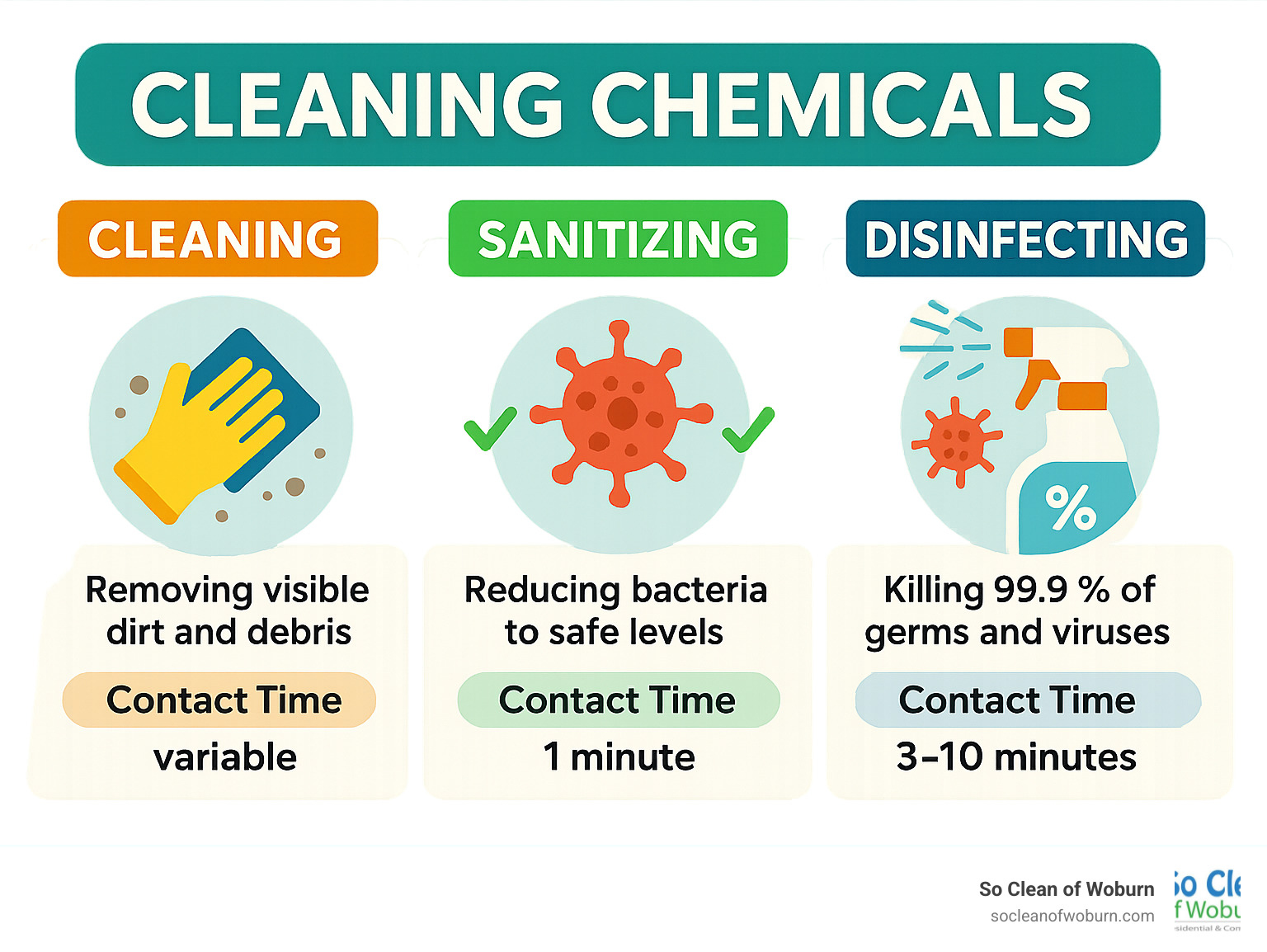
Cleaning chemicals terms at a glance:
– all purpose cleaners
– eco friendly cleaning products
– healthier home cleaning products
Understanding Cleaning Chemicals
When you grab that bottle of cleaner from under your sink, you’re actually reaching for a carefully engineered solution designed to wage molecular warfare against dirt and germs. Cleaning chemicals aren’t just soapy water in fancy bottles – they’re scientifically formulated products that target specific types of soil through predictable chemical reactions.
What Are Cleaning Chemicals & Why Do They Matter?
Cleaning chemicals are specialized solutions that remove dirt, eliminate germs, and maintain sanitary conditions by breaking down the molecular bonds holding contaminants to surfaces. These products protect your family’s health by eliminating disease-causing bacteria, viruses, and fungi that can multiply on surfaces throughout your home.
When chosen properly, quality cleaning products actually improve indoor air quality rather than pollute it. However, the wrong products can release harmful volatile organic compounds (VOCs) that cause headaches, respiratory irritation, and other health problems.
Professional-grade cleaning chemicals typically cost between $15-60 per gallon, depending on their specialization. Basic multipurpose cleaners run $15-30 per gallon, while specialized enzyme cleaners or hospital-grade disinfectants range from $25-50 per gallon.
Understanding the pH scale becomes crucial when selecting cleaning chemicals. Products with pH below 7 are acidic and excel at dissolving mineral deposits, rust, and soap scum. Those with pH above 7 are alkaline and break down grease, proteins, and organic matter.
The Science Behind Cleaning – How Molecules Break Down Dirt
The real magic happens at the molecular level, where invisible chemical reactions break apart the bonds holding dirt to your surfaces.
Surfactants serve as the workhorses in most cleaning formulations. These clever molecules have split personalities – one end loves water while the other end loves oil. When surfactants encounter greasy soil, they surround oil molecules to form tiny spheres called micelles, which then rinse away easily with water.
Saponification represents one of chemistry’s oldest cleaning tricks. When strong alkalis like sodium hydroxide encounter fats and oils, they literally convert the grease into soap through a chemical reaction.
Oxidation works by transferring oxygen atoms to target molecules, essentially burning away organic stains and killing microorganisms at the molecular level. Hydrogen peroxide and sodium hypochlorite (bleach) are powerful oxidizers that break down everything from wine stains to virus proteins.
Understanding these mechanisms helps you choose the right cleaning chemicals for specific jobs throughout your Massachusetts or New Hampshire home.
Core Types of Cleaning Chemicals & How They Work
Think of cleaning chemicals like a toolkit – each type is designed for specific jobs, and using the right tool makes all the difference.
| Chemical Type | pH Range | Best For | How It Works |
|---|---|---|---|
| Acids | 0-6 | Mineral deposits, rust, soap scum | Dissolve alkaline soils, neutralize bases |
| Alkalis | 8-14 | Grease, proteins, organic matter | Saponification, protein denaturation |
| Oxidizers | Varies | Stains, disinfection | Transfer oxygen to break down organics |
| Solvents | Varies | Oil-based soils | Dissolve like substances |
| Surfactants | 6-8 | General cleaning | Reduce surface tension, emulsify |
Alkalis, Acids & Oxidizers: The Heavy Hitters in Cleaning Chemicals
Alkalis are absolute champions at cutting through grease. Picture what happens when caustic soda meets that baked-on oven grease – it literally transforms the grease into soap through saponification. Sodium hydroxide and potassium hydroxide are the strongest players here, while ammonia and sodium carbonate offer gentler options for everyday degreasing tasks.
Acids tackle the mineral deposits that alkalis can’t touch. If you’ve ever struggled with soap scum on shower doors or lime scale on faucets, acids are your answer. Citric acid and acetic acid (yes, that’s vinegar!) work well for regular maintenance, while hydrochloric acid and phosphoric acid bring industrial-strength power to serious mineral buildup.
Oxidizing agents pull double duty as both stain fighters and germ killers. Hydrogen peroxide works by releasing oxygen that literally burns away organic stains and destroys microorganisms in 30 seconds to a minute. Sodium hypochlorite (household bleach) works similarly but requires more caution.
Solvents & Surfactants: The Unsung Heroes of Everyday Cleaning
Solvents handle oil-based messes that water simply can’t touch. Isopropyl alcohol at 70% concentration cuts through grease beautifully while evaporating quickly – perfect for cleaning glass and electronics without leaving streaks or residue.
Surfactants are the reason your soap actually works. These clever molecules make water “wetter” by reducing surface tension, so it can penetrate and lift away dirt more effectively. They surround each oil droplet, forming microscopic spheres called micelles that stay suspended in water instead of sticking back to your dishes or countertops.
Specialty & Industry Examples
Food service kitchens need heavy-duty degreasers with sodium hydroxide to cut through burnt-on grease from commercial cooking equipment. Healthcare facilities require hospital-grade disinfectants that eliminate dangerous pathogens like MRSA and C. difficile. Industrial plants rely on powerful descaling agents containing phosphoric or hydrochloric acid to remove mineral buildup from boilers and cooling systems.
Selecting Safe & Eco-Friendly Cleaning Chemicals
Making the switch to safer cleaning chemicals doesn’t mean sacrificing cleaning power. With the right knowledge, you can protect your family’s health while keeping your Massachusetts or New Hampshire home sparkling clean.
Reading Labels & Certifications Before You Buy
Think of product labels as your roadmap to safer cleaning. Green Seal and EPA Safer Choice certifications aren’t just marketing gimmicks – they represent rigorous testing that proves products work effectively while meeting strict health and environmental standards.
The term “low-VOC” or “VOC-free” on labels matters more than you might think. Scientific research on health effects of VOCs reveals that volatile organic compounds from conventional cleaners can trigger headaches, eye irritation, and respiratory problems.
Those diamond-shaped symbols on labels aren’t decorative – they’re hazard pictograms that warn about specific dangers. A flame symbol means flammable, while a skull indicates toxicity.
Biodegradable formulations break down naturally in the environment rather than accumulating in waterways. This matters for Massachusetts residents whose cleaning products eventually reach sensitive ecosystems like Cape Cod Bay or the Merrimack River.
More info about Eco-Friendly Cleaning Products
Choosing Non-Toxic or Low-Impact Alternatives
You probably already own some of the most effective cleaning chemicals available. White vinegar contains acetic acid that kills common bacteria like Salmonella and E. coli. While it can’t legally claim to be a disinfectant, it works surprisingly well for everyday cleaning tasks.
Baking soda acts as nature’s scrubbing powder. Its mild abrasive action removes grime without scratching surfaces, while its alkaline pH neutralizes odors by actually binding to smell-causing molecules.
Castile soap made from plant oils provides powerful cleaning without synthetic detergents. Essential oils like tea tree and eucalyptus contain natural antimicrobial compounds.
Hydrogen peroxide serves as an excellent chlorine-free bleach that breaks down into harmless water and oxygen. When you mix it with baking soda, the bubbling reaction helps break down stubborn grease and organic stains.
Simple homemade formulas can replace most commercial cleaners. Mix 3 tablespoons vinegar per quart of water for streak-free glass cleaning. Combine 1/4 cup vinegar, 2 cups water, and 1 teaspoon castile soap for an all-purpose cleaner that tackles most household messes.
More info about Non-Toxic Cleaning Products
Safe Storage, Handling, Dilution & Disposal of Cleaning Chemicals
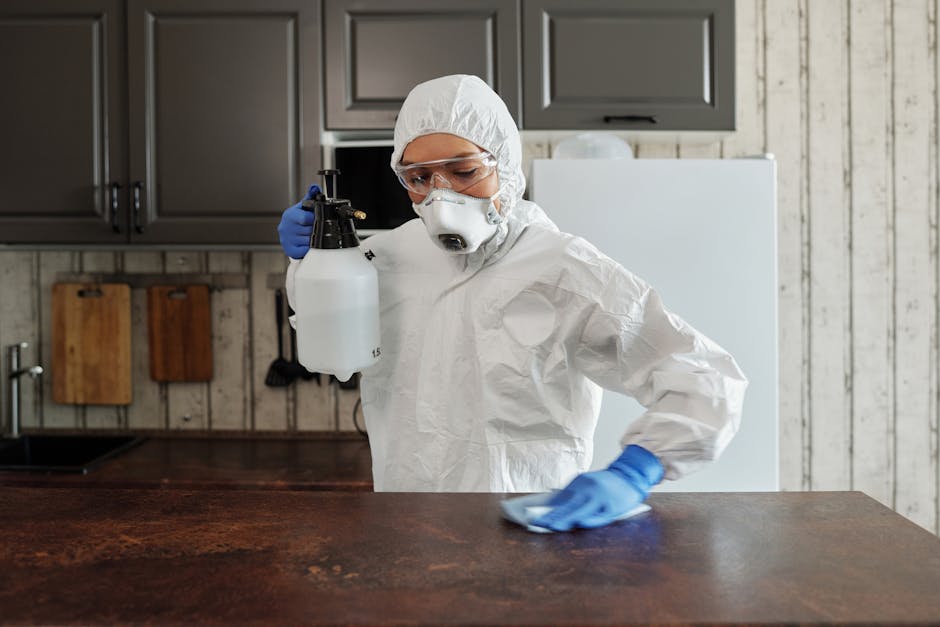
Even the most eco-friendly products can cause problems if not handled properly. A few simple habits can keep your family safe while ensuring your cleaning products work exactly as intended.
Why Dilution Ratios Matter for Effectiveness & Safety
Think of dilution ratios like cooking recipes – too much salt ruins the soup, but too little leaves it bland. With cleaning chemicals, getting the mix right affects both your wallet and your health.
Using products stronger than recommended doesn’t clean better. It just wastes money and increases the chance of skin irritation or respiratory problems. That 1:10 dilution ratio on the label means one part cleaner to ten parts water – and there’s science behind that number.
Take bleach solutions, for example. Industrial bleach at 12.5% concentration creates an effective cleaning solution at 1:10 dilution (that’s 1.25% strength) that stays potent for 30 days. Your regular household bleach at 5.25% makes a solution that works great but should be used within a week of mixing.
Quaternary ammonium disinfectants work perfectly at 0.1-2% concentrations. Go weaker and you’re not killing germs effectively. Go stronger and you’re paying extra for no benefit while potentially irritating your skin.
Practical Tips for Home & Workplace Chemical Safety
Safe chemical handling doesn’t require a chemistry degree – just common sense and a few key habits.
Personal protective equipment sounds fancy, but we’re talking about rubber gloves and safety glasses. Wear gloves every time you handle cleaning products, even gentle ones. When working with acids, alkalis, or bleach products, eye protection prevents accidental splashes that could cause serious injury.
Ventilation matters more than most people realize. Open windows or run exhaust fans when using any cleaning products, especially those containing ammonia or other volatile compounds.
Never, ever mix different cleaning chemicals. Mixing bleach with ammonia-containing products creates chlorine gas that causes immediate breathing problems and can be fatal in enclosed spaces. Even mixing bleach with products containing acids creates dangerous chemical reactions.
Storage should be simple and consistent. Keep products in their original containers with labels intact. Store chemicals in cool, dry areas away from direct sunlight. For families with young children, childproof storage isn’t optional – it’s essential.
For Massachusetts residents dealing with disposal, many communities offer household hazardous waste collection events throughout the year. Essex County, Middlesex County, and North Shore communities including Woburn, Burlington, and Reading provide regular collection programs.
More info about All Purpose Cleaners
Innovations & Trends Shaping the Future of Cleaning Chemicals
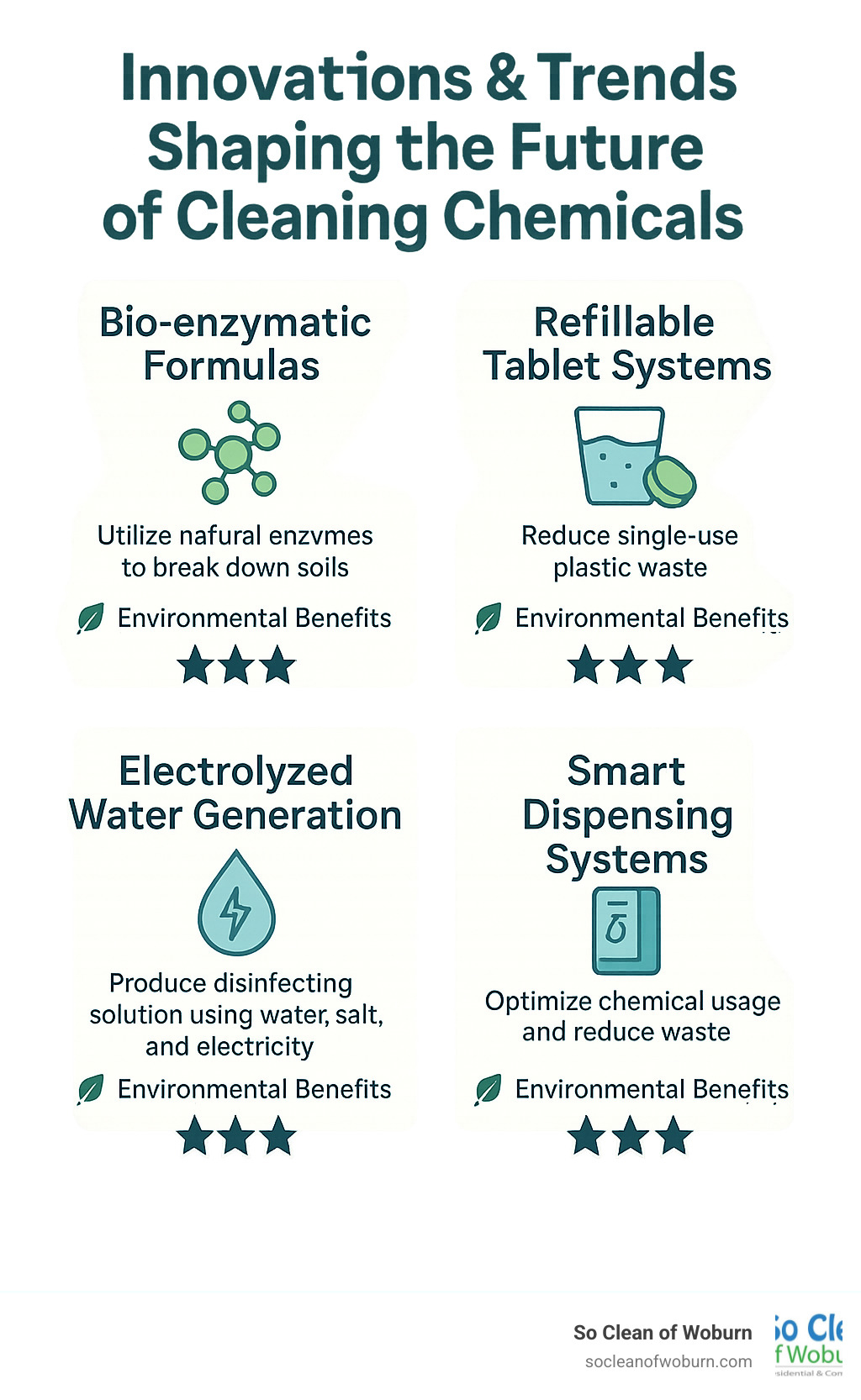
The world of cleaning chemicals is experiencing a green revolution that’s making our Massachusetts and New Hampshire homes healthier while protecting the environment.
Bio-enzymatic formulas are like having tiny biological helpers doing your cleaning work. Instead of harsh chemicals that attack everything in their path, these products use naturally occurring enzymes. Proteases snip apart protein stains from blood and sweat, lipases break down cooking grease and body oils, while amylases tackle starchy messes from pasta sauce and baby food.
What makes enzymes so special? They work at room temperature without producing toxic fumes or leaving harmful residues. It’s the same gentle process your body uses to digest food, just applied to cleaning your countertops and carpets.
Hydrogen peroxide blends are replacing old-fashioned bleach in many homes across the Greater Boston area. These innovative formulations combine hydrogen peroxide with organic acids to create powerful cleaning action that breaks down into nothing more than water and oxygen.
The packaging revolution is here with refill tablets and concentrates that dissolve in your reusable spray bottles. Instead of buying new plastic containers every month, you simply drop a tablet into water and watch it transform into professional-strength cleaner. This approach cuts packaging waste by up to 90%.
Smart dispensing systems take the guesswork out of mixing cleaning chemicals. These high-tech systems automatically adjust chemical concentrations based on water hardness and soil levels, ensuring perfect results every time while preventing waste.
Electrochemical activation sounds like science fiction, but it’s already being used in hospitals and restaurants. These systems generate powerful disinfectants on-site using only water, salt, and electricity.
These innovations are reshaping how we think about cleaning, moving away from the “stronger is better” mentality toward smarter, safer solutions that protect both our families and our planet.
Frequently Asked Questions about Cleaning Chemicals
How do dilution and contact time influence germ kill?
Understanding how cleaning chemicals work requires grasping two crucial factors: getting the concentration right and giving products enough time to do their job.
Dilution and contact time work as a team to determine how well disinfectants kill germs. Take alcohol, for example – 70% alcohol solutions actually work better than 90% alcohol because that extra water helps the alcohol penetrate bacterial cell walls.
Each disinfectant has its own sweet spot for concentration. Going beyond that optimal range won’t kill germs any faster – you’ll just waste product and potentially create safety hazards. The alcohol needs at least 30 seconds of contact time to kill most bacteria and viruses.
Hydrogen peroxide-based disinfectants can work in as little as 30 seconds to one minute when used at proper concentrations. Meanwhile, quaternary ammonium compounds may need 5-10 minutes of contact time to achieve the same level of germ kill.
Here’s the key takeaway: using a product at half strength for twice as long doesn’t give you equivalent results. The chemical concentration must reach a minimum threshold to be effective.
Are natural cleaners really as effective as commercial cleaning chemicals?
This is probably the question we hear most from our Massachusetts and New Hampshire clients, and the honest answer is: it depends on what you’re trying to clean and how quickly you need results.
Natural cleaners can be surprisingly effective for many everyday cleaning tasks. White vinegar, for instance, kills common troublemakers like Salmonella and E. coli. However, it doesn’t meet FDA requirements for official disinfectant labeling because it can’t achieve that gold standard of 99.9% kill rates against all test organisms.
Baking soda excels as nature’s odor eliminator and provides gentle scrubbing power, but it won’t kill germs or tackle heavy grease buildup on its own. Essential oils like tea tree oil have genuine germ-fighting properties, but they work more slowly than their synthetic counterparts.
The magic often happens when you combine natural ingredients. Mixing baking soda with hydrogen peroxide creates a fizzy reaction that helps break down organic soils, while adding a drop of dish soap to the mixture improves its ability to cut through grease.
For routine cleaning in healthy households, natural products often provide perfectly adequate results with fewer health and environmental concerns. However, situations requiring rapid disinfection may still benefit from commercial cleaning chemicals.
What certifications should I look for when buying eco-friendly products?
Shopping for eco-friendly cleaning chemicals can feel overwhelming with all the green claims on labels. Several trustworthy certification programs do the homework for you.
EPA Safer Choice is like the gold star of cleaning product certifications. This program puts products through rigorous testing to verify they meet strict safety standards for both human health and environmental protection.
Green Seal certification takes a comprehensive approach, requiring products to actually clean well while minimizing their environmental footprint throughout their entire lifecycle.
USDA Organic certification applies to cleaning products made from organic agricultural ingredients. While not every effective green cleaner qualifies for organic certification, this label ensures minimal synthetic chemical content.
Be skeptical of vague terms like “natural,” “eco-friendly,” or “green” without third-party certification backing them up. These terms aren’t regulated, so they might not indicate any meaningful environmental or health benefits.
Conclusion
Understanding cleaning chemicals empowers you to make informed decisions that protect your family’s health while achieving excellent cleaning results. From the molecular science of surfactants and saponification to the practical considerations of dilution ratios and storage safety, knowledge truly is your best tool for effective cleaning.
The journey through cleaning chemistry reveals how simple ingredients like surfactants break down grease at the molecular level, while oxidizers like hydrogen peroxide literally burn away stains and kill germs. When you understand that cleaning chemicals work through predictable chemical reactions rather than just “scrubbing power,” you can choose the right product for each specific challenge.
The cleaning industry continues evolving toward safer, more sustainable solutions without compromising effectiveness. Bio-enzymatic formulas use nature’s own tools to break down soils, while hydrogen peroxide systems provide powerful disinfection that breaks down into harmless water and oxygen.
What excites us most is how these innovations make it easier for Massachusetts and New Hampshire families to maintain healthy homes without exposure to unnecessary toxins. You no longer have to choose between effective cleaning and family safety.
At So Clean of Woburn, our expert team stays current with these developments to provide the safest, most effective cleaning solutions for homes and businesses throughout the Greater Boston area. We understand that every space has unique cleaning challenges – whether it’s hard water stains in your Woburn bathroom, cooking grease in your Burlington restaurant kitchen, or high-traffic soil in your office lobby.
Our experience serving Essex County and Middlesex County families has taught us that proper selection and use of cleaning chemicals makes all the difference between frustrating cleaning sessions and satisfying results. When you know why certain products work better for specific soils, cleaning becomes less of a chore and more of a science.
For personalized guidance on choosing, storing, and using the right cleaning chemicals for your specific needs, our team is here to help. We believe everyone deserves to live and work in spaces that are both spotlessly clean and genuinely healthy.
More info about Healthier Home Cleaning Products