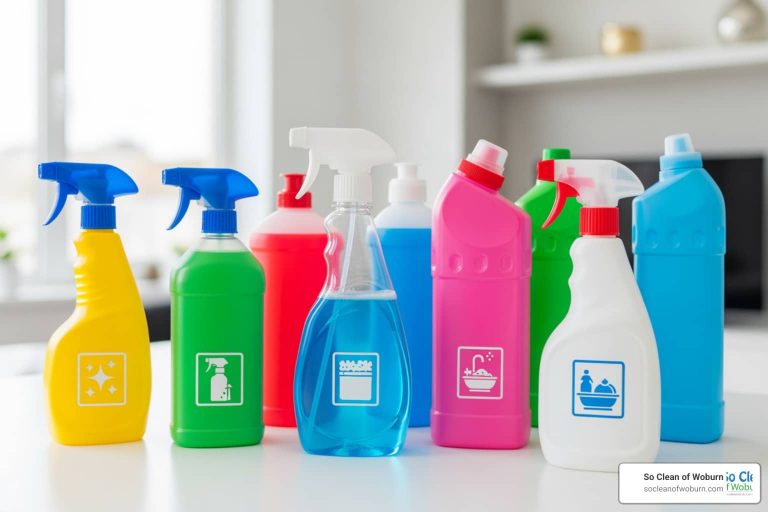
Why Choosing the Right Commercial Tile Cleaner Matters

Commercial tile cleaner products are essential for maintaining professional-looking floors in high-traffic business environments. Unlike residential cleaners, these formulations are powerful and designed to tackle heavy soiling, grease, and embedded grime that standard mopping can’t handle.
Quick Guide: Choosing the Best Commercial Tile Cleaner
- High-Alkaline Cleaners – Best for grease, soap scum, and stripping old wax.
- Acidic Cleaners – Ideal for mineral deposits, rust, and cement haze.
- pH-Neutral Cleaners – Safe for daily maintenance on natural stone and sealed surfaces.
- Eco-Friendly Options – Certified, biodegradable formulas for sensitive areas.
First impressions start from the ground up. Whether you manage an office, retail space, or restaurant in Massachusetts, your tile floors face constant foot traffic that grinds dirt, oils, and allergens deep into grout lines. In fact, professional cleaning can remove up to 96.5% of common allergens that regular mopping just spreads around.
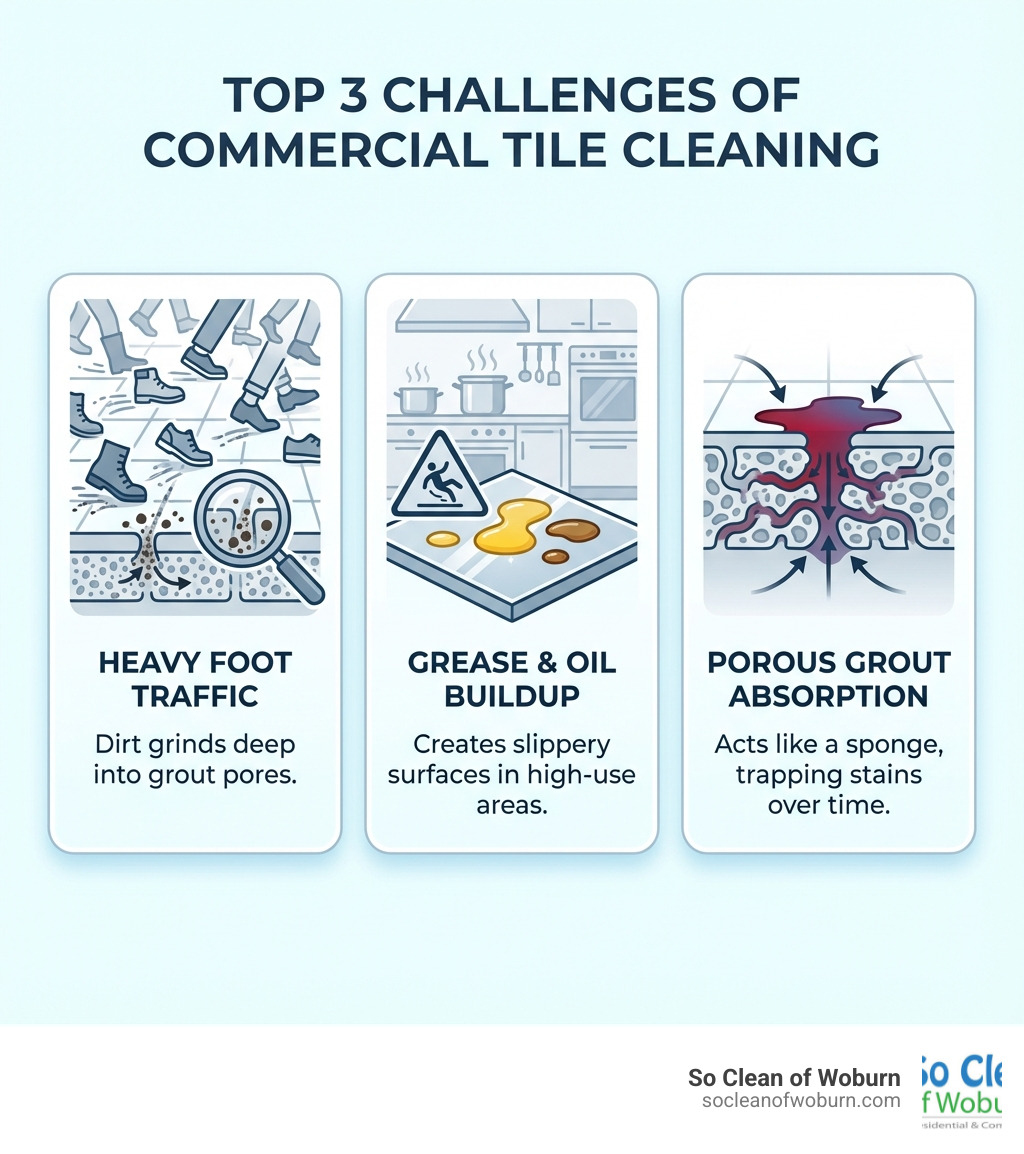
The biggest challenges for commercial tile include:
- Heavy foot traffic grinding dirt into porous grout
- Grease and oil buildup in kitchens and industrial areas
- Soap scum and mineral deposits in restrooms
- Stubborn stains and discoloration
Choosing the right cleaner protects your investment, creates a healthier environment, and maintains your professional image. The wrong product can damage tile, strip sealants, and waste money.
As Bill McGrath, owner of So Clean of Woburn, I’ve spent years helping businesses in Greater Boston maintain pristine spaces. I’ve learned that selecting the right commercial tile cleaner is the key to achieving floors that truly shine.
Simple guide to commercial tile cleaner:
Why Your Business Needs More Than a Mop and Bucket
In busy commercial settings across Massachusetts, from offices in Woburn to retail spaces in Burlington, tile floors endure far more abuse than residential ones. It’s not just visible dirt; it’s deep-seated grime, allergens, and bacteria that compromise hygiene and appearance.
High traffic grinds dirt and debris into the microscopic pores of tile and grout, causing heavy soiling that household cleaners can’t handle. Commercial kitchens face daily grease and oil buildup, which penetrates porous grout, creating slippery hazards and breeding grounds for bacteria. Restrooms and locker rooms accumulate soap scum and mineral deposits, leading to unsightly, unsanitary conditions.
Porous grout acts like a sponge, absorbing spills and trapping allergens. Professional cleaning can remove up to 96.5% of these allergens, improving indoor air quality. Residential cleaners lack the strength to break down heavy commercial soils, making them ineffective for maintaining professional standards.
The Problem with Standard Mopping
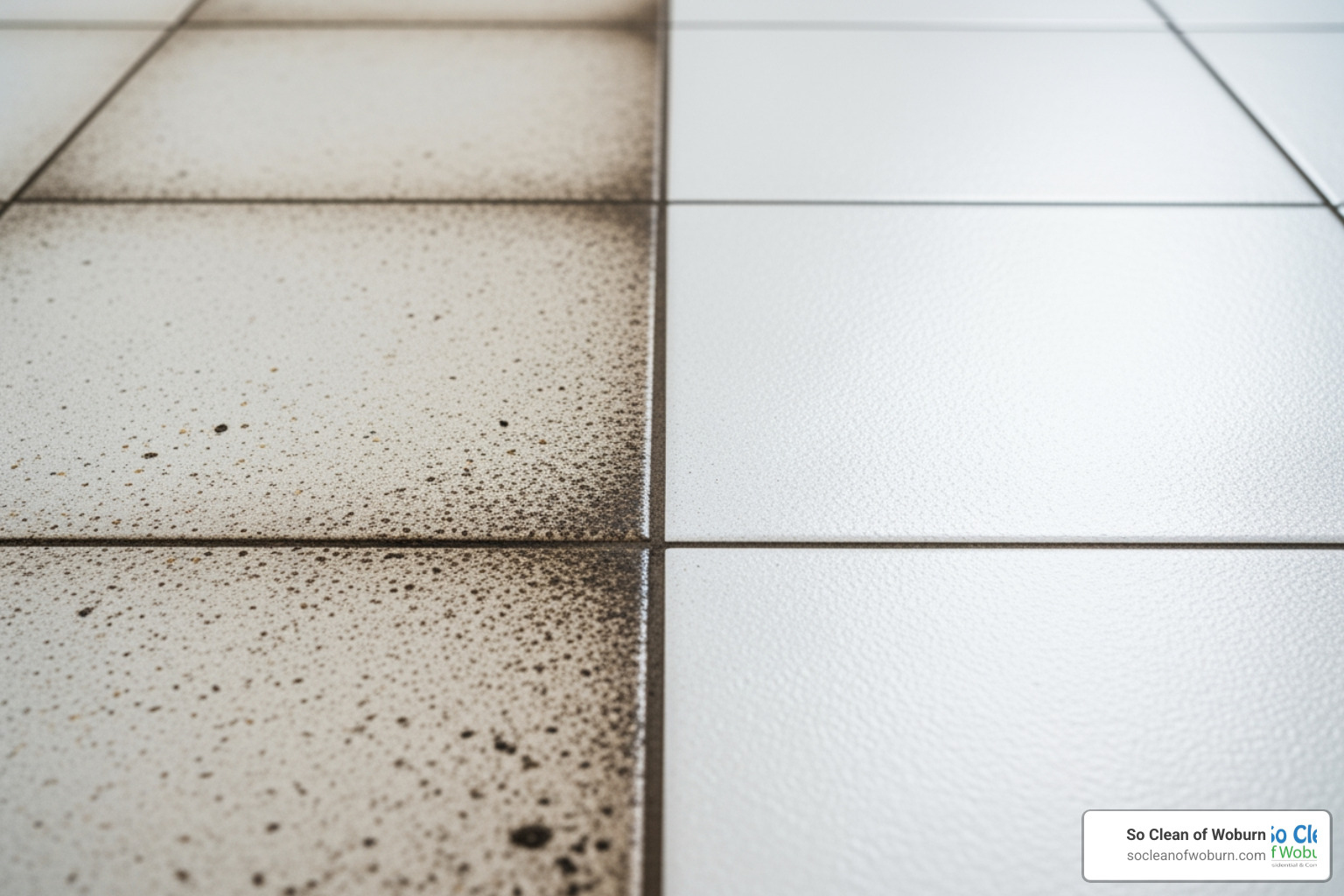
A mop and bucket may seem like a quick fix, but for commercial tile and grout, it often makes things worse. Standard mopping doesn’t remove dirt—it redistributes it. Dirty water gets pushed into porous grout lines, causing them to darken over time and look perpetually dirty.
Mopping is also ineffective against tough commercial soils. It smears grease and oil, creating unsafe, slick surfaces. It can’t break down soap scum in restrooms, leading to unsightly buildup. Mopping provides a superficial clean at best and can push grime deeper into your grout. True cleanliness requires methods designed for deep extraction.
Commercial vs. Residential Cleaners: What’s the Difference?
The difference between a commercial tile cleaner and a residential one is significant.
- Concentration: Commercial cleaners are highly concentrated, making them cost-effective for large spaces like those in Boston or Cambridge. They are diluted to create large volumes of solution, whereas residential cleaners are often ready-to-use.
- Strength & Formulation: Commercial products are formulated with powerful active ingredients to break down heavy grease, industrial oils, and mineral deposits. High-alkaline cleaners, for example, can emulsify thick grease, a task residential cleaners can’t handle.
- Targeted Action: Commercial cleaners have specialized ingredients for specific soils, such as degreasers or acidic compounds. They are also designed to work with heavy-duty equipment like auto scrubbers and hot water extraction systems, which require specific chemical properties for optimal performance.
In short, a commercial tile cleaner is an industrial-grade solution engineered for the demanding conditions of business environments, offering superior strength and efficiency.
A Guide to the Best Commercial Tile Cleaner Formulations
Understanding the chemistry of a commercial tile cleaner is key to choosing the right product. The pH scale (0-14) is our guide: acidic (below 7), neutral (7), and alkaline (above 7). Matching the cleaner’s pH to the soil type is crucial for effective, safe cleaning, as the wrong product can cause damage. Different formulations target specific grime, and at So Clean of Woburn, we know every space from a Medford restaurant to a Lexington office has unique needs.
Here’s a breakdown of the primary commercial tile cleaner types:
| Cleaner Type | Primary Use | Surfaces to Use On | Surfaces to Avoid |
|---|---|---|---|
| High-Alkaline | Grease, oil, heavy soiling, soap scum, wax stripping | Ceramic, porcelain, quarry tile, unsealed concrete, most grouts | Acid-sensitive natural stone (marble, limestone, travertine), aluminum |
| Acidic | Mineral deposits, efflorescence, rust, grout haze | Ceramic, porcelain, quarry tile, unsealed concrete, some grouts | Acid-sensitive natural stone (marble, limestone, travertine), polished surfaces, colored grout |
| pH-Neutral | Daily maintenance, light soil, general cleaning | All tile types (ceramic, porcelain, natural stone), sealed surfaces, polished finishes | N/A (safe for virtually all washable surfaces) |
High-Alkaline Cleaners & Degreasers
For tough organic soils in commercial kitchens, auto shops, or restrooms in places like Andover, a high-alkaline commercial tile cleaner (pH > 7) is our go-to. Its high pH emulsifies fats, oils, and grease, making it a powerful degreaser. It also excels at dissolving soap scum and stripping old wax finishes, preparing floors for restoration.
A great example is Aqua Mix® Heavy-Duty Tile & Grout Cleaner, a concentrated formula designed for heavy-duty use. It effectively removes grease, soap scum, and old floor finishes, making it ideal for restoration projects in challenging commercial environments across Middlesex County.
Acidic Cleaners for Mineral Deposits
Acidic commercial tile cleaners (pH < 7) are specialists for inorganic soils. They dissolve mineral compounds, making them perfect for removing hard water stains, limescale, and efflorescence (the white, powdery residue on grout). They also effectively remove cement haze after installation and can treat rust stains.
Caution is essential, as acidic cleaners can etch or damage natural stone like marble, travertine, and limestone. We always spot-test before use. On acid-resistant ceramic and porcelain, they are highly effective. For example, products like Zep Ceramic and Tile Cleaner are designed to brighten surfaces in high-moisture areas like commercial restrooms by removing scale and soap scum.
pH-Neutral Cleaners for Daily Maintenance
For daily upkeep, especially on sensitive surfaces in lobbies or retail spaces in Lincoln or Wellesley, pH-neutral commercial tile cleaners (pH ≈ 7) are the ideal choice.
Their main advantage is safety. They are safe for natural stone (marble, granite), polished finishes, and sealed surfaces, as they won’t strip protective layers. This helps preserve sealants and finishes. Best for routine cleaning of light soil and dust, they prevent long-term damage from harsh chemicals. While not as powerful as alkaline or acidic cleaners for heavy-duty jobs, their versatility makes them essential for daily maintenance.
Eco-Friendly & Certified Commercial Tile Cleaner Options
With growing environmental awareness in Massachusetts, the demand for sustainable cleaning solutions is rising. At So Clean of Woburn, we offer effective and responsible eco-friendly commercial tile cleaner options.
Look for certifications like Green Seal GS-37, which ensures reduced toxicity and biodegradability. Many use biodegradable ingredients and hydrogen peroxide-based formulas that clean effectively with low VOCs (Volatile Organic Compounds), improving indoor air quality.
For food service areas in places like Somerville or Stoneham, NSF-rated cleaners are crucial. An NSF C1 rating means a product is safe for food processing areas. A great example is the WAXIE-GREEN SOLSTA 400 series, which is Green Seal certified, NSF registered, and formulated with biodegradable materials. It’s a versatile cleaner for tile, grout, and general-purpose use, allowing us to deliver a top-notch clean while protecting the environment.
The Pro’s Application Guide for Maximum Effectiveness
Even the best commercial tile cleaner requires proper application. At So Clean of Woburn, we follow a precise process to ensure a flawless finish for your commercial floors.
- Read the Label: Always follow the manufacturer’s instructions for dilution, application, and safety.
- Correct Dilution: Commercial cleaners are concentrated. Proper dilution is key for effectiveness and cost-efficiency. Too much can leave residue, while too little won’t be effective.
- Allow Dwell Time: Let the solution sit on the surface to break down soils. This allows the active ingredients to work, making scrubbing easier and more effective.
- Agitate the Surface: Physically scrub the floor with deck brushes, grout brushes, or an automatic floor scrubber to dislodge loosened grime from tile and grout lines.
- Rinse Thoroughly: A final rinse with clean water is critical to remove all dissolved dirt and cleaning agents. This prevents sticky residue and ensures a sparkling, slip-free finish.
Essential Tools and Equipment
Achieving a professional-level clean requires more than just the right commercial tile cleaner; it demands specialized tools.
- Deck and Grout Brushes: Stiff-bristled brushes are essential for agitating surfaces and cleaning deep within porous grout lines.
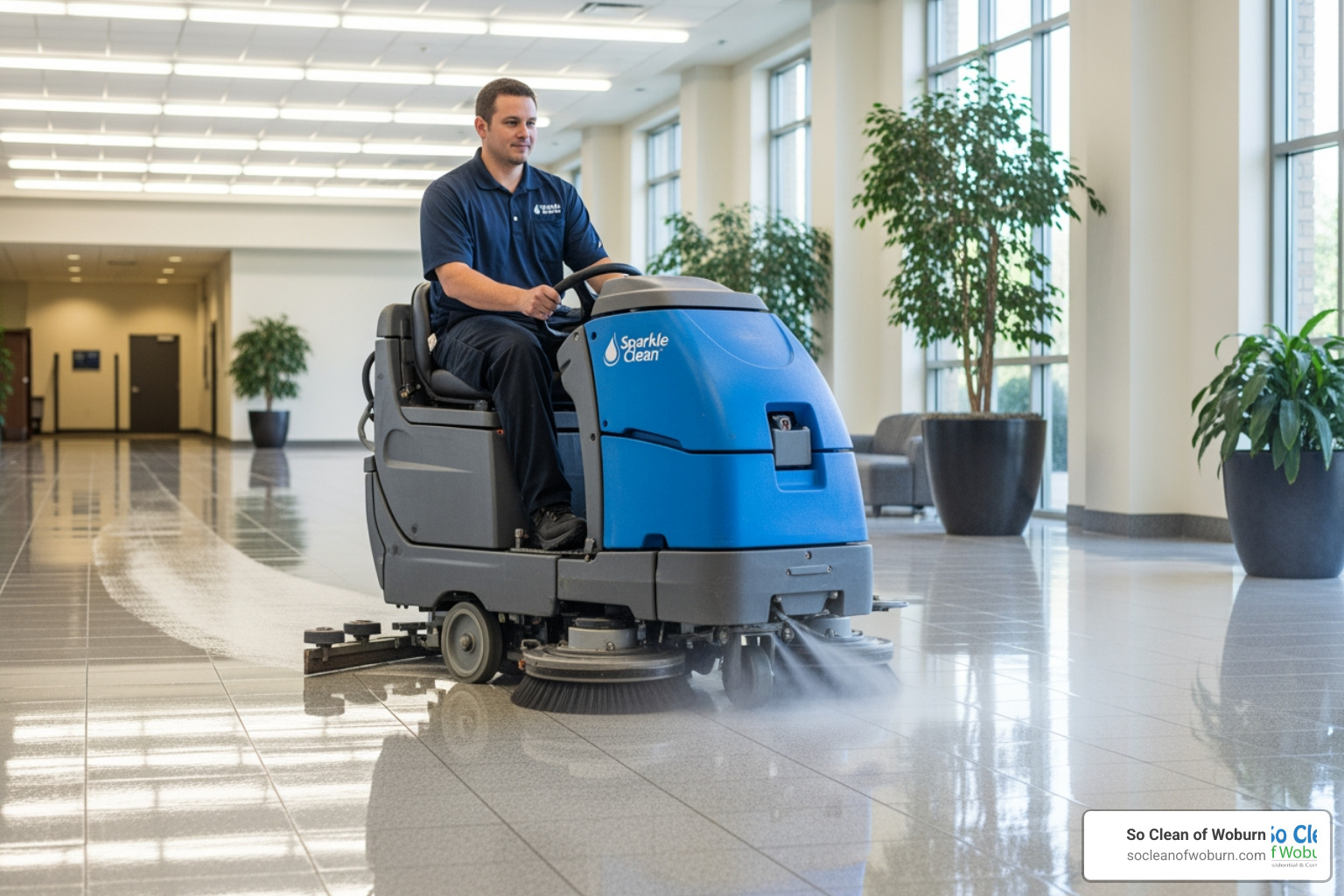
- Automatic Floor Scrubbers: For large spaces in Woburn or Wakefield, these machines apply solution, scrub, and vacuum up dirty water in one pass, maximizing efficiency.
- Wet-Vacuums: Crucial for extracting dirty water and dissolved grime to ensure a residue-free finish.
- High-Pressure Cleaning Systems: For the deepest clean, hot water extraction systems (often called “steam cleaning”) blast away embedded dirt from grout.
- Microfiber Mops: Excellent for daily maintenance and picking up fine dust more effectively than traditional mops.
Safety First: Handling a Commercial Tile Cleaner
Safety is paramount when using a powerful commercial tile cleaner. At So Clean of Woburn, we prioritize safety on every job in Massachusetts and New Hampshire.
- Use Personal Protective Equipment (PPE): Always wear chemical-resistant gloves and safety goggles to protect your skin and eyes from splashes and irritation.
- Ensure Proper Ventilation: Work in a well-ventilated area to disperse fumes and prevent respiratory issues, especially in enclosed spaces like restrooms.
- Consult Safety Data Sheets (SDS): The SDS provides critical information on a product’s chemical properties, health hazards, and safe handling procedures. We consult the SDS for every cleaner we use. You can find this information on portals like the Zep SDS Web Portal.
Following these protocols ensures the safety of our team and your property.
Protecting Your Investment: Sealing and Long-Term Maintenance
Once your commercial tile floors are cleaned, protecting that investment is the next crucial step. Sealing and consistent maintenance are pivotal for businesses in areas like Belmont or Reading that want to maintain a pristine appearance.
Different tile types have varying levels of porosity. While glazed ceramic and porcelain tiles are non-porous, their grout lines are highly absorbent. Natural stone like marble, granite, and travertine is also porous and requires sealing to prevent stains.
Sealing grout is essential. Unsealed, cement-based grout acts like a sponge, absorbing spills and dirt, which leads to discoloration and bacteria growth. A quality sealant creates a protective barrier, making grout resistant to water and stains. This prevents future stains, makes daily cleaning easier, and extends the floor’s lifespan—a smart investment for any commercial property.
The Role of Grout Sealant
Grout sealant is a game-changer for tile maintenance, acting as an invisible shield against dirt and spills. For our clients in Watertown and Wilmington, we stress that sealing is as important as cleaning.
There are two main types: clear sealants, which create an invisible, water-repellent barrier, and color sealants, which both protect and recolor grout for a refreshed look.
The main benefits are easier daily cleaning (dirt wipes away instead of soaking in) and preventing moisture absorption, which stops mold and mildew growth.
Resealing frequency depends on traffic and cleaning routines, but professional-grade sealants typically last 1-5 years. We recommend an annual assessment to ensure continuous protection. This simple step is vital for protecting your investment and maintaining a clean, attractive environment.
Creating a Commercial Cleaning Schedule
A structured cleaning schedule is fundamental for maintaining your tile floors. At So Clean of Woburn, we help businesses across the Greater Boston area create customized plans.
A comprehensive schedule includes:
- Daily Tasks: Sweep or dust mop to remove loose debris. Promptly spot-clean spills, especially in kitchens and entryways.
- Weekly Deep Cleaning: Use the appropriate commercial tile cleaner for a more thorough clean. Use a pH-neutral cleaner for general areas and targeted alkaline or acidic cleaners for restrooms and kitchens.
- Periodic Professional Service: Depending on traffic, a professional deep clean every 1-3 months is advisable to remove deep-seated dirt and allergens. As a general guideline, we recommend professional service at least every 12 months.
Cleaning frequency should be adjusted for high-traffic vs. low-traffic areas. A busy Malden lobby needs more attention than a Middleton storage room. A custom schedule ensures all areas remain hygienic and presentable.
Frequently Asked Questions about Commercial Tile Cleaning
We often receive questions from commercial property managers and business owners in Massachusetts and New Hampshire regarding the best practices for maintaining their tile floors. Here are some of the most common inquiries we address:
How often should commercial tile floors be professionally cleaned?
The ideal frequency depends on several factors, including foot traffic, business type, and your daily maintenance routine. High-traffic areas like retail entrances or restaurants need more frequent attention than low-traffic offices.
As a general recommendation, we advise a professional deep cleaning for commercial tile and grout every 6 to 12 months. This removes deep-seated dirt, stains, and allergens that accumulate over time. For extremely high-traffic or heavily soiled areas, a quarterly service (every 3 months) may be necessary to maintain appearance and hygiene. Regular professional cleaning extends your floor’s lifespan by preventing damage from embedded dirt.
Can I use bleach to clean commercial tile and grout?
We generally do not recommend using bleach for routine cleaning of commercial tile and grout. Bleach is a harsh chemical that can degrade grout over time, making it brittle. It can also strip protective sealants, leaving grout vulnerable to stains and moisture.
Furthermore, bleach can discolor colored grout and produces strong fumes that require significant ventilation. It is also not an effective degreaser. Instead of bleach, use a pH-appropriate commercial tile cleaner (alkaline, acidic, or neutral) designed for the specific soil you are targeting. These products are safer and more effective.
What’s the difference between a commercial tile cleaner and a general-purpose cleaner?
The main differences between a commercial tile cleaner and a general-purpose cleaner are formulation, concentration, and application.
- Formulation & Strength: A commercial tile cleaner is engineered with powerful ingredients to break down heavy grease, industrial grime, and mineral deposits. General-purpose cleaners are milder and designed for light, everyday dirt.
- Concentration: Commercial cleaners are highly concentrated and diluted for use, making them cost-effective for large areas. General-purpose cleaners are often sold ready-to-use.
- Targeted Action: Commercial cleaners are often pH-specific (alkaline for grease, acidic for minerals) to dissolve tough soils. General-purpose cleaners are typically pH-neutral and less aggressive.
- Equipment Compatibility: Commercial formulas are designed to work with professional equipment like auto scrubbers, while general-purpose cleaners may not be suitable.
A commercial tile cleaner is a specialized, industrial-strength tool that a general-purpose cleaner cannot match for tough jobs.
Conclusion: The Right Choice for a Flawless Finish
Maintaining clean, safe, and attractive tile floors in your commercial establishment is more than just a chore; it’s an investment in your business’s image, hygiene, and longevity. We’ve explored the unique challenges that commercial floors face, from heavy foot traffic to stubborn grease and allergens, and why standard cleaning methods simply fall short.
The key to achieving truly impressive results lies in making informed choices:
- Assess your tile and soil type: Understanding whether you’re dealing with ceramic, porcelain, or natural stone, and the primary types of grime (grease, mineral deposits, general dirt), will guide your cleaner selection.
- Choose the correct cleaner formulation: Whether it’s a powerful high-alkaline degreaser for kitchens, an acidic cleaner for mineral scale, or a gentle pH-neutral option for daily maintenance and sealed surfaces, the right commercial tile cleaner formulation is crucial. Don’t forget the growing benefits of eco-friendly, certified options for a healthier environment.
- Follow proper application and safety steps: Dilution, dwell time, agitation, and thorough rinsing are vital for effectiveness. Always prioritize safety by using appropriate PPE and consulting SDS sheets.
- Accept long-term maintenance: Sealing your grout creates a protective barrier, preventing stains and making routine cleaning easier. A consistent cleaning schedule, balancing daily tasks with weekly deep cleans and periodic professional services, will protect your investment and keep your floors looking their best.
The value of professional results cannot be overstated. With the right commercial tile cleaner, specialized equipment, and expert techniques, your floors can look similar to when they were first installed! At So Clean of Woburn, we bring our expertise and customized solutions to businesses across Massachusetts and New Hampshire, ensuring your commercial tile floors are not just clean, but truly shine. For a consistently clean and healthy environment without the hassle, consider a professional service.