Why Your Cleaning Products Might Be Making You Sick
Healthy house cleaners are non-toxic, plant-based cleaning products that use biodegradable ingredients like vinegar, baking soda, and castile soap instead of harsh chemicals. They protect your family, pets, and indoor air quality while still delivering powerful cleaning results.
Quick Guide to Healthy House Cleaners:
- What to look for: Plant-based surfactants (glucosides), saponified oils, citric acid, hydrogen peroxide
- What to avoid: Phthalates, ammonia, chlorine bleach, synthetic fragrances, dyes, VOCs
- Trusted certifications: EPA Safer Choice, MADE SAFE, EWG Verified
- DIY essentials: White vinegar, baking soda, lemon juice, castile soap, essential oils
- Top benefit: Indoor air can be 2-5 times more polluted than outdoor air due to conventional cleaners
Indoor air quality matters for every home in Massachusetts, especially in tightly sealed houses and apartments throughout Woburn, Winchester, Burlington, and the Greater Boston area. When strong chemical cleaners are used in these enclosed spaces, the vapors have fewer places to escape and can build up over time.
Consumers are often alarmed to learn that even when used as directed, products commonly found in homes can release hundreds of chemicals into the air. These compounds have been linked to asthma, developmental harm, and even cancer.
Studies from the EPA show that indoor pollution levels are two to five times higher inside homes than outside. As we spray, wipe, and scrub, those chemicals do not just disappear – they linger on surfaces and vaporize into the air we breathe. Over time, this exposure can cause irritation, allergies, or worse.
The good news is that switching to healthy house cleaners is easier than most people expect. Whether you choose commercial eco-friendly brands or simple DIY solutions, you can protect your family while still getting a sparkling clean home.
I am Bill McGrath, owner of So Clean of Woburn, and I have spent years helping families across the Greater Boston area achieve cleaner, healthier homes through safe cleaning practices. Our team specializes in using healthy house cleaners that deliver professional results without the toxic trade-offs.
Healthy house cleaners helpful reading:
Why Switch to Healthy Cleaning? The Hidden Dangers in Your Cleaning Caddy
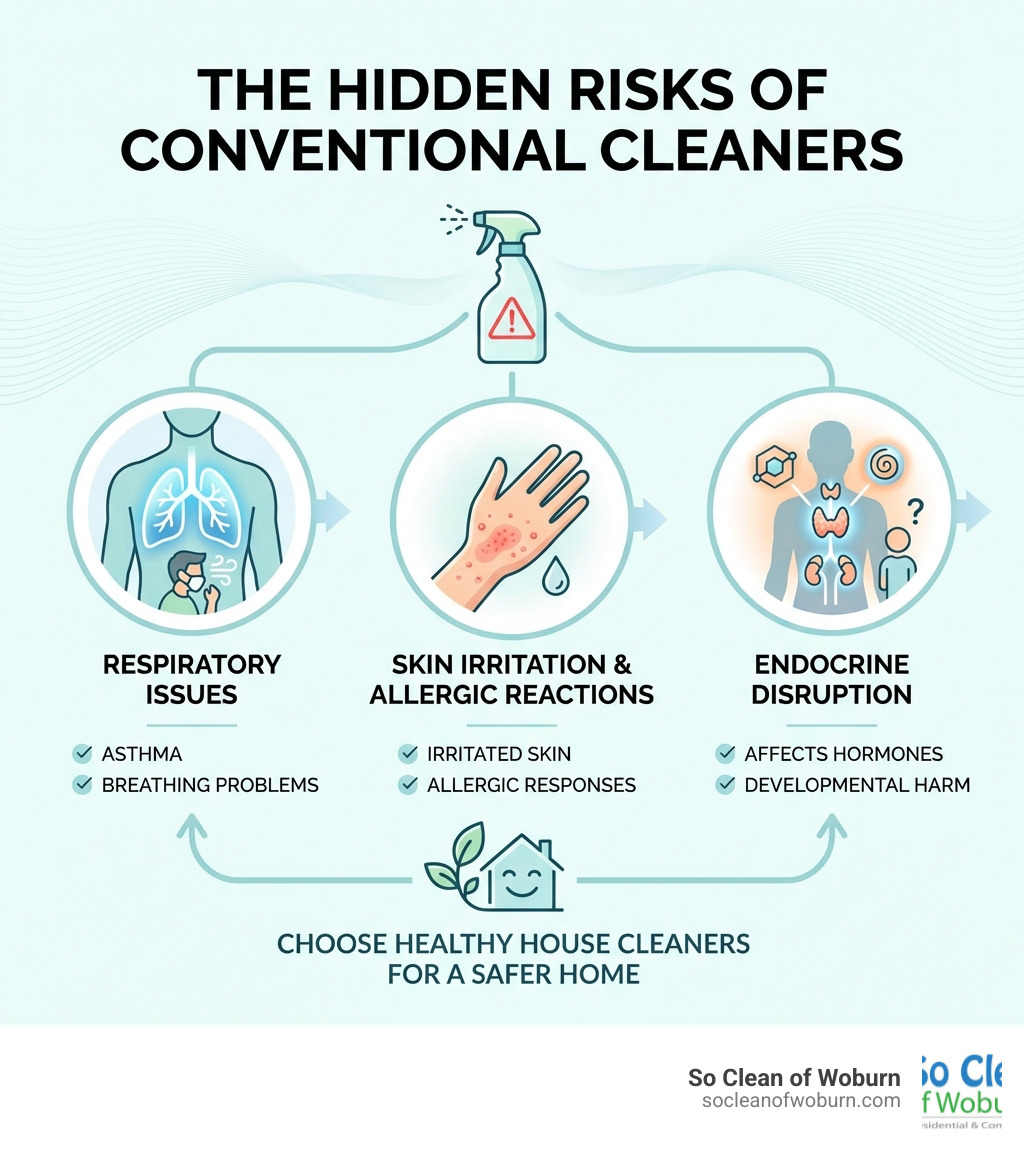
We all want a clean home, but at what cost to our health and the environment? The truth is, many conventional cleaning products are packed with chemicals that can pose significant risks. Consumers are often shocked to learn that products commonly found in their homes can release hundreds of chemicals into the air, even when used as directed. These compounds are linked to serious health issues like asthma, developmental and reproductive harm, and even cancer.
For instance, recent research has uncovered that many household cleaning products contain harmful ingredients such as formaldehyde, volatile organic chemicals (VOCs), 1,4-dioxane, and toxic fluorinated chemicals like PFAS or PFCs. These aren’t just tongue-twisters; they’re substances that can impact our well-being.
As we spray, wipe, and scrub our way to a seemingly sparkling home, these chemicals don’t simply vanish. They linger on surfaces, releasing vapors into the air we breathe. Over time, this continuous exposure can lead to irritation, allergies, and more severe health problems. For sensitive individuals, this can manifest as respiratory irritation or skin sensitization.
One of the biggest culprits of hidden chemicals? Fragrances. Because federal legislation doesn’t always require companies to list all fragrance components, a single “fragrance” ingredient can hide hundreds of chemicals. Many of these have been associated with a host of health problems, including endocrine disruption (which messes with our hormones), cancer, and developmental toxicity. Similarly, the color in a cleaning solution rarely adds to its effectiveness, serving primarily as an unnecessary chemical exposure. Some colorants have even been linked to asthma, skin sensitization, irritation, and a lack of biodegradability.
Beyond our personal health, these chemicals have a significant environmental footprint. When rinsed down the drain, they can wreak havoc on aquatic life, harming ecosystems far beyond our homes. Opting for natural, plant-based products means you don’t have to worry about their effects on living things and the environment. These products are not only effective but also safer for your family, your pets, and the planet. For more detailed information on pet-safe options, check out our Pet Safe Cleaning Products Ultimate Guide.
What Makes a Cleaner “Healthy” or “Eco-Friendly”?
So, what exactly defines a healthy or eco-friendly cleaner? It’s more than just a marketing buzzword. Healthy house cleaners are fundamentally different from their conventional counterparts in several key ways:
- Non-Toxic Ingredients: They are formulated without harsh chemicals, carcinogens, or substances known to cause irritation or long-term health issues. This means they are non-reactive and non-corrosive, making them safer for use around people and pets.
- Biodegradable Formulas: Healthy cleaners break down naturally in the environment, minimizing their impact on water systems and aquatic life. Our research shows that 100% biodegradable products are a hallmark of truly green cleaning.
- Plant-Based Sources: Many effective healthy house cleaners derive their power from renewable, plant-based materials like palm kernel oils, coconut oils, sugars, and soybeans. These natural ingredients provide cleaning efficacy without the toxic load. For a deeper dive, explore our guide on Eco-Friendly Cleaning Products.
- Sustainable Packaging: Eco-friendly brands often prioritize packaging that reduces waste. This includes using recycled materials, plastic-free containers, and even water-free, concentrated formulas distributed in reusable bottles. This approach significantly reduces carbon footprint and packaging waste.
- Refillable Options & Zero-Waste Concepts: Many brands are embracing refillable systems, allowing you to buy a product once and then purchase concentrated refills. This cuts down on single-use plastic and contributes to a more sustainable lifestyle.
- Cruelty-Free: Healthy and eco-friendly brands often commit to not testing their products on animals.
The Alarming Truth About Indoor Air
We often think of air pollution as an outdoor problem, but the air inside our homes can be significantly more contaminated. Studies conducted by the Environmental Protection Agency (EPA) reveal that levels of several common organic pollutants are two to five times higher inside homes than outside. Considering that we spend approximately 90% of our time indoors, this is a serious concern.
The very act of cleaning, intended to make our homes pristine, can ironically introduce new pollutants. As we spray and wipe, the chemicals in our cleaning products don’t just vanish; they linger on surfaces and vaporize into the air. These volatile organic compounds (VOCs) are gases emitted from liquids that can have short and long-term adverse health effects.
Moreover, household dust isn’t just annoying; it’s been shown to contain high levels of VOCs, asthmagens, and other toxic chemicals. This means that even between cleanings, our indoor air quality can be compromised by the residues of conventional cleaners and other household items. Understanding this alarming truth is the first step toward making informed choices about the products we bring into our homes. To learn more about how cleaning supplies can impact your indoor environment, read about How cleaning supplies pollute your indoor air.
Decoding the Label: How to Choose Genuinely Healthy House Cleaners
Navigating the cleaning aisle can feel like deciphering a secret code. Many products boast “natural” or “green” labels, but these terms are not always regulated and can be misleading. This phenomenon, known as “greenwashing,” occurs when companies spend more effort advertising as green than actually implementing environmentally sound practices. To truly choose healthy house cleaners, ingredient transparency and careful label reading are essential for homeowners and renters across North Shore, Middlesex County, and Essex County.

Current federal legislation does not always require companies to disclose all ingredients, especially for catchall terms like “fragrance.” This lack of transparency means you might be exposed to hundreds of hidden chemicals linked to various health problems. When in doubt, check company websites for more comprehensive ingredient lists if they are not fully detailed on the product label, and favor brands that clearly list every component.
Ingredients to Look For
When you are scrutinizing labels for healthy house cleaners, here are some effective ingredients that signal a safer choice:
- Plant-Based Surfactants (Glucosides): Look for names like decyl glucoside, lauryl glucoside, coco glucoside, caprylyl/capryl glucoside, and caprylyl/myristyl glucoside. These are gentle, plant-derived cleansing agents that effectively cut through grease and lift dirt.
- Saponified Oils (Castile Soap): Simple soap-based cleaners are often the safest bet. Ingredients such as potassium cocoate, sodium cocoate, saponified coconut oil, sodium palmate, potassium palmate, and saponified palm oil indicate a traditional soap base. Castile soap, made from olive oil, is a prime example of a gentle, versatile cleanser.
- Citric Acid: A mild acid found in citrus fruits, citric acid is excellent for tackling hard water deposits, soap scum, and even some disinfecting. For effective disinfection, look for concentrations of at least 0.5 percent.
- Hydrogen Peroxide: This powerful yet safer disinfectant is a practical alternative to chlorine bleach. It is effective against many germs, and you will typically find it in concentrations of at least 3 percent for cleaning purposes. For more on plant-based disinfectants, refer to our Plant-Based Disinfectant Cleaner Guide.
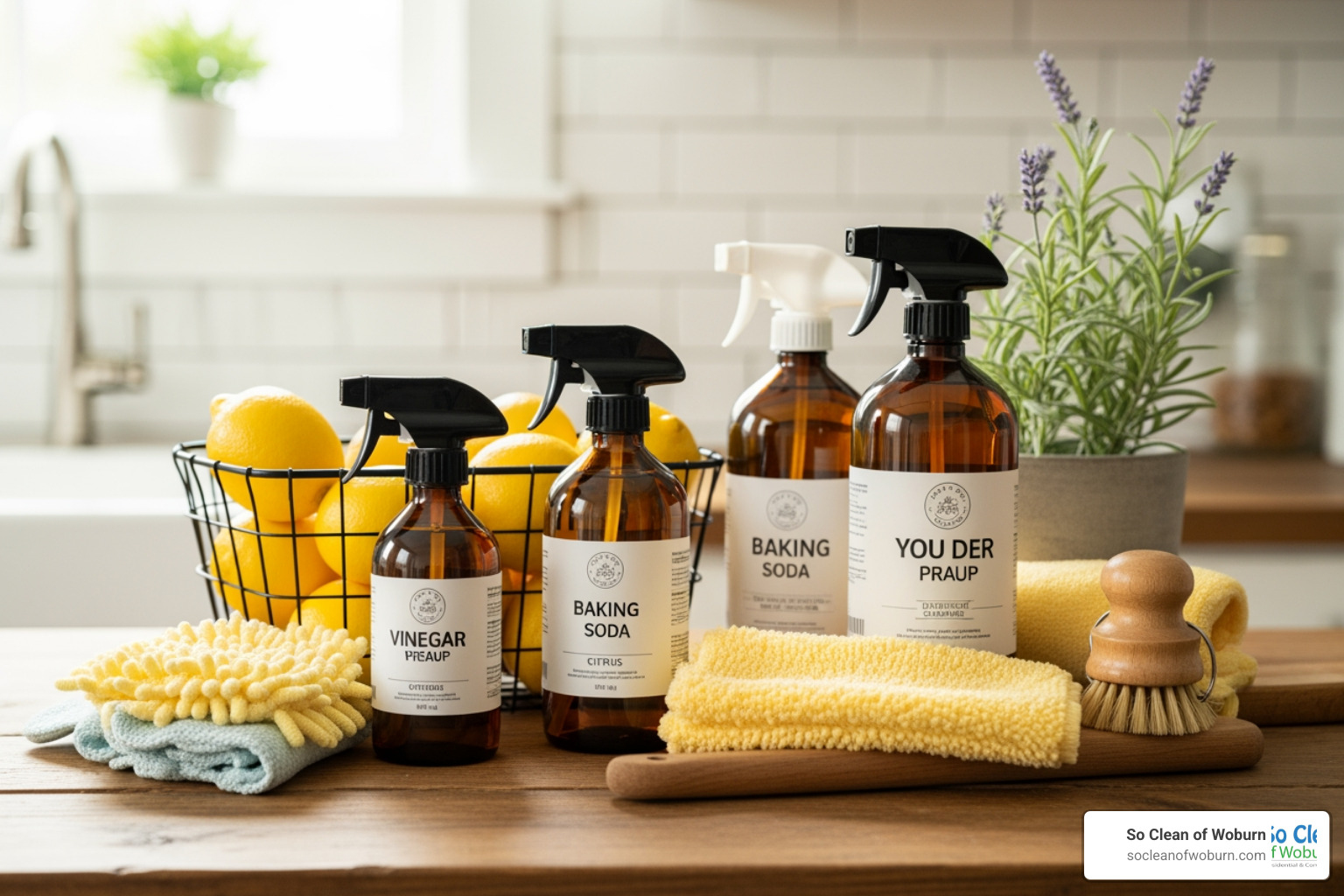
- Baking Soda (Sodium Bicarbonate): This kitchen staple is a mild abrasive, deodorizer, and gentle alkali. It is useful for scrubbing, absorbing odors, and boosting cleaning power.
- White Vinegar (Acetic Acid): White vinegar is acidic and effective at cutting grease, dissolving mineral deposits, and reducing certain bacteria on hard, non-porous surfaces.
- Essential Oils: While synthetic fragrances are a no-go, pure essential oils like tea tree, lemon, and eucalyptus can add natural antibacterial properties and a pleasant scent to your cleaners. Use them sparingly and ensure they are 100% pure.
Ingredients to Avoid
Knowing what to avoid is just as important as knowing what to choose. Many common chemicals in conventional cleaners are linked to serious health concerns. Here is a table summarizing key harmful ingredients and their safer alternatives:
| Harmful Ingredient | Why Avoid | Safer Alternative |
|---|---|---|
| Phthalates | Often hidden in “fragrance,” these are endocrine disruptors linked to reproductive and developmental harm. | Fragrance-free products or those scented with pure essential oils. |
| Ammonia | A powerful irritant for the respiratory system, skin, and eyes. Can trigger asthma. Mixing with bleach creates toxic chloramine gas. | White vinegar and water solution, baking soda paste. |
| Chlorine Bleach | A strong respiratory irritant that can create toxic gases when mixed with other cleaners. Harmful to aquatic life. | Hydrogen peroxide, oxygen-based bleaches (sodium percarbonate). |
| Quaternary Ammonium Compounds (Quats) | Found in many disinfectants, they are linked to asthma, skin irritation, and may contribute to antibiotic-resistant bacteria. | Alcohol (ethanol/isopropanol), hydrogen peroxide, steam cleaning. |
| Formaldehyde | A known human carcinogen that can cause respiratory irritation and skin allergies. Often released by other preservatives. | Products without formaldehyde-releasing preservatives (for example bronopol, DMDM hydantoin). |
| Synthetic Fragrance | A catchall term that can hide hundreds of chemicals, including phthalates, allergens, and endocrine disruptors. | Unscented products or those scented with 100% pure essential oils. |
| Dyes | Serve no cleaning purpose and add unnecessary chemical exposure. Some are not biodegradable and can cause irritation. | Dye-free or clear cleaning products. |
For additional background on the risks of household chemicals, see this overview of Risks of household chemical products.