
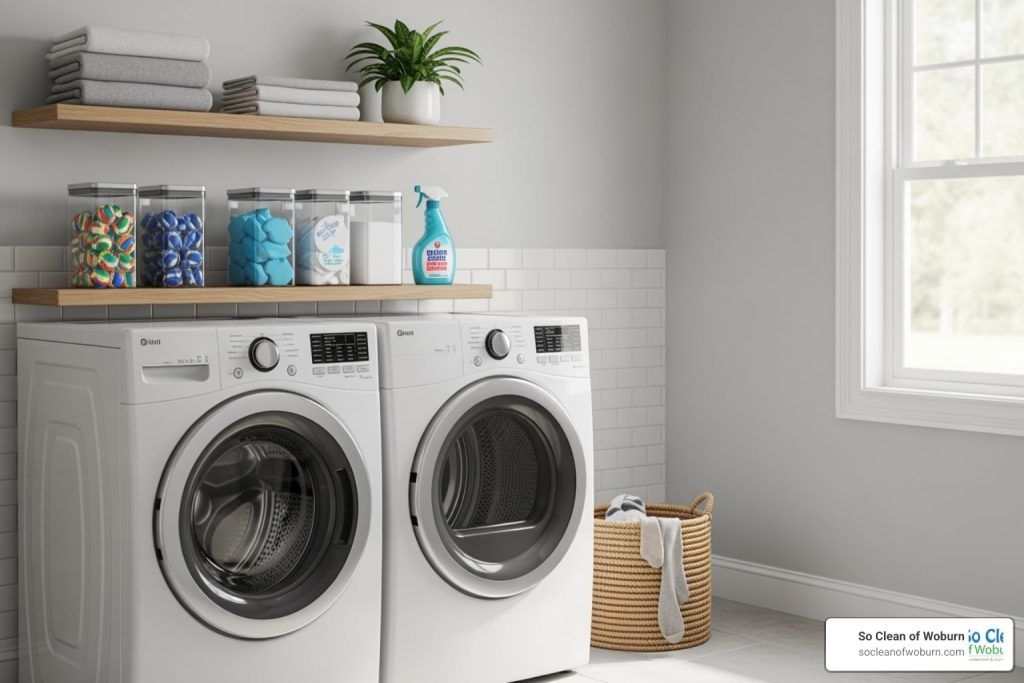
Why Laundry Room Cleaning Matters for Your Home and Health
Laundry room cleaning keeps your appliances running efficiently, prevents fire hazards, and stops mold and bacteria from spreading to your clothes. Here’s what a proper cleaning routine includes:
Essential Laundry Room Cleaning Tasks:
- Monthly: Deep clean washing machine with vinegar or baking soda
- After every load: Clean dryer lint trap
- Yearly: Professional dryer vent cleaning
- Weekly: Wipe down surfaces, sweep floors, declutter countertops
- Quarterly: Clean behind appliances, sanitize utility sink
There’s nothing worse than doing chores in an area that is cluttered and messy. When your space is chaotic, it can cause you to feel anxious, depressed, fatigued, and unmotivated. But if there’s one thing we need when doing laundry, it’s motivation.
Beyond the mental toll, a dirty laundry room poses real risks to your health and safety. Washing machines can harbor everything from drug-resistant bacteria to other harmful pathogens. Lint clogs in the ductwork can present a fire hazard if unchecked—a dirty dryer can cause a dryer fire in extreme cases.
The good news? Keeping your laundry room clean doesn’t require hours of work. With the right routine and techniques, you can maintain a space that’s efficient, safe, and actually pleasant to use.
I’m Bill McGrath, owner of So Clean of Woburn, and over the years I’ve helped countless families in the Greater Boston area transform cluttered, neglected laundry rooms into clean, functional spaces through our professional laundry room cleaning services. The difference a systematic approach makes is remarkable—both in appliance performance and peace of mind.
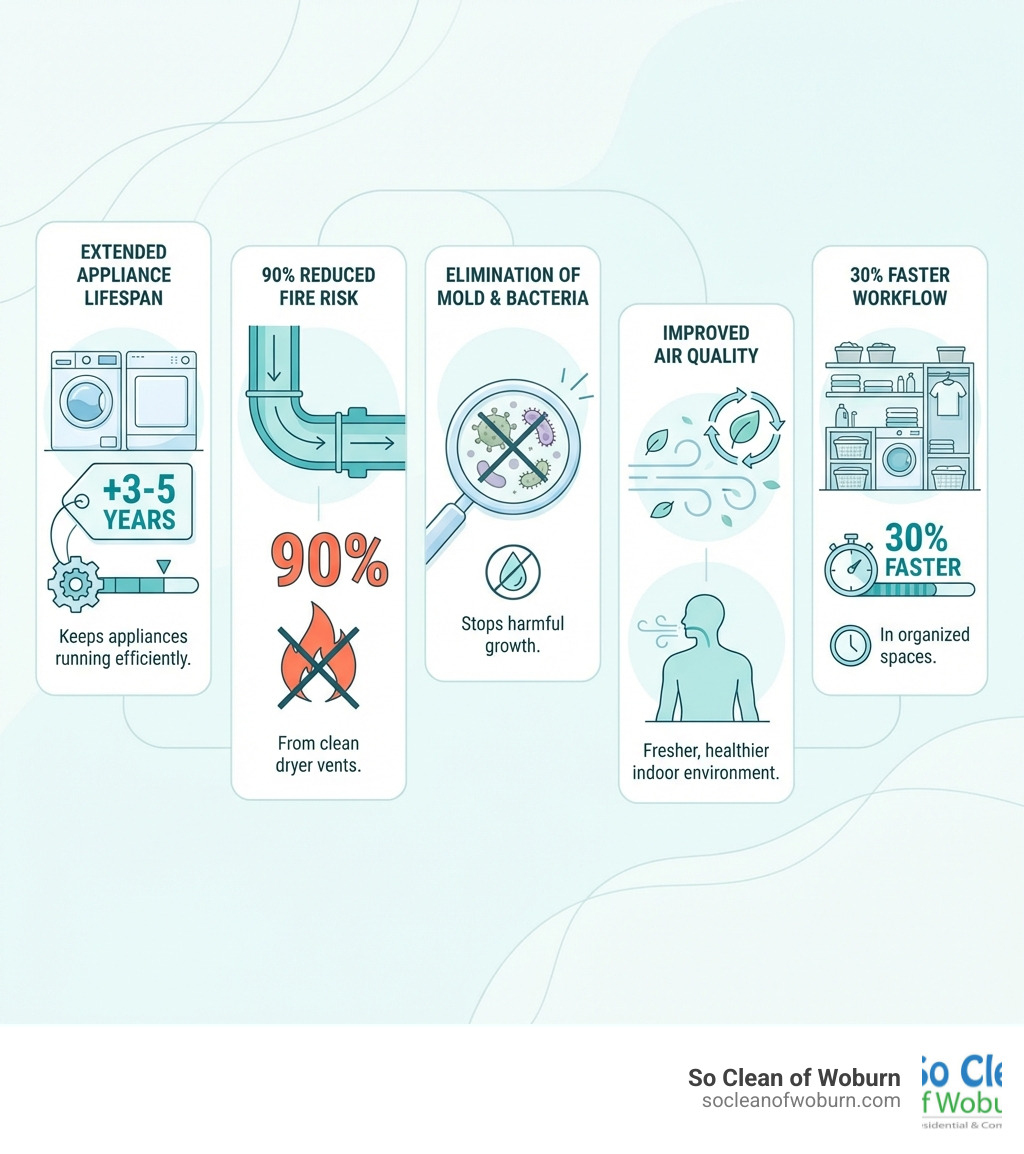
Laundry room cleaning word roundup:
The Heart of the Matter: Deep Cleaning Your Washer and Dryer
Our washing machines and dryers are the unsung heroes of our homes, tirelessly cleaning our clothes, towels, and linens. But just like any hardworking appliance, they need a little TLC themselves to perform their best. Neglecting them can lead to unpleasant odors, decreased efficiency, and even health and safety risks. Keeping appliances in good condition ensures they operate effectively, reducing the need for repairs or replacements, which ultimately prolongs their lifespan.
A clean, well-ventilated laundry room prevents mold and mildew buildup, which can cause health issues and damage your laundry equipment. Beyond that, the statistics are quite sobering: research notes that washing machines can harbor everything from drug-resistant bacteria to other harmful pathogens. These microscopic invaders can thrive in the warm, damp environment of your washer, potentially transferring to your “clean” clothes.
For dryers, the primary concern is fire safety. Lint clogs in the ductwork can present a significant fire hazard if unchecked. In extreme cases, a dirty dryer can cause a dryer fire, putting your home and family at risk. Regular appliance maintenance isn’t just about sparkling surfaces; it’s about safeguarding your health and home. If you’re looking for professional assistance with deep cleaning your home, including your laundry room, we invite you to learn more info about our Deep Cleaning Services.
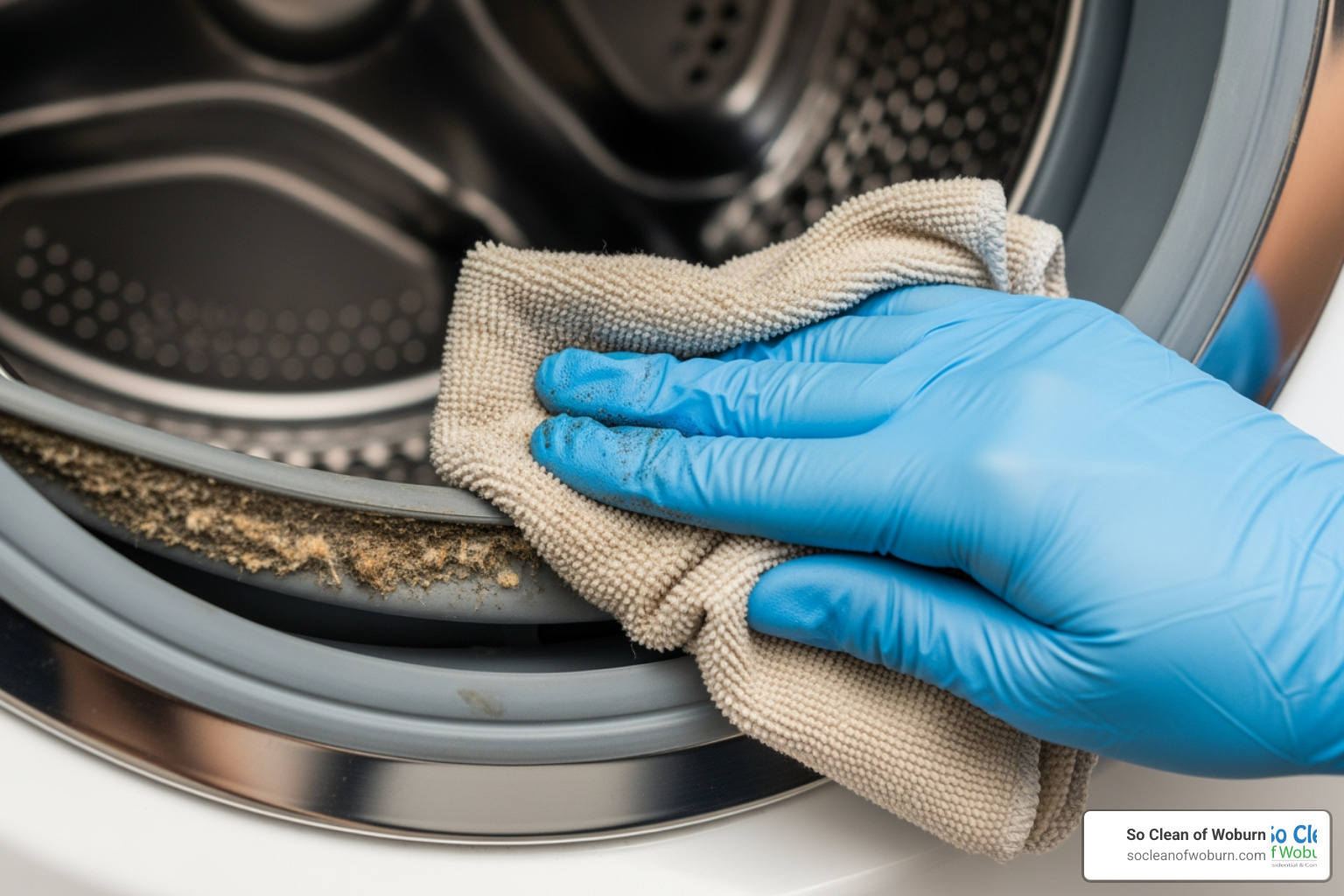
How to Clean Your Washing Machine
It might seem counterintuitive to clean the machine that cleans your clothes, but your washing machine accumulates soap scum, mineral deposits from hard water, and residual dirt from laundry. This buildup can lead to musty odors in your clothes and even affect the machine’s performance.
Signs your washing machine needs cleaning:
- A musty smell coming from the drum or your freshly washed clothes.
- Visible mold or mildew around the rubber seal (especially in front-loaders).
- A grayish or white film inside the drum.
- Clothes not coming out as clean as they should be.
- The machine struggling to drain properly.
Our best methods and natural cleaning solutions:
- For Top-Load Washers:
- Vinegar Method: Fill the washer with hot water on the highest setting. Add 4 cups of white vinegar. Let it agitate for a few minutes, then pause the cycle and let the water sit for an hour. During this soak, wipe down the exterior, lid, and control panel with a vinegar-dampened cloth. After an hour, complete the cycle.
- Baking Soda Method: After the vinegar cycle, or as a separate cleaning, sprinkle 1 cup of baking soda directly into the drum. Run another hot water cycle. Baking soda helps to deodorize and scrub away residue.
- Cleaning the Agitator and Dispenser: For top-loaders with an agitator, you can often remove it to scrub away residue. Clean the fabric softener and detergent dispensers with a small brush and warm, soapy water.
- For Front-Load Washers: These are notorious for mold and mildew due to water pooling around the rubber gasket.
- Vinegar Method: Add 2 cups of white vinegar to the detergent dispenser or directly into the drum. Select the “Clean Washer” cycle or the hottest water setting with an extra rinse option.
- Baking Soda Method: After the vinegar cycle, or as a separate step, sprinkle 1/2 cup of baking soda into the detergent drawer and run another hot water cycle.
- Cleaning the Gasket and Seals: This is crucial! Pull back the rubber gasket around the door and thoroughly wipe away any mold, mildew, or debris with a cloth dampened with a 50/50 mix of white vinegar and water. You might need a small brush for stubborn spots.
- Cleaning Dispensers: Remove and rinse the detergent and fabric softener drawers. If they’re not removable, use a small brush to scrub away buildup.
- Draining the Filter: Many front-loaders have a small drain hose and filter at the bottom. Consult your manual to locate and clean it regularly. Place a towel and shallow dish underneath to catch water before opening.
Preventing Mold and Mildew:
- Always leave the washer door slightly ajar after each load to allow the drum to air dry.
- Wipe down the rubber seal of front-loaders weekly.
- Use the correct amount of detergent; too much can leave residue that feeds mold.
- Run an empty hot water cycle with vinegar monthly.
- Consider using a Natural Mold Cleaner or Non-Toxic Cleaning Products for regular maintenance. For serious disinfection, a Plant-Based Disinfectant Cleaner Guide can be very helpful.
For a more in-depth guide on using vinegar for cleaning, check out this article that suggests the acidity of white vinegar helps break down slimy buildup.
How to Clean Your Dryer and Prevent Fire Hazards
Your dryer, while not prone to mold like a washer, carries a significant fire risk if not properly maintained. Lint is highly flammable, and its accumulation is the leading cause of dryer fires.
How often to clean:
- Lint Trap: After every load. This is non-negotiable.
- Dryer Vent System: At least once a year. More frequently if you do a lot of laundry or have pets.
- Interior Drum and Exterior: Monthly or as needed.
Signs of a clogged dryer vent:
- Clothes taking longer to dry than usual.
- Clothes are hot to the touch after a cycle.
- The dryer itself feels excessively hot.
- A burning smell.
- Excessive lint on clothes after drying.
Our best methods for cleaning your dryer:
- Deep Clean the Lint Trap: While you remove lint after every load, a deeper clean is needed periodically. Use a lint trap cleaning kit to get into the slot and capture all that loose lint that accumulates below the screen. You can also wash the screen with warm, soapy water and a brush to remove fabric softener residue that can reduce airflow.
- Clean the Dryer Vent System: This is critical for fire prevention.
- Unplug the dryer from its power source (and turn off the gas supply if it’s a gas dryer).
- Disconnect the dryer from the exhaust duct.
- Use a vacuum cleaner with a hose attachment to remove lint from inside the dryer’s exhaust port and the duct itself. You can also purchase a dryer vent cleaning brush kit that attaches to a drill for a more thorough cleaning.
- Clean the exterior vent flap on your home.
- Reconnect everything securely.
- While this can be a DIY task, many homeowners in Massachusetts prefer to hire a professional. The cost to have a dryer vent professionally cleaned averages around $135, but can range up to $270 depending on the complexity and length of your ductwork. This is a small price to pay for peace of mind.
- Wipe the Drum and Exterior: Use a damp cloth with a mild all-purpose cleaner (or a 50/50 vinegar-water solution) to wipe down the inside of the dryer drum, removing any residue or marks. Wipe down the exterior surfaces as well. For effective cleaning, we always recommend having the Best Cleaning Supplies on hand.
Beyond the Machines: A Top-to-Bottom Laundry Room Cleaning Guide
While the appliances are central, the entire laundry room space deserves attention. A clean and organized room makes the chore of laundry feel less daunting and more efficient. We believe in cleaning from top to bottom and left to right to ensure no dust or grime is missed.
- Dusting: Start high! Use an extendable duster to tackle cobwebs in corners, light fixtures, and the tops of shelves and cabinets. Then, dust window sills and the tops of your washer and dryer.
- Wiping Surfaces: Use a damp cloth with an all-purpose cleaner to wipe down all countertops, shelves, and the outside of cabinets. Pay attention to frequently touched areas like handles and knobs.
- Cleaning the Utility Sink: If you have a utility sink, it often accumulates grime from pre-treating clothes or cleaning tools. Spray it down with an all-purpose cleaner, scrub with a brush or sponge, and rinse thoroughly. Don’t forget to shine the faucet and handles.
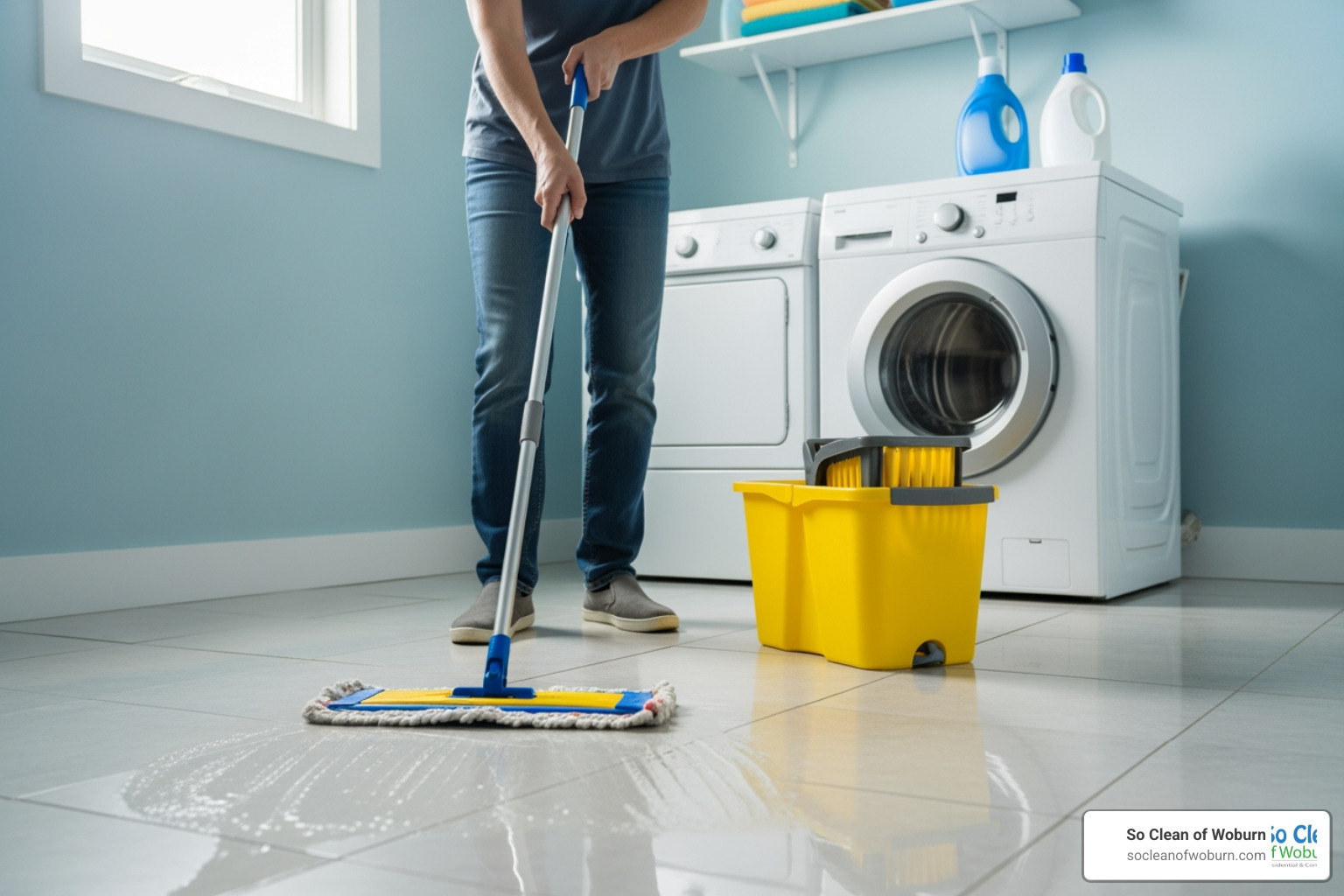
- Cleaning Floors and Baseboards: After all the dust and debris have settled, it’s time for the floor. Sweep or vacuum the entire floor, paying special attention to the areas around and behind your appliances. Then, wipe down baseboards with a damp cloth and a mild cleaner. Finally, mop the floor with a floor-safe cleaner, working in sections.
For those in the Greater Boston area seeking a sparkling clean home, including a pristine laundry room, explore more info about our Residential Cleaning Services to see how we can help.
Cleaning and Organizing Storage Areas
It is amazing how quickly we can accumulate clutter in this room. The washer and dryer are flat spaces after all, and it is easy to put stuff on top of them. A cluttered laundry room can significantly reduce efficiency and increase stress. When everything has a place, and that place is tidy, your laundry routine becomes much smoother.
- Start with a Clean Slate: Take everything out of your laundry room to start fresh. This allows you to truly see what you have and what you need.
- Declutter Ruthlessly: Clear out expired cleaning products, old supplies, and any unwanted items. If it doesn’t belong in the laundry room or isn’t used regularly, find it a new home or get rid of it.
- Zone Your Space: Separate your cleaning products from other storage area items. For example, some laundry rooms double as storage for gift wrapping, party supplies, or seasonal decor. Designate specific zones for each category.
- Smart Storage Solutions:
- Cabinets: If you have cabinets, get transparent, lidless bins with integrated side handles to hold your detergent and cleaning supplies. The bins make these bottles easier to access and they’ll also catch any leaking fluids.
- Shelves: Use stackable baskets, like The Chancellor Baskets or The Like-It Deep Modular Organizer Bins from Container Store, for storing larger items or miscellaneous supplies. These Container Store bins are perfect for cleaning supplies! We organized under the sink with these easy to use, plastic containers. They range in size, are durable, and stay in place without shifting around. Stone Woven Plastic Storage Bins with Handles are also great for larger items.
- Walls: Install hooks, like 3M Command Broom Holders, to hang brooms, mops, or even lint rollers, freeing up floor space.
- Drawers: Use drawer organizers to separate smaller items like sewing kits, stain removers, or spare change. The Container Store Like-It Bricks Bins are excellent for this.
- Labeling: Once everything is organized, label your containers. This helps everyone in the household know where things belong and where to find them. You can use these pretty pantry labels for a cohesive look. We also love using Laundry Detergent Jars as they are great for seeing when detergent is running low. And, of course, a good Laundry Basket is essential.
By implementing these strategies, you’ll find that your laundry room transforms from a chaotic catch-all to a streamlined, stress-free space. For more tips on organizing your home in an environmentally conscious way, check out our Eco-Friendly Cleaning Complete Guide.
Common Mistakes in Laundry Room Cleaning
Even with the best intentions, it’s easy to fall into common traps when cleaning your laundry room. Avoiding these mistakes will ensure a more thorough clean and prevent potential issues.
- Ignoring the Space Behind Appliances: Dust bunnies, lint, and even lost socks can accumulate behind your washer and dryer. This area is often neglected but can be a source of dust and, for dryers, a fire hazard. We recommend pulling out your appliances (carefully!) at least once a year to vacuum and wipe down the walls and floors.
- Using Harsh Chemicals on All Surfaces: While some areas might need strong disinfectants, not all surfaces can handle them. Always check cleaning product labels and consider using milder, all-purpose cleaners for general wiping. For more information on safe cleaning, refer to our guide on Non-Toxic Cleaning Products.
- Forgetting to Clean the Lint Trap (or not deep cleaning it): We’ve said it before, and we’ll say it again: clean your lint trap after every load. But also remember the deeper clean discussed earlier to remove residue that builds up beneath the screen.
- Leaving Wet Clothes in the Washer: This is a surefire way to invite mold, mildew, and unpleasant odors into your washing machine and, subsequently, your clean laundry. Always remove clothes promptly after the cycle finishes.
- Mixing Cleaning Agents, Especially Bleach and Vinegar: This is a crucial safety warning. Never mix bleach and vinegar! Combining these two common household cleaners creates chlorine gas, which is highly toxic and can cause serious respiratory issues. Similarly, combining hydrogen peroxide and vinegar creates peracetic acid, a corrosive and lung-irritating substance. Always use cleaning agents separately and ensure proper ventilation.
Creating Your Laundry Room Cleaning Routine
Establishing a regular laundry room cleaning routine is key to maintaining a fresh, efficient, and stress-free space. Just like any other room in your home, consistency pays off. We find that breaking down tasks into weekly and monthly actions makes the entire process manageable and prevents overwhelming buildup. This proactive approach significantly improves efficiency and reduces the accumulation of clutter over time.
Your Weekly Laundry Room Cleaning Checklist
Incorporating these quick tasks into your weekly routine will keep your laundry room in top shape:
- Wipe down appliance exteriors: A quick wipe of the washer and dryer surfaces with a damp cloth removes dust and smudges.
- Clear surfaces of clutter: Remove any items that have accumulated on top of the washer, dryer, or countertops. Put them back in their designated spots or relocate them if they don’t belong.
- Sweep or vacuum the floor: Lint and dust collect quickly. A swift sweep or vacuum keeps the floor clean.
- Empty the trash: Don’t let lint or empty detergent containers pile up.
- Check and restock supplies: A quick glance at your detergent, fabric softener, and other essentials ensures you’re never caught off guard mid-load.
- Wipe down the utility sink: If you have one, give it a quick scrub.
- Clean the dryer lint trap: As mentioned, this should be done after every load, but make it part of your weekly check-in.
For more guidance on creating an effective cleaning schedule for your entire home, check out our resource on how to create a cleaning schedule for efficient apartment building maintenance.
Advanced Techniques and Special Situations
Sometimes, standard cleaning isn’t enough, or you’re dealing with unique circumstances like shared laundry facilities.
- Laundry Stripping for Deep Fabric Cleaning: Have your towels or sheets lost their softness or brightness, even after washing? They might have residue buildup. Laundry stripping, or strip washing, is a deep cleaning method that removes accumulated oil, soap residue, and mineral deposits from fabrics.
- How it works: Fill a bathtub or large basin with very hot water. Add a mixture of laundry detergent, washing soda (sodium carbonate), and borax. A common ratio is 1/4 cup washing soda, 1/4 cup borax, and 1/2 cup detergent for a full tub of water.
- Soak: Submerge your clean laundry (primarily white towels, sheets, or light-colored durable fabrics) and let it soak for at least four hours, stirring periodically. The water will turn shockingly murky as residue is released.
- Rinse: Drain the dirty water and run the items through a rinse-only cycle in your washing machine without any additional detergent.
- Frequency: We recommend laundry stripping only once every six months, as frequent stripping can be harsh on fabrics. Avoid stripping delicate items or dark-colored clothes that might bleed.
- Cleaning Shared or Communal Laundry Rooms: In communal living spaces, hygiene is paramount. Communal laundry rooms can become breeding grounds for bacteria, mold, and fungi, particularly in warm, damp areas like door seals, detergent drawers, and internal hoses. This isn’t just about courtesy; it’s essential for health.
- Before and After Use: We advise wiping down the exterior and interior of the washing machine and dryer with an antibacterial wipe before and after each use. Pay special attention to areas where moisture collects.
- Sanitize the Washer: Before your load, run a quick empty cycle on the hottest setting with 1 cup of chlorine bleach or 2 cups of white vinegar (never mix them!). This sanitizes the drum for your clothes. For more tips on disinfecting, see this guide from The Spruce on how to disinfect a washer.
- Leave Doors Open: After your cycle, leave the washing machine and dryer doors open to allow them to air dry completely.
- Clean Your Basket: Always use a clean and dry laundry basket to transport your clothes.
- Personal Hygiene: Sanitize your hands before and after using shared facilities.
- For apartment residents in the Greater Boston area, ensuring hygiene in shared spaces is a priority. We offer dedicated Apartment Cleaning Services that can help maintain these common areas. We also have resources on Ensuring Health and Safety in Apartment Common Areas Through Cleaning.
Frequently Asked Questions about Laundry Room Cleaning
How often should I deep clean my washing machine and dryer?
We recommend deep cleaning your washing machine monthly to prevent the buildup of mold, mildew, and detergent residue that can lead to odors and impact cleaning performance. For your dryer, the lint trap should be cleaned after every load. However, the dryer vent system, which is crucial for fire safety, should be professionally cleaned at least once a year.
What are the biggest health risks in a dirty laundry room?
The primary health and safety risks in a dirty laundry room include:
- Respiratory issues from mold and mildew buildup, especially in damp areas like washing machine gaskets and poorly ventilated spaces. Mold can be an allergen and cause various health problems. More info can be found on mold and mildew.
- Bacterial contamination from washing machines that can harbor drug-resistant bacteria and other harmful pathogens, potentially transferring to your “clean” clothes.
- Fire hazards from lint accumulation in dryer vents and ductwork. This is a significant risk that can lead to devastating dryer fires.
How can I effectively declutter a small laundry room?
For small laundry rooms, maximizing space and maintaining organization is key.
- Use Vertical Space: Install shelving above your washer and dryer, or use over-the-door organizers on the back of the laundry room door for smaller items like detergent, stain removers, or lint rollers.
- Wall-Mounted Storage: Use hooks or wall-mounted holders for brooms, mops, and ironing boards to keep them off the floor.
- Decant and Consolidate: Transfer bulky detergent boxes or bottles into smaller, uniform, transparent containers. This looks tidier and makes it easier to see when supplies are running low.
- The “15-Minute Declutter”: Dedicate just 15 minutes once a week to quickly put away items that don’t belong, clear flat surfaces, and tidy up. This prevents clutter from accumulating and becoming overwhelming.
Transform Your Laundry Routine Today
A clean, organized, and well-maintained laundry room is more than just aesthetically pleasing; it’s a vital component of a healthy and efficient home. From prolonging the life of your appliances and preventing fire hazards to improving air quality and reducing stress, the benefits of regular laundry room cleaning are undeniable. We know that maintaining a spotless home can be a challenge with busy schedules.
For residents in the Greater Boston area looking for a professional touch, So Clean of Woburn offers customized cleaning solutions to create a healthier, more organized home. Whether you need a one-time deep clean or regular maintenance, our experienced team is here to help you achieve a perfectly clean laundry room and peace of mind. Learn more about our Apartment Cleaning services and find how we can simplify your life.