Why Apartment Pest Control Is a Building-Wide Challenge
Apartment pest control is one of the most frustrating challenges facing tenants, landlords, and property managers in multifamily housing — and it’s rarely as simple as calling an exterminator for one unit.
Here’s a quick overview of what you need to know:
- Who’s responsible? Landlords are generally required to maintain pest-free, habitable conditions. Tenants share responsibility by keeping units clean and reporting problems promptly.
- Most common apartment pests: cockroaches, mice, rats, bed bugs, ants, and flies
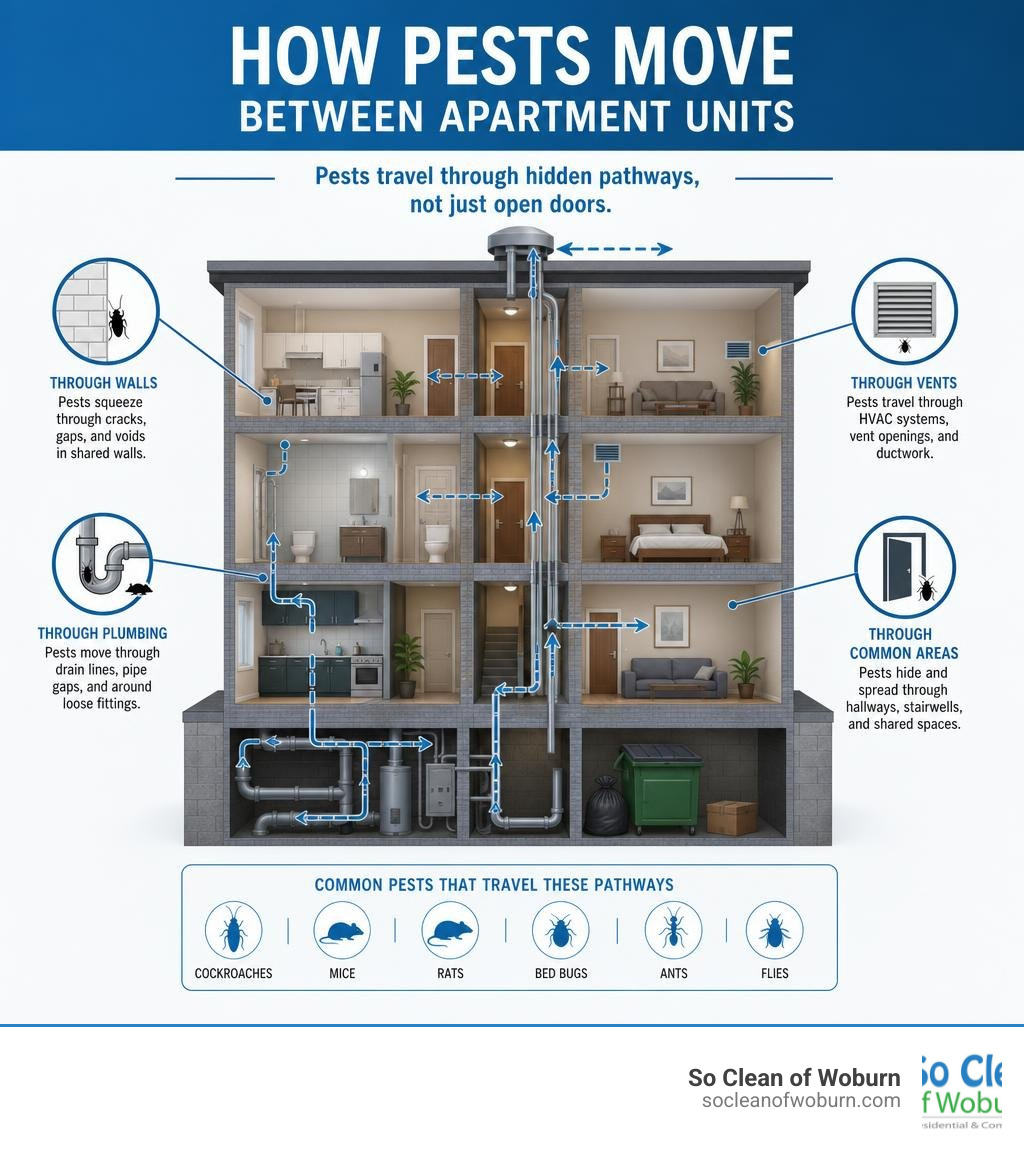
- How pests spread: through shared walls, plumbing lines, electrical conduits, and vents between units
- Best approach: coordinated building-wide treatment using Integrated Pest Management (IPM) — not just spraying one unit
- Typical costs in Massachusetts and New Hampshire: $150–$1,050 per visit, or $600–$4,100 per year depending on property size and pest type
- How to prepare: store food, clear baseboards, remove pets, and plan to stay out for a few hours after treatment
Unlike a single-family home, an apartment building is an interconnected system. Treating one unit without addressing shared spaces — trash rooms, pipe chases, hallways, and laundry areas — rarely solves the problem for long. Pests simply relocate to the next untreated space.
That interconnected reality is exactly what makes apartment pest control in Massachusetts and New Hampshire so challenging, and why a prevention-first approach matters just as much as the treatment itself.
I’m Bill McGrath, owner of So Clean of Woburn, and through years of providing residential and commercial cleaning services across the Greater Boston area, I’ve seen how cleanliness and pest control go hand in hand — a consistently clean building is one of the most effective defenses against recurring infestations. In this guide, I’ll walk you through everything you need to know to manage apartment pest control effectively, from understanding how pests move between units to what tenants and property managers can do to prevent them.
How Apartment Pest Control Works in Multifamily Buildings
Apartment buildings are convenient for people, and unfortunately, they are also convenient for pests. Shared utilities, connected walls, stacked kitchens and bathrooms, trash rooms, laundry areas, storage spaces, and frequent tenant turnover all create pest highways.
A pest control visit usually starts with inspection, not spraying. A licensed technician looks for:
- Pest activity, such as droppings, shed skins, nests, trails, or chew marks
- Entry points around pipes, baseboards, doors, windows, and utility lines
- Moisture sources under sinks, near tubs, in laundry rooms, and around drains
- Food sources in kitchens, trash rooms, pantries, and compactor areas
- Conditions in adjacent units and common spaces that may be feeding the problem
From there, treatment may include baits, traps, dusts in wall voids, crack-and-crevice applications, exclusion repairs, monitoring devices, and follow-up visits. The best programs combine pest control with cleaning, maintenance, and tenant communication.
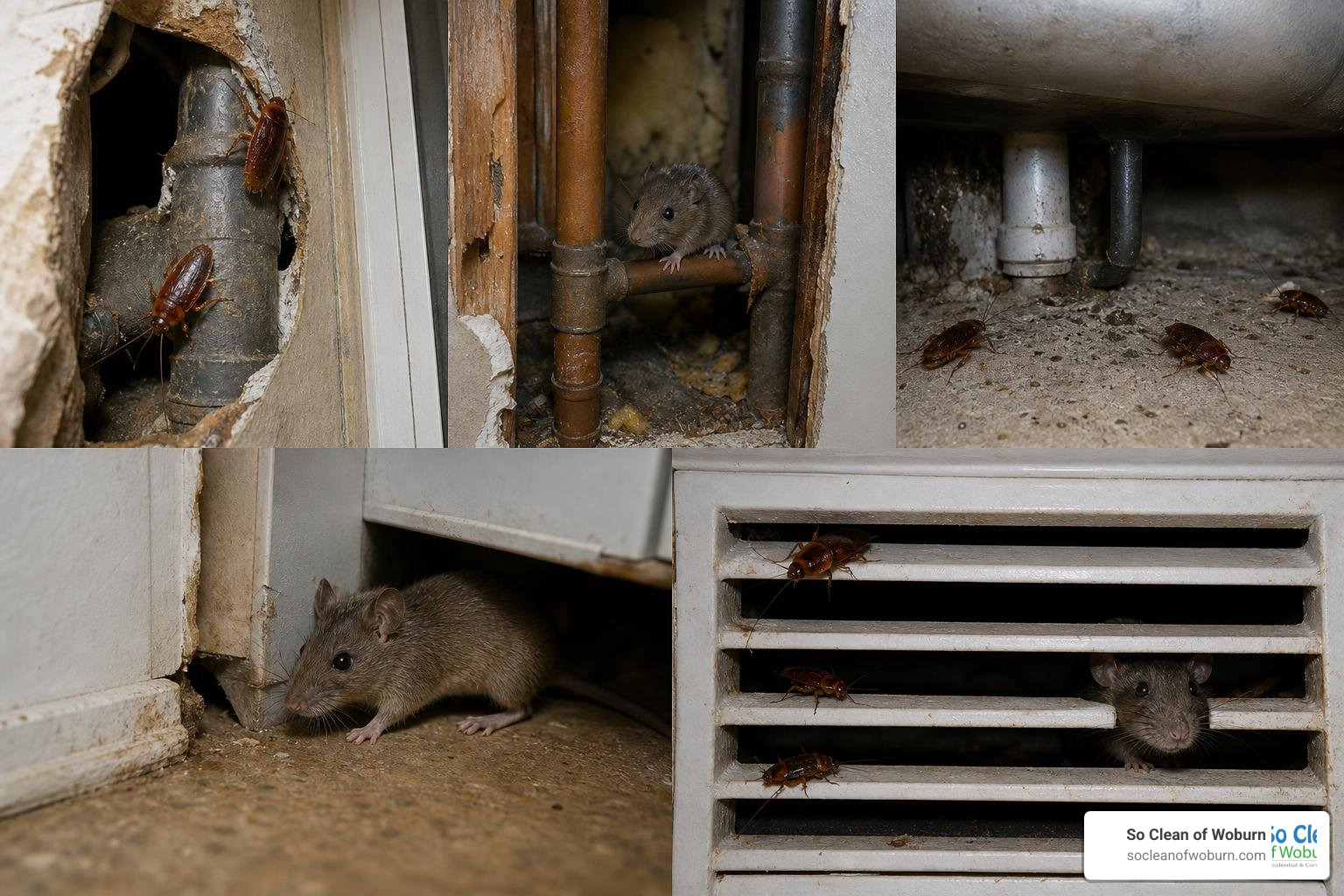
Why Pests Spread Quickly Between Units
Pests spread quickly in apartment buildings because the building gives them protected routes from one unit to another. They do not knock on the front door. Very rude of them.
Common travel paths include:
- Shared walls and wall voids
- Pipe chases behind kitchens and bathrooms
- Electrical conduits and outlet gaps
- Plumbing penetrations under sinks
- Baseboard gaps
- Hallways and stairwells
- Laundry rooms
- Trash rooms and compactor rooms
- Storage rooms and basements
- Vents and utility closets
Untreated units are a major issue. If one apartment has a roach infestation and the adjacent units are not inspected, pests can hide, breed, and return after treatment. Bed bugs can move through wall voids and may also spread through used furniture, mattresses, luggage, and shared laundry areas. Rodents can nest in ceilings, walls, basements, and utility spaces, then move from unit to unit as they search for food.
Tenant turnover also matters. New residents may unknowingly bring in infested furniture or boxes. Vacant units can hide pest activity until a new tenant moves in and discovers the problem.
The Most Common Apartment Pests in Massachusetts and New Hampshire
In Massachusetts and New Hampshire apartment buildings, the most common pests include:
-
Cockroaches
German cockroaches are especially common in kitchens and bathrooms because they need food, warmth, and moisture. They often hide behind refrigerators, under sinks, in cabinet hinges, and near plumbing lines. -
Mice and rats
Rodents enter through surprisingly small gaps and often travel through basements, utility rooms, walls, ceilings, and trash areas. They contaminate surfaces, chew materials, and can damage wiring. -
Bed bugs
Bed bugs are difficult because they spread through furniture, luggage, clothing, wall voids, and neighboring units. Early detection is critical. -
Ants
Ants are common in spring and summer, especially near kitchens, windows, foundation gaps, and moisture sources. -
Flies and fruit flies
These pests often come from trash rooms, drains, recycling areas, rotting food, and sticky residue around beverage containers. -
Spiders
Spiders usually follow other insects. If a building has many spiders, there may be a broader insect issue. -
Silverfish
Silverfish like damp, dark spaces such as bathrooms, basements, laundry areas, and storage rooms. -
Stink bugs and seasonal invaders
In fall, stink bugs and other occasional invaders look for warm hiding places around windows, siding gaps, attics, and wall voids. -
Pantry pests
Pantry moths and beetles often come from stored grains, flour, cereal, pet food, or bulk dry goods. -
Termites and carpenter ants
These are less about daily sanitation and more about moisture, wood-to-soil contact, structural conditions, and exterior maintenance.
For roach-specific advice, we also recommend reading The Ultimate Guide to Evicting Cockroaches in Apartments.
Health and Property Risks Property Managers Should Not Ignore
Pests are not just annoying. They can affect tenant health, property value, and a building’s reputation.
Key risks include:
- Cockroach allergens that can worsen asthma and indoor air quality
- Bacteria spread by roaches and rodents
- Rodent droppings and urine contamination
- Chewed wires, insulation, food packaging, and stored belongings
- Odors from dead rodents in walls or ceilings
- Bed bug bites, stress, and sleep disruption
- Tenant complaints and negative reviews
- Failed inspections or habitability concerns
- Higher long-term costs when small problems become building-wide infestations
Property managers should document pest reports, inspection findings, treatment dates, cleaning work, repairs, and tenant communication. Good records help prove that issues are being handled responsibly.
Who Is Responsible for Pest Control in Apartments?
Responsibility depends on the lease, local rules, the cause of the infestation, and how quickly everyone responds. In general, landlords and property managers are responsible for maintaining habitable rental housing, which usually includes addressing pest infestations. Tenants are responsible for keeping their units reasonably clean, reporting issues promptly, and allowing access for inspection and treatment.
In plain English: pest control works best when nobody plays the blame game and everyone does their part.
What Leases and Local Laws Usually Require
In Massachusetts and New Hampshire, rental housing is generally expected to be safe, sanitary, and habitable. While exact responsibilities can vary by city, town, lease language, and building type, most leases include terms about:
- Maintaining clean and sanitary conditions
- Proper trash disposal
- Reporting leaks, pests, and maintenance problems
- Allowing reasonable access for repairs and pest control
- Preventing damage or unsafe conditions
- Cooperating with building-wide service
Local health departments or housing inspectors may become involved when pest issues are not addressed. Tenants are usually expected to notify the landlord or property manager first, preferably in writing. If management does not respond, tenants may contact local code enforcement, inspectional services, or the appropriate municipal department.
Property managers should provide advance notice before entering units unless there is an emergency. For building-wide pest issues, clear notices and preparation instructions are essential.
When Tenants May Be Responsible
Tenants may be responsible for pest problems when their actions create or worsen the infestation. Examples include:
- Leaving food uncovered
- Allowing trash to build up
- Failing to report leaks
- Keeping heavy clutter that blocks inspection and treatment
- Bringing in infested secondhand furniture
- Leaving pet food out overnight
- Refusing access for scheduled treatment
- Ignoring pest sightings until the infestation spreads
- Violating sanitation terms in the lease
That said, apartment infestations are often shared problems. A clean tenant can still get roaches from a neighboring unit or mice from a basement entry point. That is why documentation matters. Tenants should report sightings with dates, locations, photos if possible, and notes about where pests were seen.
Can Tenants Hire Their Own Pest Control Company?
Sometimes, yes, but tenants should be careful. Before hiring a pest control company, tenants should review the lease and ask the landlord or property manager for written permission. This protects the tenant and helps avoid treatment conflicts.
| Option | Pros | Cons |
|---|---|---|
| Landlord-provided service | Usually coordinated with building access, lease requirements, and common areas | May be limited to scheduled service days or basic treatments |
| Tenant-hired service | Tenant may get faster attention or a second opinion | May violate lease if not approved; may only treat one unit |
| Building-wide professional program | Best for shared infestations, common areas, and recurring issues | Requires scheduling, tenant cooperation, and management oversight |
| DIY products | Can help with minor monitoring or prevention | Misuse can scatter pests, create safety issues, or interfere with professional baits |
The biggest downside of tenant-only treatment is that it may not solve the root problem. If pests are coming from wall voids, trash rooms, or neighboring units, one apartment treatment may only provide temporary relief.
Tenants should also avoid mixing products. For example, spraying over gel bait can make the bait less attractive to roaches. Always tell management and the pest technician what products have already been used.
What Technicians Treat and How Tenants Should Prepare
A professional pest control visit is usually targeted. Technicians do not normally spray every surface in an apartment. They inspect first, then treat pest travel paths, hiding spots, and entry points.
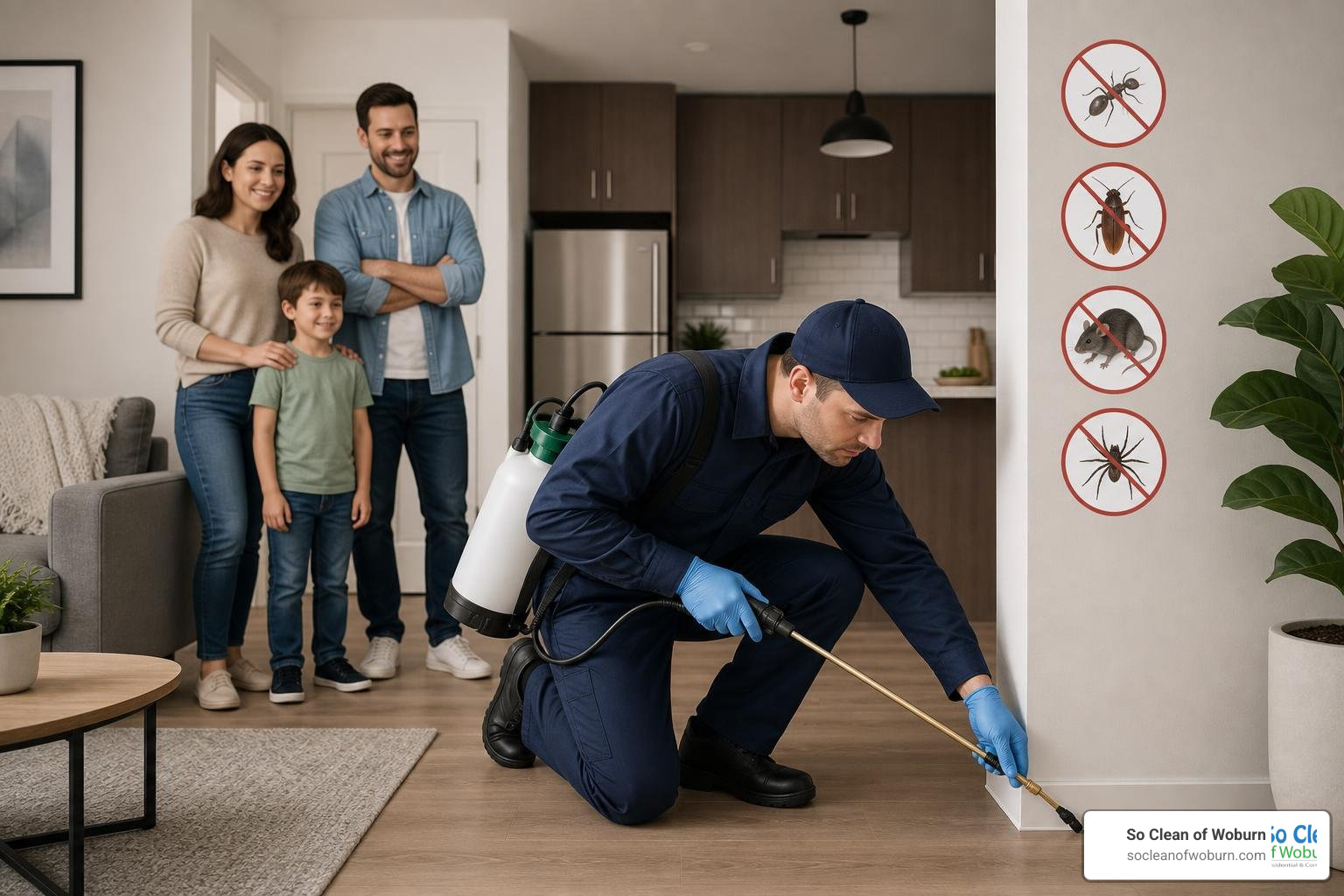
What Apartment Pest Control Technicians Treat Inside a Unit
Depending on the pest, technicians may inspect and treat:
- Under kitchen sinks
- Cabinet corners and hinges
- Behind and beside refrigerators
- Around stoves and dishwashers
- Baseboards
- Cracks and crevices
- Door thresholds
- Window frames
- Pipe penetrations
- Pantries
- Bathroom plumbing areas
- Closets and storage spaces
- Utility closets
- Wall void access points
- Areas where droppings, nests, or trails are found
- Monitoring trap locations
For rodents, technicians may focus on exclusion, snap traps, tamper-resistant stations, and sealing holes. For roaches and ants, they may use gel baits and non-repellent products. For bed bugs, the process is more specialized and preparation is usually more detailed.
How Targeted Are Professional Applications?
Modern pest control is not about soaking an apartment in chemicals. A good technician uses the least amount of product necessary in the right location.
Targeted tools may include:
- Gel baits in cracks, cabinet corners, and roach harborages
- Crack-and-crevice treatments
- Non-repellent products that pests unknowingly contact
- Insect growth regulators for roach life-cycle control
- Rodent traps and stations
- Exclusion materials to close gaps
- Glue boards for monitoring
- Dusts in inaccessible voids when appropriate
Products must be applied according to label directions. Tenants should follow re-entry instructions, keep children and pets away until treated areas are dry, and avoid touching baits or traps.
How to Prepare Before a Pest Control Visit
Preparation makes treatment more effective. Before service, tenants should:
- Store food in sealed containers
- Cover or put away dishes, utensils, and small appliances
- Empty trash and recycling
- Clear clutter from floors and counters
- Move furniture away from baseboards if requested
- Vacuum floors, especially along edges
- Remove items from under sinks if those areas need treatment
- Report exact pest sightings to management or the technician
- Secure pets away from treatment areas
- Cover aquariums and turn off air pumps if instructed
- Unlock rooms, closets, basements, or storage areas that need access
- Avoid using DIY sprays before the visit
For bed bugs or fleas, preparation may include laundering fabrics, bagging items, vacuuming mattresses and furniture, and following a separate checklist.
What to Do After Treatment for Safety and Effectiveness
After treatment, tenants should follow the technician’s instructions. Common aftercare steps include:
- Stay out of the unit until the recommended re-entry time has passed
- Ventilate if instructed by opening windows
- Do not mop treated baseboards immediately
- Leave gel baits and traps undisturbed
- Keep food sealed and counters clean
- Repair or report leaks
- Continue vacuuming as directed
- Track sightings after treatment
- Report ongoing activity to management
It is normal to see some pests after treatment, especially roaches, because products and baits may take time to work. However, sightings should decrease. If activity continues, follow-up service may be needed.
Integrated Prevention for Long-Term Apartment Pest Control
The strongest apartment pest control programs use Integrated Pest Management, or IPM. IPM combines prevention, monitoring, sanitation, exclusion, maintenance, and targeted treatment. The goal is not just to kill pests today, but to make the building less inviting tomorrow.
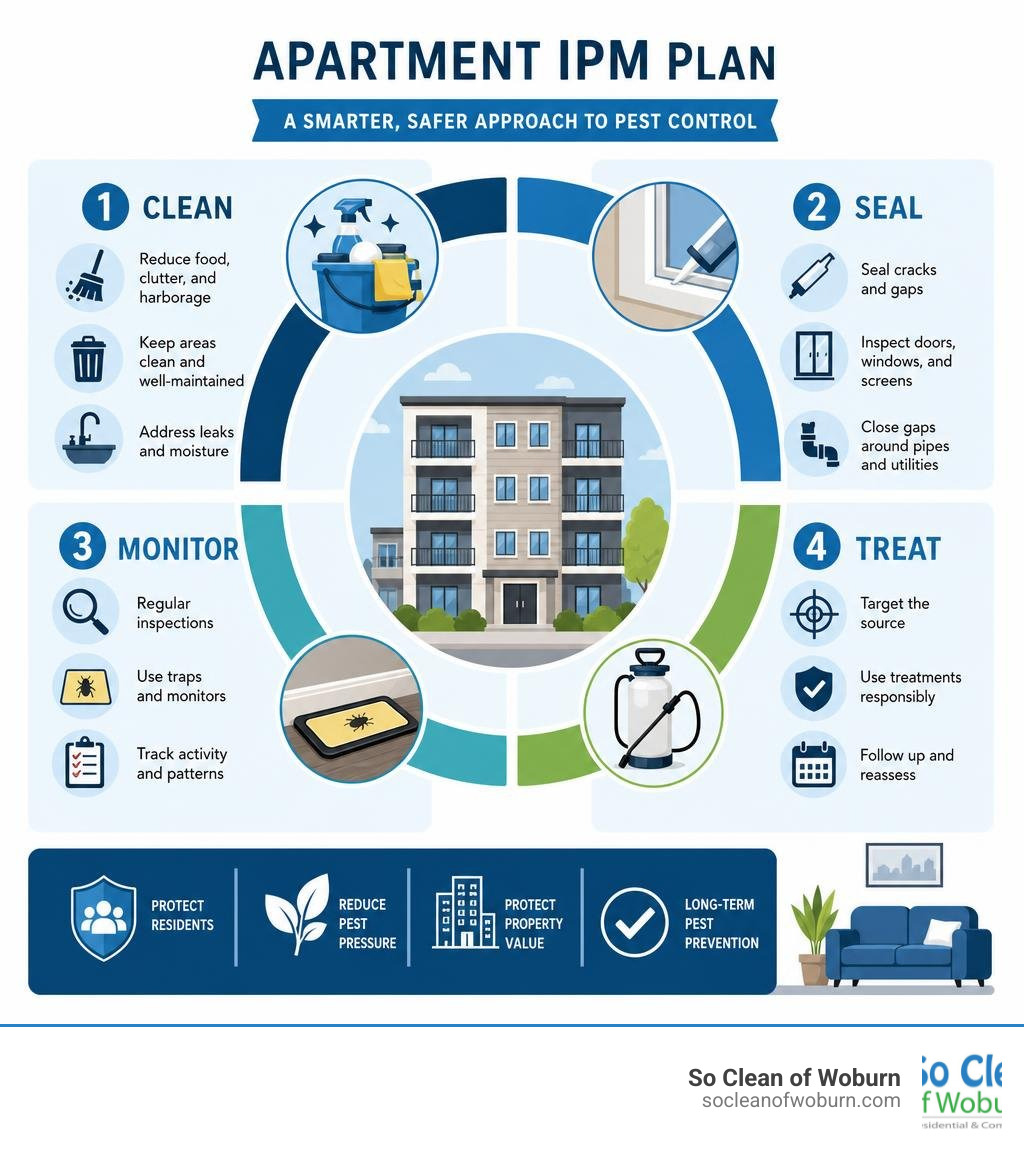
Sealing, Exclusion, and Building Maintenance
Exclusion means keeping pests out or limiting how easily they move. In apartments, exclusion should include individual units and common areas.
Important steps include:
- Install or repair door sweeps
- Caulk baseboard gaps and wall cracks
- Seal around pipes under sinks
- Use escutcheon plates or pipe collars where appropriate
- Repair window screens
- Weatherstrip exterior doors
- Seal utility penetrations
- Repair foundation cracks
- Inspect basements and crawlspaces
- Close gaps around trash rooms and loading areas
- Rodent-proof exterior entry points
Older buildings in Boston, Cambridge, Somerville, Medford, Woburn, and surrounding communities often have charming character and, occasionally, charming little gaps that mice absolutely love. Regular maintenance is essential.
Sanitation Strategies That Reduce Pest Pressure
Sanitation is one of the most powerful pest prevention tools in multifamily housing. Pests need food, water, and shelter. Cleaning removes the buffet.
Focus on:
- Trash rooms
- Compactor rooms
- Chute doors
- Recycling areas
- Laundry rooms
- Basement storage areas
- Hallways and stairwells
- Kitchen common areas
- Floor drains
- Grease and sticky residue
- Food debris behind appliances
- Odors from spills or waste buildup
Trash and compactor rooms are especially important. Spilled garbage and liquids can attract flies, roaches, mice, and rats. Regular scraping, washing, deodorizing, and degreasing can reduce odors and pest pressure.
We cover this in more detail here: More on apartment common-area cleaning.
Monitoring, Reporting, and Tenant Education
Monitoring helps identify pest problems early, before they spread. Property managers should consider:
- Glue boards in utility and trash areas
- Sighting logs for tenants and staff
- Unit maps showing recurring hotspots
- Photos of droppings, damage, or entry points
- Maintenance tickets for leaks and gaps
- Sanitation reports when housekeeping issues contribute
- Follow-up inspections after treatment
- Written tenant notices before service
- Clear preparation checklists
Tenant education is not about shaming residents. It is about making prevention easy. Simple reminders about storing food, reporting leaks, avoiding used furniture, and preparing for service can make a huge difference.
For a deeper look, see More multifamily pest prevention strategies.
Why Clean Buildings Have Fewer Recurring Infestations
Clean buildings are not pest-proof, but they are much harder for pests to exploit. Regular cleaning helps by:
- Removing food crumbs and residue
- Reducing roach allergens
- Lowering dust and debris
- Improving indoor air quality
- Reducing odors that attract pests
- Making droppings and activity easier to spot
- Supporting consistent housekeeping standards
- Encouraging resident cooperation
Cleanliness also helps technicians do better work. If baseboards, sinks, trash areas, and storage rooms are accessible, pest control treatments can be more precise and effective.
For more on the connection between cleaning and indoor health, read More on reducing allergens in apartment buildings.
Building-Wide Treatments, Difficult Pests, and Service Frequency
Some pests can be handled with a unit-level response. Others require coordinated building-wide action. Cockroaches, rodents, and bed bugs often fall into the second category, especially when multiple tenants report activity.
Why Building-Wide Coordination Beats Single-Unit Treatment
Building-wide coordination works better because pests do not respect unit lines. If only one apartment is treated, pests may move into untreated spaces and return later.
A coordinated plan may include:
- Inspecting adjacent units
- Treating units above, below, and beside the problem unit
- Checking shared plumbing walls
- Servicing hallways, basements, and laundry rooms
- Cleaning and treating trash areas
- Sealing exterior entry points
- Scheduling follow-up visits
- Sending tenant preparation notices
- Tracking results by unit and common area
For property managers comparing local service coverage, examples of Massachusetts pest service area information include resources for the North Shore, Essex County, Middlesex County, Andover, Arlington, Bedford, Belmont, and Beverly.
Specialized Services for Bed Bugs and Other Difficult Pests
Bed bugs require a different approach from general pest control. Standard baseboard spraying is not enough.
Specialized bed bug services may include:
- Detailed bed, mattress, furniture, and baseboard inspection
- Mattress and box spring encasements
- Heat treatment
- Steam treatment
- Precision chemical treatment
- Vacuuming
- Canine detection in larger properties
- Follow-up monitoring
- Treatment of adjacent units when needed
Tenants should watch for early signs such as small blood spots on sheets, dark specks on mattresses, shed skins, bites in clusters, or live insects in seams and crevices.
Other difficult pests also need special handling:
- Fleas: often require pet treatment, laundering, vacuuming, and follow-up.
- Rodents: require exclusion, trapping, sanitation, and exterior inspection.
- Severe roaches: may require bait rotation, growth regulators, repeated visits, and adjacent-unit inspections.
- Termites or carpenter ants: require structural inspection and moisture correction.
Apartment Pest Control Costs, Contracts, and Scheduling in Massachusetts and New Hampshire
Costs vary widely depending on the pest, building size, number of units, severity, access, preparation, and follow-up needs.
Typical planning ranges in Massachusetts and New Hampshire include:
- One-time visit: about $150 to $1,050
- Annual service plan: about $600 to $4,100
- Routine preventive service: often priced by unit count, building layout, and service frequency
- Specialized bed bug, termite, or rodent exclusion work: often costs more than general pest service
The high end is usually tied to larger buildings, severe infestations, difficult access, repeated visits, or specialized treatment methods. A small ant issue in one unit will not be priced like a building-wide bed bug response. Thankfully.
Property managers should ask whether pricing includes:
- Inspection
- Common area service
- Unit treatments
- Follow-up visits
- Emergency calls
- Reporting
- Tenant preparation materials
- Exclusion recommendations
- Bed bug or rodent add-ons
How Often Preventive Service Should Be Scheduled
For many apartment buildings, quarterly preventive pest control is a reasonable baseline. Higher-risk buildings may need service every two months or monthly.
Frequency depends on:
- Building age
- Number of units
- Tenant turnover
- History of infestations
- Trash room conditions
- Nearby restaurants or food businesses
- Basement and storage conditions
- Moisture problems
- Seasonal pest pressure
- Rodent activity in fall and winter
- Cockroach activity in warm, humid areas
- Bed bug reports
Buildings with recurring issues should not rely on occasional emergency service alone. Preventive inspections, cleaning, sealing, and routine monitoring are much more effective.
Frequently Asked Questions About Apartment Pest Control
Do Exterminators Spray Everywhere in an Apartment?
No. Professional technicians usually use targeted treatments. They focus on baseboards, cracks, crevices, entry points, under sinks, behind appliances, cabinet areas, and places where pests live or travel.
For many pests, baits and traps are more effective than broad spraying. Technicians should follow product labels and avoid unnecessary applications on surfaces where people cook, eat, sleep, or sit.
Is Apartment Pest Control Safe for Children and Pets?
When performed by licensed professionals according to label directions, apartment pest control can be done safely. Tenants still need to follow instructions.
Common safety steps include:
- Remove pets during service
- Cover aquariums
- Keep children away from treated areas until dry
- Follow re-entry times
- Ventilate if instructed
- Do not touch baits, traps, or treated cracks
- Tell management about asthma, pregnancy, chemical sensitivities, or medical concerns
If you are unsure, ask the technician what was applied, where it was applied, and when it is safe to return.
Can a Tenant Refuse Pest Control in an Apartment?
A tenant may have concerns about treatment, but refusing access can create problems in a shared building. Most leases allow landlords or property managers to enter with reasonable notice for repairs, inspections, and necessary services.
If pests threaten multiple units, tenant cooperation is important. Refusal may allow infestations to spread and may violate lease terms. Tenants with health concerns should communicate early so management can discuss options, timing, ventilation, or alternative treatment methods with the pest professional.
Conclusion
Effective apartment pest control is not just about killing pests after they appear. It is about understanding how apartment buildings work: shared walls, shared utilities, shared trash areas, shared habits, and shared responsibility.
The best results come from combining:
- Prompt reporting
- Professional inspection and treatment
- Building-wide coordination
- Tenant cooperation
- Sealing and maintenance
- Trash room and common-area cleaning
- Moisture control
- Regular monitoring
- Clear communication
At So Clean of Woburn, we help property managers, landlords, and residents create cleaner, healthier apartment buildings across the Greater Boston area, including Middlesex County, Essex County, the North Shore, Woburn, Boston, Cambridge, Somerville, Medford, Arlington, Burlington, Waltham, and nearby communities.
A clean building will not magically repel every pest, but it removes the conditions that allow infestations to return again and again. And that is where long-term prevention really begins.
If you want to support pest prevention with cleaner common areas, healthier living spaces, and a more consistent building maintenance plan, start here: keep your apartment building cleaner and healthier.