
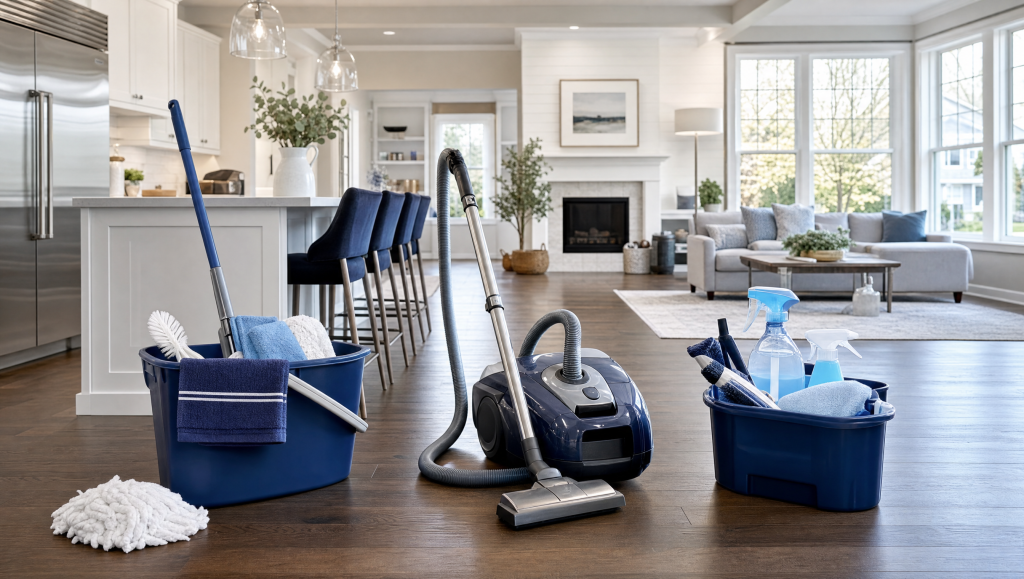
A practical house cleaning schedule should keep everyday mess from turning into a full-day project. The right rhythm depends on the people, pets, surfaces, and high-use rooms in the home, so the most useful schedule separates quick resets from deeper work.
Start with the rooms that create the most work
Kitchens, bathrooms, entries, and frequently used living areas usually need attention sooner than guest rooms or formal spaces. Build the schedule around how the household actually lives instead of assigning every room the same frequency.
| Frequency | Priority tasks | Reason |
|---|---|---|
| Daily or after use | Clear counters, wash dishes, wipe food-prep surfaces, contain laundry, spot-clean spills, and reset entry areas | Prevents clutter, moisture, and food residue from spreading |
| Weekly | Clean bathrooms, dust reachable surfaces, vacuum carpets, mop hard floors, change bed linens, and empty small waste bins | Addresses the soil and dust that normal use creates |
| Monthly | Dust vents and trim, clean cabinet fronts, vacuum upholstery, wash interior glass as needed, and reach beneath movable furniture | Catches buildup outside the normal cleaning path |
| Seasonally | Review closets, clean behind large appliances where accessible, wash window treatments as appropriate, and rotate deep-cleaning zones | Prevents infrequent tasks from being forgotten |
Use a short daily reset
A daily reset is not a deep clean. It is a brief pass that returns items to their homes and removes the mess most likely to become harder later. Focus on dishes, crumbs, spills, bathroom counters, entry clutter, and anything that blocks tomorrow's routine.
Keep the reset small enough to repeat. If it regularly takes too long, move lower-priority work to the weekly list rather than abandoning the schedule.
Give the weekly clean a consistent order
Working in the same sequence reduces backtracking. Start by picking up and removing trash. Dust from higher surfaces toward lower ones. Clean kitchens and bathrooms with products appropriate for each surface. Vacuum, then mop where needed. Finish by replacing linens and supplies.
Allow disinfectants to remain visibly wet for the contact time on their labels. Do not mix cleaning products, and keep products in their original containers. Good ventilation and manufacturer directions matter more than using extra product.
Build a monthly zone rotation
Trying to deep-clean the entire home in one weekend often makes the routine fragile. Assign one or two zones each week instead. For example:
- Week one: kitchen cabinet fronts, appliance exteriors, and pantry review
- Week two: bathroom grout, exhaust-fan covers, and storage
- Week three: bedrooms, mattress-area vacuuming, and closet floors
- Week four: living areas, upholstery, baseboards, and interior glass
When a month has a fifth week, use it for a skipped task or a seasonal project.
Adjust for pets, children, allergies, and entertaining
A home with shedding pets may need more frequent floor and upholstery care. Young children can shift attention toward food surfaces and play areas. Allergy concerns may make controlled dust removal and filter maintenance more important. Before guests arrive, prioritize the entry, bathroom, kitchen, and the rooms they will actually use.
Know when professional cleaning changes the plan
Professional service can replace part of the weekly or monthly workload, but it works best when expectations are defined. Decide whether the priority is recurring maintenance, a deeper reset, or preparation for a specific event. Note delicate surfaces, restricted rooms, pets, access details, and any task that requires special attention.
So Clean provides house cleaning services in the Woburn area. A clear room-by-room priority list helps align the visit with the way the home is used.