
Why Natural Stainless Steel Cleaners Are Taking Over Modern Kitchens
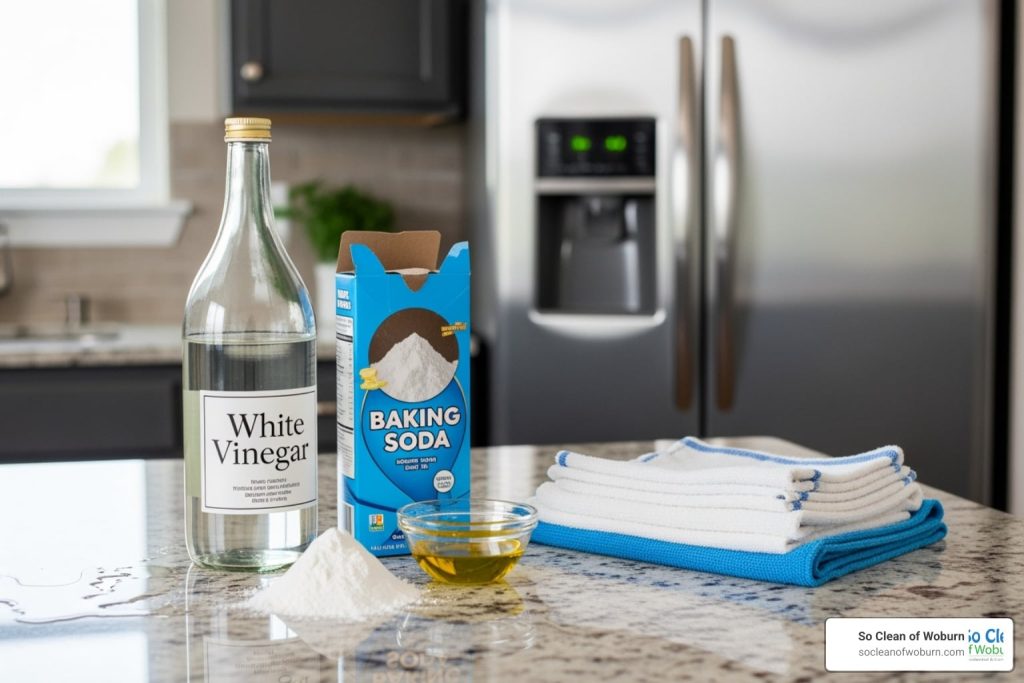
Natural stainless cleaner solutions are revolutionizing how we maintain our kitchen appliances, offering powerful cleaning without harsh chemicals. These eco-friendly alternatives use simple ingredients like white vinegar, baking soda, and olive oil to tackle fingerprints, grease, and water spots just as effectively as commercial products.
Quick Natural Stainless Steel Cleaner Options:
- Vinegar & Oil Method: Mix equal parts white vinegar and water, add 1 tablespoon olive oil
- Streak-Free Solution: Combine cornstarch, distilled water, vinegar, and rubbing alcohol
- Simple Baking Soda Paste: Mix baking soda with water for tough stains
- Cost Savings: Up to 80% cheaper than commercial cleaners
The shift toward natural cleaning isn’t just about saving money – though DIY natural cleaners can cost up to 80% less than commercial alternatives. It’s about creating healthier homes for busy families who want effective results without toxic fumes or residue on surfaces where food is prepared.
Modern stainless steel appliances are everywhere, with over 80% of refrigerators and dishwashers in American homes featuring these sleek finishes. But keeping them spotless can feel impossible with traditional cleaners that leave streaks or require constant reapplication.
I’m Bill McGrath, owner of So Clean of Woburn, and I’ve spent years helping Massachusetts and New Hampshire families maintain pristine homes using safe, effective methods. Through my professional cleaning experience, I’ve seen how natural stainless cleaner solutions consistently outperform harsh chemicals while protecting both your family’s health and your appliances’ finish.
Why Choose Natural Cleaners for Your Stainless Steel?
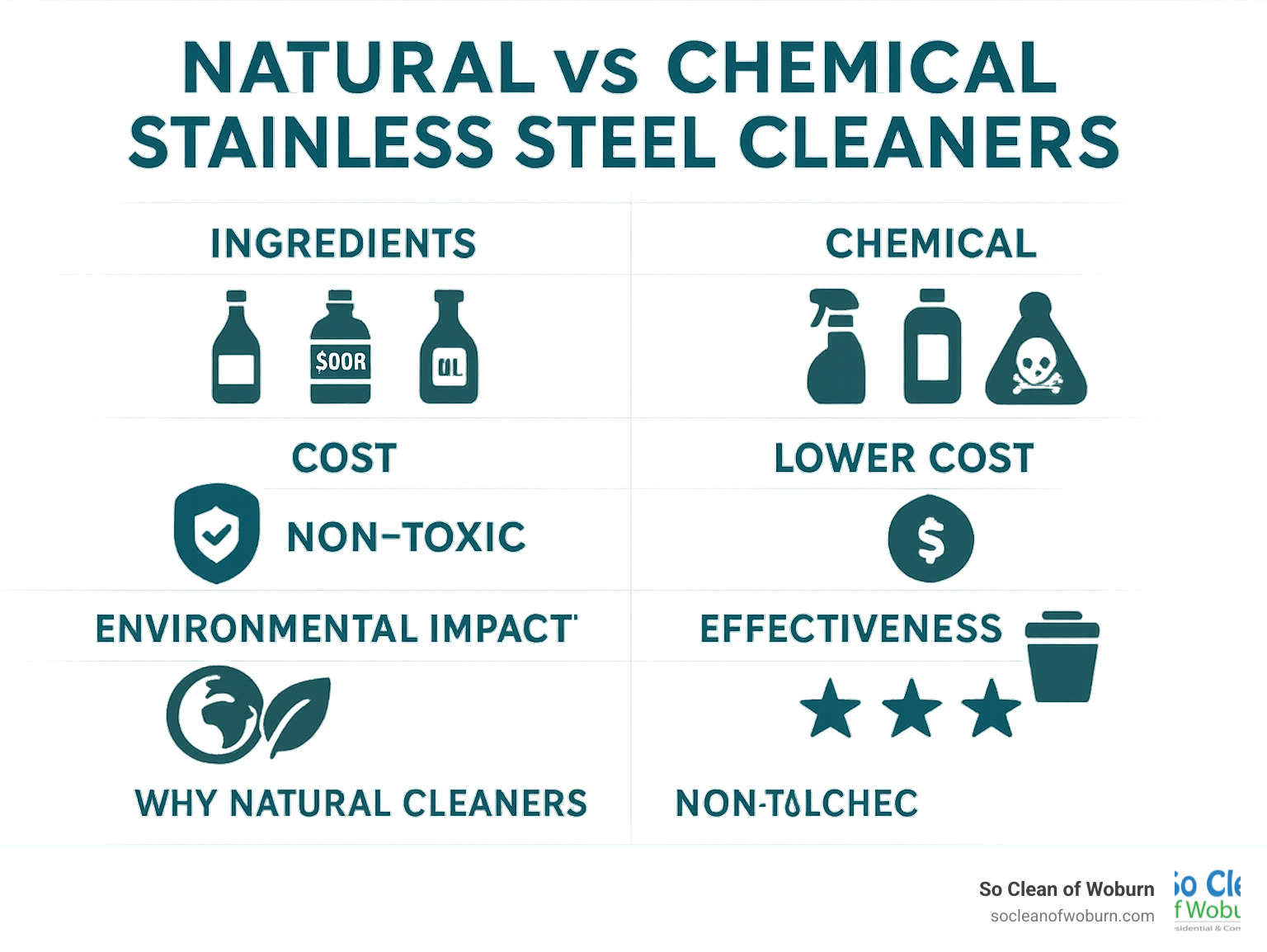
Making the switch to a natural stainless cleaner isn’t just a trendy choice – it’s a smart one that benefits your family, your wallet, and the planet. After years of helping Massachusetts and New Hampshire families maintain spotless homes, I’ve seen why more people are ditching harsh chemicals for simple, effective natural solutions.
Your Family’s Health Comes First
Let’s start with what matters most: keeping your loved ones safe. Traditional cleaning products are loaded with harsh chemicals that release volatile organic compounds (VOCs) into your home’s air. These invisible toxins can trigger respiratory issues, cause skin irritation, and create ongoing health concerns for children and pets.
When you choose natural stainless cleaner ingredients like white vinegar and baking soda, you’re creating a non-toxic environment where your family can breathe easy. There’s something wonderful about cleaning your kitchen knowing that every surface is safe for food preparation and that curious toddlers won’t be harmed if they touch freshly cleaned appliances.
Making a Real Environmental Impact
Our planet needs all the help it can get, and your cleaning choices make a bigger difference than you might think. Conventional cleaners contain chemicals that flow down your drain and into waterways, harming aquatic life and contributing to widespread chemical pollution.
The good news? Consumer demand for eco-friendly solutions is driving real change. 70% of consumers are now willing to pay more for sustainable cleaning solutions, showing that families everywhere are prioritizing environmental responsibility. Natural ingredients like vinegar and plant-based oils are completely biodegradable, leaving zero harmful residue in our shared environment.
When you choose natural cleaning methods, you’re joining a movement that’s reducing chemical pollution one spotless appliance at a time. For more ways to make your cleaning routine environmentally friendly, check out our guide to eco-friendly cleaning products.
Your Budget Will Thank You
Here’s where natural cleaners really shine: they’re incredibly cost-effective. While commercial stainless steel cleaners can cost anywhere from $6 to $25 per bottle, DIY natural solutions can be up to 80% cheaper.
Think about it – a bottle of white vinegar costs around $2 and can make dozens of cleaning solutions. Compare that to repeatedly buying specialized cleaners, and the savings add up fast. Many of our clients tell me they’ve cut their cleaning supply budget in half just by switching to natural ingredients they already have in their pantry.
Effectiveness That Actually Works
The biggest myth about natural cleaners? That they can’t handle tough cleaning jobs. I’m here to tell you that’s absolutely wrong. The acetic acid in white vinegar is a powerful degreaser with natural antimicrobial properties, while baking soda provides gentle abrasive action that won’t scratch your appliances.
These natural combinations remove fingerprints, tackle grease, and eliminate water spots just as effectively as commercial products – often better, since they don’t leave behind the sticky residue that some commercial wipes are notorious for. Your stainless steel appliances will have that brilliant, streak-free shine you’re looking for, achieved with ingredients you can feel good about using.
The Pantry Staples: Your Essential Natural Cleaning Ingredients
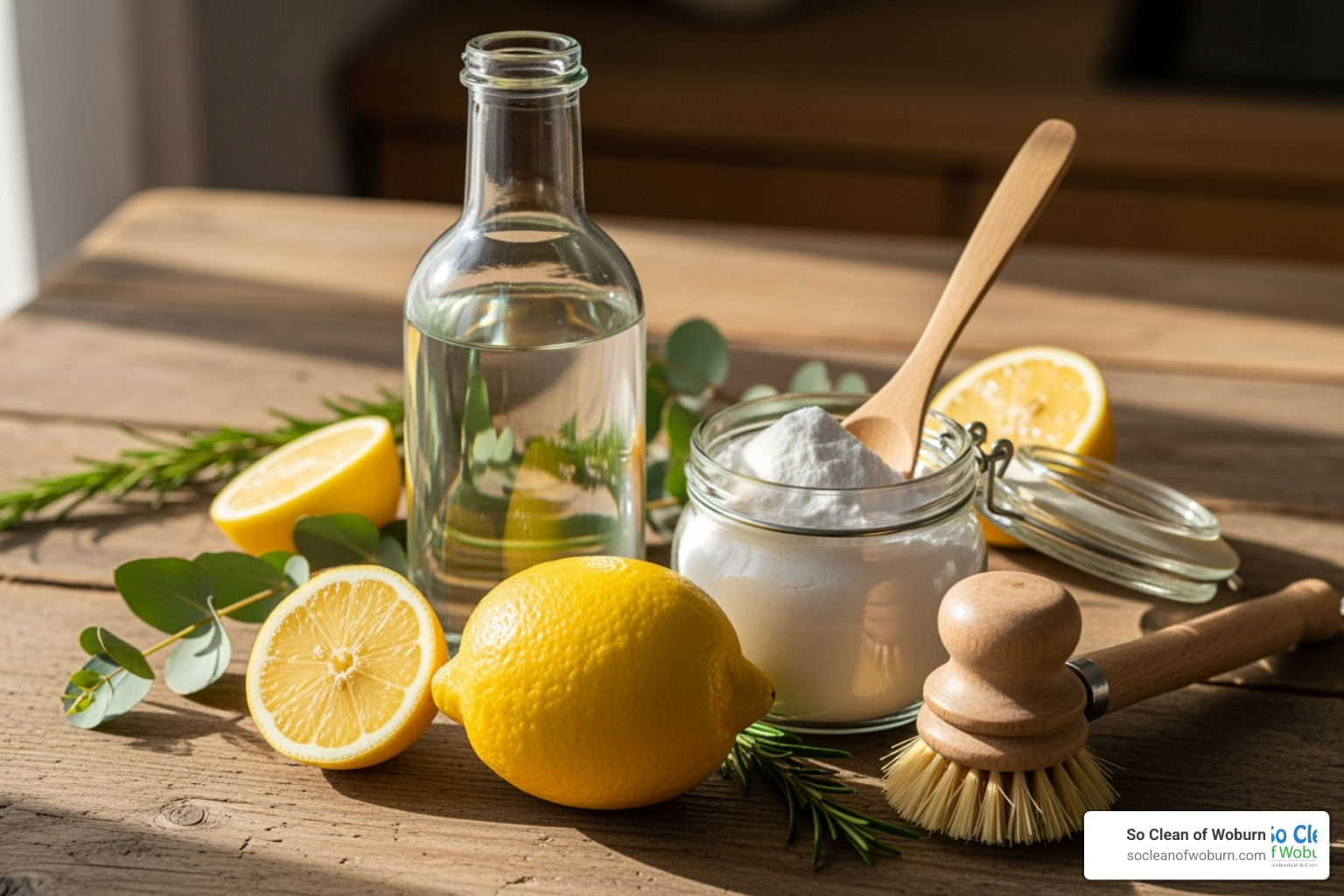
You know what I love most about making your own natural stainless cleaner? You probably already have everything you need sitting right in your kitchen! These everyday pantry heroes pack serious cleaning power, and once you understand what each one brings to the table, you’ll wonder why you ever bought those expensive commercial cleaners.
Let’s start with the superstar of natural cleaning: white vinegar. This humble bottle holds the key to streak-free, sparkling appliances thanks to its acetic acid content. This natural acid is like a gentle warrior – tough enough to cut through grease and dissolve those stubborn water spots, yet mild enough that it won’t harm your beautiful stainless steel finish. The Scientific research on Acetic acid shows just how effective this common ingredient really is. I’ve watched countless clients amazed at how something so simple can make their refrigerators gleam like new.
Next up is baking soda, your kitchen’s secret weapon against stuck-on messes. As a mild abrasive, it gently scrubs away grime without scratching delicate surfaces. What makes it truly special is how it teams up with vinegar – when these two meet, they create a fizzing action that lifts dirt and neutralizes odors naturally. It’s like having a gentle but determined cleaning assistant that never gives up on tough spots.
Now here’s where things get interesting – olive oil and coconut oil aren’t just for cooking anymore! After you’ve cleaned your stainless steel, a tiny amount of either oil works magic as a natural polishing and protecting agent. This step transforms good cleaning into great cleaning, creating that showroom shine while forming a protective barrier against future fingerprints. Think of it as giving your appliances a spa treatment.
For those of you who’ve battled streaks on stainless steel (and really, who hasn’t?), let me introduce you to an unlikely hero: cornstarch. This pantry staple creates a streak-free finish by absorbing oils and residue that typically cause those annoying marks. It’s one of those “trust me on this” ingredients that seems odd until you see the crystal-clear results.
Finally, essential oils add the perfect finishing touch. While they’re not required for cleaning power, a few drops of lemon or lavender oil can transform the sharp scent of vinegar into something pleasant. Plus, citrus oils bring their own grease-fighting properties to your homemade solutions.
With these simple ingredients in your arsenal, you’re ready to create powerful cleaning solutions that rival anything you can buy in stores – for a fraction of the cost!
Your Go-To Recipes for a DIY Natural Stainless Cleaner
Ready to roll up your sleeves and create some magic? These natural stainless cleaner recipes have been my go-to solutions for years, and I’m excited to share them with you. After testing countless combinations in real Massachusetts and New Hampshire homes, these two methods consistently deliver that showroom shine we’re all after.
The beauty of these recipes lies in their simplicity. You won’t need a chemistry degree or expensive equipment – just a few pantry staples and about five minutes of your time. Let’s explore these game-changing formulas that will transform how you think about cleaning your stainless steel appliances.
The All-Purpose Vinegar and Oil Method
This recipe is like the Swiss Army knife of stainless steel cleaning – versatile, reliable, and surprisingly effective. I’ll admit, when I first heard about mixing what essentially amounts to salad dressing for cleaning, I was skeptical. But after seeing it tackle everything from stubborn fingerprints to greasy stovetop smudges, I became a true believer.
Start by gathering half a cup of white vinegar, half a cup of water, and one tablespoon of olive oil. If you want to mask that initial vinegar scent (which disappears within an hour anyway), add a few drops of your favorite essential oil – lemon works beautifully with stainless steel.
Pour everything into a clean spray bottle, giving preference to glass if you have it. The essential oils can sometimes interact with plastic over time, though it’s not a deal-breaker if plastic is all you have. Give it a good shake, and you’re ready to go.
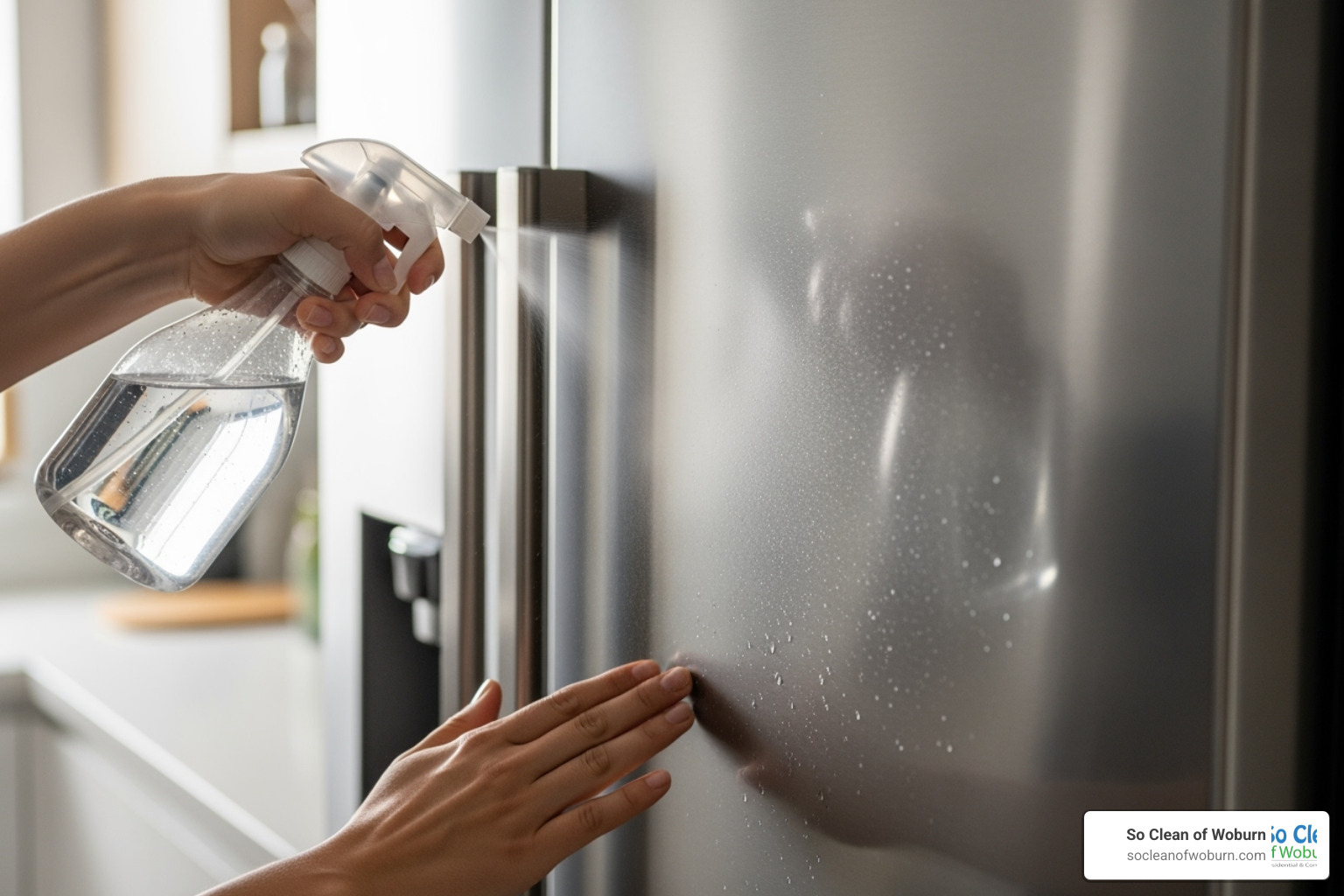
Here’s where technique matters: always wipe with the grain of your stainless steel. Think of it like brushing your hair – you want to follow the natural direction. Spray your mixture onto a clean microfiber cloth rather than directly onto the surface. This gives you better control and prevents oversaturation.
Work in small sections, removing fingerprints and tackling smudges with gentle, overlapping strokes. The vinegar cuts through the grime while the oil conditions and protects the surface. Finish with a dry microfiber cloth to buff everything to a brilliant shine.
The Streak-Free Natural Stainless Cleaner Solution
If streaks are your nemesis (and trust me, they’re everyone’s nemesis), this recipe is your secret weapon. The magic ingredient here is cornstarch – it sounds unusual, but it works like a charm to absorb oils and prevent those annoying streaks that seem to appear out of nowhere.
You’ll need one tablespoon of cornstarch, one and a half cups of distilled water, a quarter cup of white vinegar, and a quarter cup of rubbing alcohol. The distilled water is worth the small extra cost because it eliminates mineral deposits that can cause water spots.
Start by dissolving the cornstarch in a small amount of cold water to create a smooth slurry. This prevents clumping when you add it to your glass spray bottle. Add the remaining ingredients, including 10-12 drops of essential oil if you’re using it, and shake vigorously.
The application technique is crucial for streak-free results. Spray lightly – one spray per two-foot section is plenty. Immediately wipe with a clean microfiber cloth, following the grain of the steel. For that perfect finish, flip your cloth to a dry side and give everything a final buff. This polishing technique is what separates good results from spectacular ones.
The rubbing alcohol helps everything dry quickly while adding disinfecting power, and that cornstarch truly is the hero ingredient that makes this homemade solution rival any commercial cleaner on the market.
Both recipes require a good shake before each use since oil and water naturally separate, but that’s a small price to pay for such effective, affordable cleaning power.
Best Practices for Cleaning and Common Mistakes to Avoid
When it comes to maintaining your stainless steel surfaces, whether you’re dealing with appliance finishes on your refrigerator and dishwasher or caring for your sinks and pans, the approach remains surprisingly consistent. The beauty of using a natural stainless cleaner is that it works wonderfully across all these different applications, though there are some subtle differences between cleaning cookware vs. appliances that we’ll explore.
At So Clean of Woburn, we’ve learned that the key to gorgeous stainless steel isn’t just about what you use – it’s about how you use it. After years of helping Massachusetts and New Hampshire families maintain their homes, we’ve seen what works and what definitely doesn’t. For more insights into our comprehensive approach, check out More info about green house cleaning.
The fascinating thing about stainless steel is that it comes in various finishes – brushed, polished, or satin – and while our natural cleaning recipes work beautifully on all of them, understanding the grain direction is absolutely crucial. Your large appliances usually have a very visible grain pattern, while sinks and cookware might have a more subtle one that requires a closer look to detect.
Pro Tips for a Perfect Shine with Your Natural Stainless Cleaner
The difference between okay results and absolutely stunning results often comes down to technique. Wiping with the grain is hands down the most important rule for cleaning stainless steel. Think of it like petting a cat – you want to go with the natural direction, not against it. Whether you’re tackling a massive refrigerator door or a small sauce pan, always follow those metal lines. You can usually spot the grain by looking closely at the surface – it’ll run either horizontally or vertically.
Microfiber cloths are absolutely essential for this job. We can’t stress this enough! These soft, non-abrasive cloths are designed to lift dirt and moisture without scratching delicate surfaces. Paper towels might seem convenient, but they can actually leave tiny scratches and lint behind. Invest in a few high-quality microfiber cloths – your stainless steel will thank you.
Before diving into cleaning an entire appliance, always test on a small area first. Even though natural cleaners are gentle, different finishes can react differently. Pick a hidden spot – maybe behind your refrigerator handle or on the back edge of your sink – and try your cleaner there first. This simple step can save you from any surprises.
Drying thoroughly is where many people stumble, even when using the perfect natural cleaner. Leaving water to air dry, especially in areas with hard water, creates those frustrating water spots and mineral deposits. After cleaning, immediately buff the surface with a clean, dry microfiber cloth until it’s completely streak-free. This extra step transforms your results from good to spectacular.
For that extra wow factor, try polishing with oil after cleaning. A tiny amount of olive oil on a clean cloth, wiped along the grain, creates a protective barrier against fingerprints and adds incredible luster. Remember – we’re talking just a few drops here, not a salad dressing situation!
Common Mistakes That Can Damage Stainless Steel
Even with the gentlest natural stainless cleaner, certain habits can still cause problems. Abrasive sponges and steel wool are stainless steel’s worst enemies. It sounds ironic – steel wool on stainless steel – but these materials will create permanent scratches that dull the finish and can even lead to rust in damaged areas. Stick with soft cloths exclusively.
Stay far away from harsh chemicals like bleach and ammonia. These aggressive cleaners can cause discoloration, permanent damage, or corrosion to your beautiful stainless steel finish. Chlorine-based products are particularly nasty – they can cause pitting and rust that’s impossible to repair. Even though we’re all about natural cleaning, never mix different cleaners together, as this can create dangerous chemical reactions.
Cleaning against the grain might seem like a minor detail, but those microscopic scratches add up over time, making your stainless steel look tired and worn. Always follow those natural metal lines, just like you would when sanding wood.
Using too much oil during the polishing step is a common enthusiasm mistake. While oil creates gorgeous shine and protection, too much leaves a greasy residue that actually attracts dust, crumbs, and more fingerprints. You’ll end up with appliances that look worse than when you started! A light touch is all you need.
Finally, leaving residue from any cleaner – natural or otherwise – can attract dirt or even tarnish the surface over time. Always ensure you’ve wiped everything clean and buffed the surface completely dry. This final step is what separates amateur results from professional-looking shine.
The good news is that once you develop these habits, maintaining gorgeous stainless steel becomes second nature. Your appliances, sinks, and cookware will look showroom-fresh for years to come.
Frequently Asked Questions about Natural Stainless Steel Cleaning
I get these questions all the time from our clients in Massachusetts and New Hampshire, and I completely understand the curiosity! When you’re making the switch to natural cleaning, you want to know it’s going to work just as well as what you’re used to. Let me share what we’ve learned through years of professional cleaning experience.
Can I use these natural cleaners on all my stainless steel items, including appliances, sinks, and pans?
Absolutely! This is one of my favorite things about natural stainless cleaner solutions – they’re incredibly versatile. Whether you’re tackling that fingerprint-covered refrigerator door, cleaning your kitchen sink after dinner prep, or dealing with your stainless steel cookware, these gentle formulas work beautifully across the board.
For your big appliances like refrigerators, dishwashers, and ovens, our vinegar and oil method or streak-free solution will handle everyday fingerprints and smudges with ease. These appliances typically have that smooth, brushed finish that responds perfectly to gentle natural cleaning.
Your kitchen sink gets a real workout every day, and natural cleaners are fantastic here too. I often recommend making a simple paste with baking soda and water for soap buildup or food residue, followed by a vinegar rinse for that final shine. Pro tip: cut a lemon in half, dip it in baking soda, and use it as a natural scrubber – your sink will smell amazing!
Now, stainless steel pans and cookware might need a bit more muscle, especially if you’re dealing with burnt-on food. Before using your regular natural stainless cleaner spray, try making a paste with equal parts baking soda and water. Let it sit for about 10-15 minutes on stubborn spots, then gently scrub with a soft cloth. For really tough stains, you might need something with a bit more power, but for daily maintenance, our DIY solutions work wonderfully.
How do natural cleaners compare in shine to commercial products?
Here’s where I get really excited – natural cleaners can absolutely match the shine of commercial products, and often do it better! The secret isn’t just in the ingredients; it’s in the technique.
Many store-bought cleaners rely on temporary fixes like waxes or silicones that can build up over time and actually attract more dust and fingerprints. Our natural approach works differently – the vinegar cuts through grease and grime, while the oil conditions and protects the surface.
The real magic happens in that final buffing step with a clean microfiber cloth. This is what brings out that gorgeous, natural luster that makes your appliances look showroom-ready. When I train our cleaning teams, I always emphasize this step because it’s what transforms a clean surface into a truly sparkling one.
We’ve consistently found that our cost-effective DIY mixtures clean just as well as expensive commercial products, without leaving behind any sticky residue that can make surfaces look dull over time. The main difference you’ll notice is usually just the scent – and honestly, that fresh, clean smell of natural ingredients is pretty wonderful too.
How often should I clean my stainless steel appliances?
This is such a practical question, and the answer really depends on how your family uses your kitchen. Let me break this down in a way that makes sense for busy households.
For daily maintenance, I recommend wiping away spills and fingerprints as they happen, especially on high-touch areas like refrigerator handles and the front of your dishwasher. Just a quick swipe with a damp microfiber cloth can prevent buildup and keep things looking fresh.
For deeper cleaning with your natural stainless cleaner, aim for weekly or bi-weekly sessions depending on your household’s activity level. If you have kids who love to “help” in the kitchen (and leave their mark on every surface!), you might lean toward the weekly schedule. Families with less kitchen traffic can often get away with every other week.
The beauty of staying consistent with this routine is that it prevents those marathon cleaning sessions where you’re scrubbing away weeks of accumulated grime. Regular maintenance with natural products keeps everything manageable and ensures your appliances always look their best.
Trust me, once you get into this rhythm, you’ll be amazed at how easy it becomes to maintain that pristine, sparkling kitchen you love showing off to guests.
Conclusion
We hope this guide has opened your eyes to just how amazing natural stainless cleaner solutions can be for your home! After years of helping families across Massachusetts and New Hampshire maintain pristine kitchens, we’ve seen how these simple DIY recipes can transform the way you clean.
The benefits really speak for themselves. These natural methods are completely safe around your children, pets, and food preparation areas – no more worrying about toxic fumes or harmful residues. They’re incredibly cost-effective too, saving you up to 80% compared to store-bought alternatives. Plus, they’re genuinely powerful at tackling everything from stubborn fingerprints to greasy smudges, all while being surprisingly easy to make with pantry staples you probably already own.
What we love most is how these solutions prove that effective cleaning doesn’t have to come with a laundry list of unpronounceable chemicals. A little vinegar, some baking soda, and a touch of olive oil can work absolute magic on your stainless steel appliances, leaving them gleaming like the day you brought them home.
At So Clean of Woburn, we’ve built our reputation on the belief that a truly clean home shouldn’t compromise your family’s health or our shared environment. While we absolutely encourage you to try these fantastic DIY methods, we also know that life in the Greater Boston area moves fast. Between work, family, and everything else on your plate, sometimes you need professional help to keep up.
When those busy weeks hit and you need a deeper clean that maintains the same eco-friendly standards, our expert team is here for you. We bring the same commitment to natural, effective cleaning to every home and office we serve across Massachusetts and New Hampshire. You can learn More info about our green cleaning services and find how we can help you maintain that sparkling clean home – naturally!