

Why Natural Stainless Steel Cleaners Are Taking Over Massachusetts Kitchens
Natural stainless steel cleaner options are becoming the go-to choice for busy professionals who want spotless appliances without harsh chemicals. Here’s what you need to know:
Top Natural Stainless Steel Cleaning Solutions:
- White vinegar + water (1:1 ratio) – cuts through grease and fingerprints
- Baking soda paste – tackles tough, baked-on stains without scratching
- Olive oil finish – restores shine and repels future smudges
- Microfiber cloths – essential for streak-free results
Stainless steel appliances add that sleek, modern touch to any kitchen, but keeping them clean and shiny can feel like a never-ending battle. As one frustrated homeowner put it: “Are you fed up with all the fingerprints and greasy smudges on your stainless steel appliances?”
The good news? DIY natural stainless steel cleaners are just as effective as commercial cleaners when it comes to removing dirt, grime, and water spots. Plus, they’re non-toxic, affordable, and safe for your family and pets.
These simple ingredients work because science is on their side. Vinegar contains acetic acid that cuts through grease and oils rather than just smearing them around. Baking soda provides gentle scrubbing power without scratching your expensive appliances.
I’m Bill McGrath, owner of So Clean of Woburn, and I’ve seen how switching to natural stainless steel cleaner solutions can transform both cleaning results and indoor air quality for busy Massachusetts families. After years of helping clients maintain pristine homes and offices, I’ve learned that the most effective cleaning often comes from the simplest ingredients.
Why Choose a Natural Stainless Steel Cleaner?
Let’s be honest – we’ve all been there. You’re hosting friends for dinner, and just as they arrive, you notice those telltale fingerprints smudged all over your beautiful stainless steel refrigerator. You grab whatever cleaner is handy, spray it on, and suddenly you’re breathing in harsh chemical fumes that make your eyes water. There’s got to be a better way, right?
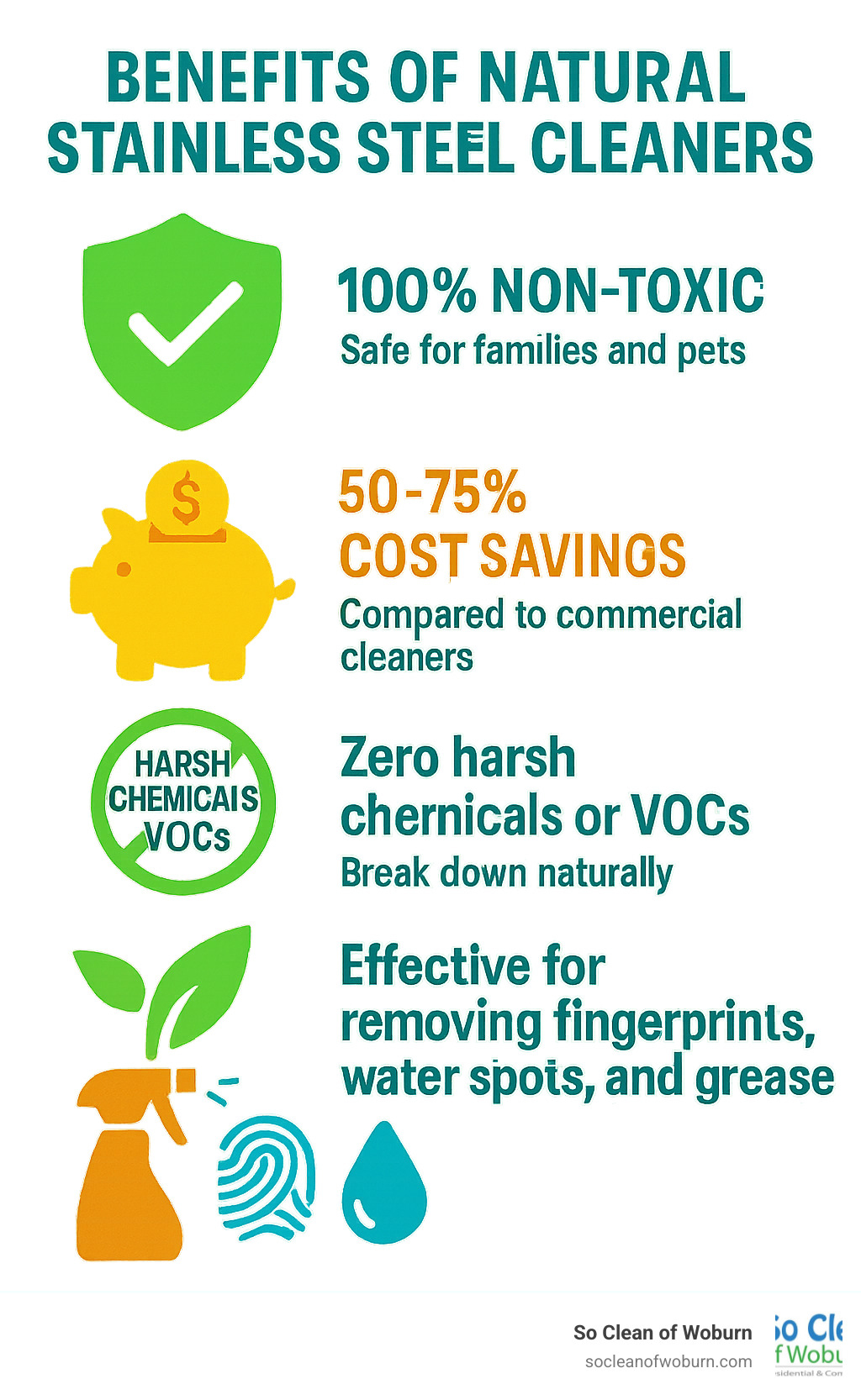
That’s exactly why more Massachusetts families are switching to natural stainless steel cleaner solutions. When you choose natural ingredients over harsh chemicals, you’re making a decision that benefits your health, your wallet, and the environment all at once.
Think about the health benefits for a moment. Those conventional cleaners often contain volatile organic compounds (VOCs) and synthetic fragrances that can irritate your skin, eyes, and lungs. A natural stainless steel cleaner uses non-toxic ingredients that are completely safe for children and pets. No more worrying about your curious toddler getting into the cleaning cabinet or your cat walking across freshly cleaned surfaces. This commitment to cleaner indoor air aligns perfectly with our approach to Reducing Allergens in Apartment Buildings: Tips for Cleaner Indoor Air.
The environmental advantages are just as compelling. Natural cleaners are biodegradable, meaning they break down safely in our waterways instead of polluting them. Plus, making your own cleaner dramatically reduces plastic waste from those single-use bottles that pile up under your sink. It’s a small change that makes a real difference, especially when you consider our broader commitment to Eco-Friendly Cleaning Products.
And here’s something that’ll make you smile – the cost savings are incredible. While store-bought stainless steel cleaners can run anywhere from $3 to $15 per bottle, your homemade version costs just pennies to make. We’re talking about 50-75% savings using ingredients you probably already have in your pantry.
The Power of Simple Ingredients
The magic of a natural stainless steel cleaner lies in the science behind everyday household items. These aren’t just random ingredients – they’re powerful cleaning agents that have been working for generations.
Vinegar’s cleaning power comes from its acetic acid content, which cuts through grease and grime like nobody’s business. Unlike some cleaners that just push dirt around, acetic acid’s ability to cut grease actually dissolves it. Yes, it smells strong at first, but that odor disappears within minutes, leaving no lingering chemical scent behind.
Baking soda’s mild abrasiveness makes it perfect for scrubbing away stuck-on messes without scratching your expensive appliances. It’s gentle enough for daily use but tough enough to handle those stubborn spots that seem permanently attached to your stainless steel.
Olive oil for polishing might sound counterintuitive – after all, aren’t we trying to remove oil? But a tiny amount of olive oil actually creates a protective barrier that repels future fingerprints and leaves your appliances with that showroom shine.
Lemon juice for degreasing adds extra cleaning power while leaving behind a fresh, natural scent. Meanwhile, essential oils like lavender or lemon can transform your cleaning routine from a chore into something almost enjoyable.
Effectiveness on Common Messes
You might wonder if these simple ingredients can really tackle the everyday chaos of a busy kitchen. The answer is a resounding yes! A well-made natural stainless steel cleaner handles common problems just as effectively as expensive commercial products – sometimes even better.
Fingerprints disappear effortlessly with the vinegar-water combination. Water spots from hard water dissolve away thanks to the acetic acid. Grease splatters from cooking meet their match without leaving behind that sticky film that some commercial cleaners are notorious for.
Food residue – whether it’s dried ketchup on the fridge or mysterious splatters on the dishwasher – comes off easily with a baking soda paste. The best part? You get a truly streak-free finish without any chemical smell lingering in your kitchen.
After years of helping Greater Boston families maintain spotless homes, I can confidently say that natural solutions often outperform their commercial counterparts, especially when it comes to achieving that perfect, streak-free shine we all want.
Your DIY Natural Cleaner Toolkit: Recipes and Ratios
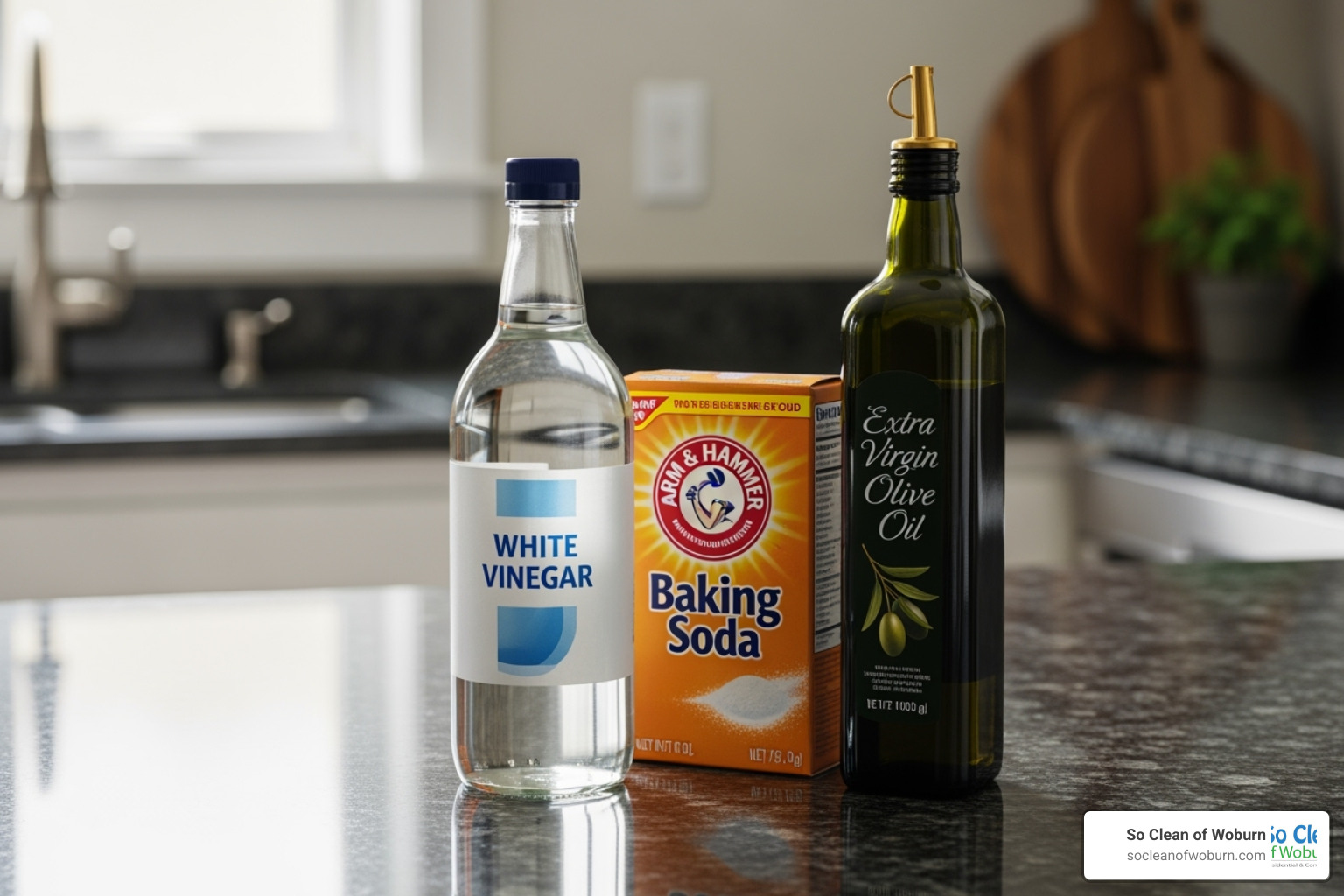
The best part about making your own natural stainless steel cleaner? You probably have everything you need sitting in your kitchen right now! We’re talking about simple household staples that cost a fraction of what you’d spend on commercial cleaners.
After helping countless families across Woburn and the Greater Boston area achieve spotless kitchens, I’ve learned that the most effective cleaning solutions are often the simplest ones. Let me share the exact recipes and proper ingredient ratios that have worked wonders for our clients.
Your Basic Natural Stainless Steel Cleaner Recipe
This is our everyday hero – the natural stainless steel cleaner recipe that handles 90% of your cleaning needs. It’s so simple, you’ll wonder why you ever bought those expensive commercial sprays.
Here’s what you’ll need: White vinegar (distilled works best), water, and olive oil or mineral oil. That’s it! If you want to get fancy, grab some essential oils for a pleasant scent.
The magic ratio is 1-to-1 water and vinegar. Mix half a cup of each in a spray bottle, then add just one tablespoon of olive oil. This creates the perfect balance – the vinegar does the heavy cleaning work while the oil adds that gorgeous, streak-free shine.
To make your cleaner: Pour everything into a spray bottle and shake it well. Really well! The oil wants to separate, so give it a good shake before each use. Glass bottles work best, especially if you’re adding essential oils, since they can sometimes affect plastic over time.
Here’s how the science works: The vinegar cuts through grease and dissolves water spots with its natural acetic acid. The water makes it gentle enough for regular use. The olive oil? That’s your secret weapon – it polishes the surface and creates a protective barrier that actually repels future fingerprints and smudges.
Heavy-Duty Scrub for Baked-On Grime
Sometimes life happens, and you need something stronger than your basic spray. Maybe someone forgot about that pasta sauce splatter, or your dishwasher door has some seriously stubborn spots. That’s when we turn to the gentle power of baking soda.
Creating your baking soda paste is refreshingly simple. Sprinkle baking soda directly onto the problem area, then add just enough water to make a thick paste. For extra cleaning power, use a few drops of your basic vinegar cleaner instead of water – you’ll get a satisfying little fizz that helps activate the cleaning action.
The application method requires a bit of patience, but it’s worth it. Let that paste sit for 15 to 20 minutes. For really tough spots, grab half a lemon and use it as a natural scrubber right on the paste. The citric acid gives you extra degreasing power plus a fresh, clean scent.
When it’s time to scrub, use a soft cloth and always move with the grain of your stainless steel. The mild abrasiveness of baking soda lifts away even the most stubborn grime without scratching your expensive appliances. Rinse thoroughly with clean water and dry completely.
This method tackles baked-on food, grease buildup, and even light rust spots without any harsh chemicals or risk of damage.
The Ultimate Polishing Method
The final step in achieving that professional, mirror-like finish is all about the polish. This is where your stainless steel goes from clean to absolutely stunning.
Your polishing toolkit is beautifully simple: a clean microfiber cloth and a few drops of olive oil or mineral oil. Some of our clients prefer fractionated coconut oil, especially for surfaces near heat sources like stove tops, since it stays liquid and won’t go rancid with temperature changes.
The technique makes all the difference. Start with a completely clean, dry surface. Put just a few drops of oil on your microfiber cloth – seriously, a little goes a very long way. Too much oil will leave streaks instead of shine.
Apply the oil by wiping with the grain of your stainless steel. You’ll see the surface immediately start to gleam. Then buff it out with a clean part of your cloth, removing any excess oil until you’re left with a brilliant, protective shine.
This polishing method does double duty – it restores that original luster and creates a thin protective barrier that helps repel fingerprints, dust, and water spots. Your appliances will stay cleaner longer, which means less work for you!
How to Clean for a Flawless, Streak-Free Finish
Getting that perfect, showroom shine on your stainless steel appliances isn’t magic – it’s all about technique. After helping countless families across the Greater Boston area achieve spotless results, I’ve learned that the difference between “clean” and “wow, that looks amazing!” comes down to following the right steps and using proper tools.
The secret isn’t just having a great natural stainless steel cleaner (though that certainly helps!). It’s understanding how stainless steel works and respecting its unique characteristics. Think of it like petting a cat – go with the grain, and you’ll get purrs. Go against it, and well… you’ll get scratches.
The Step-by-Step Application Guide
Here’s the foolproof method we’ve perfected over years of professional cleaning:
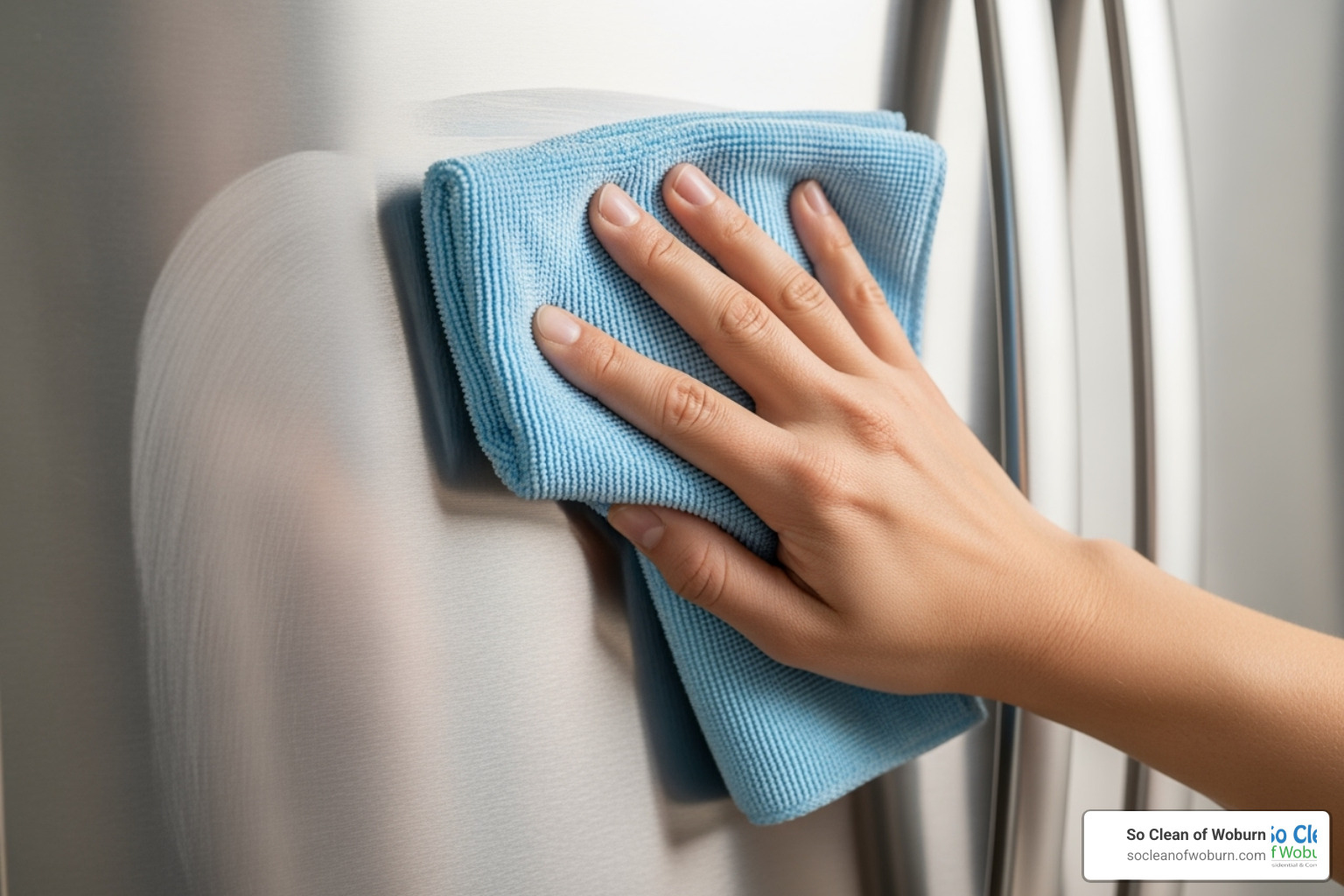
1. Determine the Grain Direction – This is your golden rule for streak-free results. Just like wood, stainless steel has a grain pattern with faint lines running either horizontally or vertically. Take a moment to identify this direction before you start cleaning. Every wipe, every buff, every motion should follow this grain. It’s the difference between a mirror finish and a streaky mess.
2. Do a Preliminary Wipe with a Damp Cloth – Start with a microfiber cloth dampened with warm water to remove loose dirt, crumbs, and surface dust. This prep step helps your natural stainless steel cleaner focus on the real grime instead of just pushing dirt around. It’s like clearing the table before you set it for dinner.
3. Spray Your Natural Cleaner – Give your homemade solution a good shake first (remember, oil and water naturally separate). Here’s a pro tip: instead of spraying directly onto the appliance, spray your cleaner onto the microfiber cloth. This prevents drips and gives you better control over coverage.
4. Wipe with the Grain – Using firm, even strokes, clean the surface following that grain direction you identified earlier. Overlap your strokes slightly to ensure you don’t miss any spots. Work methodically from top to bottom or left to right – whatever feels natural while staying with the grain.
5. Buff Dry with a Clean Cloth – This final step is where the magic happens. Take a separate, completely dry microfiber cloth and buff the surface vigorously, still following the grain direction. This removes all moisture and creates that brilliant, streak-free shine that makes your appliances look brand new.
Choosing the Right Tools for the Job
The wrong tools can undo all your hard work faster than you can say “scratched stainless steel.” Let me save you some heartache by sharing what works and what to avoid at all costs.
Microfiber cloths are absolutely essential – they’re like the Swiss Army knife of cleaning tools. These ultra-fine fibers grab dirt and moisture without scratching, making them perfect for both cleaning and polishing. I always recommend having at least two on hand: one for applying cleaner and one for that final buffing step.
For tougher jobs where you need gentle scrubbing power (like when using that baking soda paste we talked about), soft sponges work beautifully. Just make sure they’re non-abrasive – you want cleaning power, not sandpaper.
Now, here’s what you should never, ever use on stainless steel: steel wool, abrasive pads, or harsh brushes will scratch your surfaces permanently. Those scratches don’t buff out, and they’ll catch dirt and make future cleaning even harder. Also avoid any cleaners containing bleach, ammonia, or chlorine – these harsh chemicals can discolor or damage the steel. This is exactly why we’re such advocates for Non-Toxic Cleaning Products throughout your entire home.
A Note on Different Finishes and Appliances
Not all stainless steel is created equal, and understanding these differences can save you from cleaning disasters. It’s like knowing that silk needs different care than cotton – same concept, different materials.
Coated stainless steel and fingerprint-resistant finishes are increasingly popular, especially on newer appliances. These surfaces have a protective coating that can sometimes react differently to cleaners. The golden rule here is simple: always test on an inconspicuous area first. Try a small spot on the side of your fridge or the bottom corner of your dishwasher door. Wait a few minutes to see how the surface reacts before cleaning the entire appliance.
Different appliances also have different cleaning needs. Stainless steel sinks typically see more action – food particles, soap scum, and general grime build up quickly. They often benefit from regular treatments with our heavy-duty baking soda scrub. The good news is that sinks are usually more forgiving since they’re designed for heavy use.
Refrigerators and dishwashers are fingerprint magnets but generally deal with lighter soil. Our basic spray cleaner followed by proper polishing keeps them looking pristine. Ovens and cooktops can accumulate stubborn, baked-on grease, so don’t be afraid to use that baking soda paste more frequently. Just remember – if you’re polishing surfaces that get hot, consider using fractionated coconut oil instead of olive oil, as it handles heat better without going rancid.
The key is paying attention to how each appliance responds and adjusting your approach accordingly. Your dishwasher might need daily fingerprint removal, while your oven exterior might only need weekly attention. Work with your appliances, not against them, and you’ll achieve consistently beautiful results.
Frequently Asked Questions about Natural Cleaning
Making the switch to homemade cleaners can feel like uncharted territory, and we totally get it! After helping countless families across the Greater Boston area accept cleaner, healthier homes, we’ve heard just about every question imaginable. Let’s tackle the most common concerns about your natural stainless steel cleaner so you can clean with confidence.
How can I improve my homemade natural stainless steel cleaner?
Once you’ve mastered the basic recipe, you’ll probably find yourself wondering how to take it to the next level. The beauty of DIY cleaning is that you can customize it to work even better for your specific needs and preferences.
Essential oils for scent can completely transform your cleaning experience. A few drops of lemon essential oil not only masks any lingering vinegar smell but actually boosts the degreasing power of your cleaner. Lavender creates a spa-like atmosphere that makes cleaning feel less like a chore, while peppermint leaves everything smelling crisp and fresh.
Here’s a game-changer many people don’t know about: cornstarch for a streak-free finish. If you’re still getting occasional streaks despite following our technique, try dissolving a teaspoon of cornstarch in a bit of cold water first, then adding it to your vinegar mixture. It acts as a gentle polishing agent and helps absorb any residual oils that might cause streaking.
For those really stubborn spots, using lemon halves for extra scrubbing power works wonders. Cut a lemon in half, dip the cut side in baking soda, and use it like a natural scrub brush. The citric acid brightens while the baking soda provides gentle abrasion – it’s like nature’s own power tool!
How should I store my DIY cleaner for maximum shelf life?
Proper storage isn’t just about keeping your cleaner effective – it’s about safety too. We’ve learned a few tricks over the years that make a real difference.
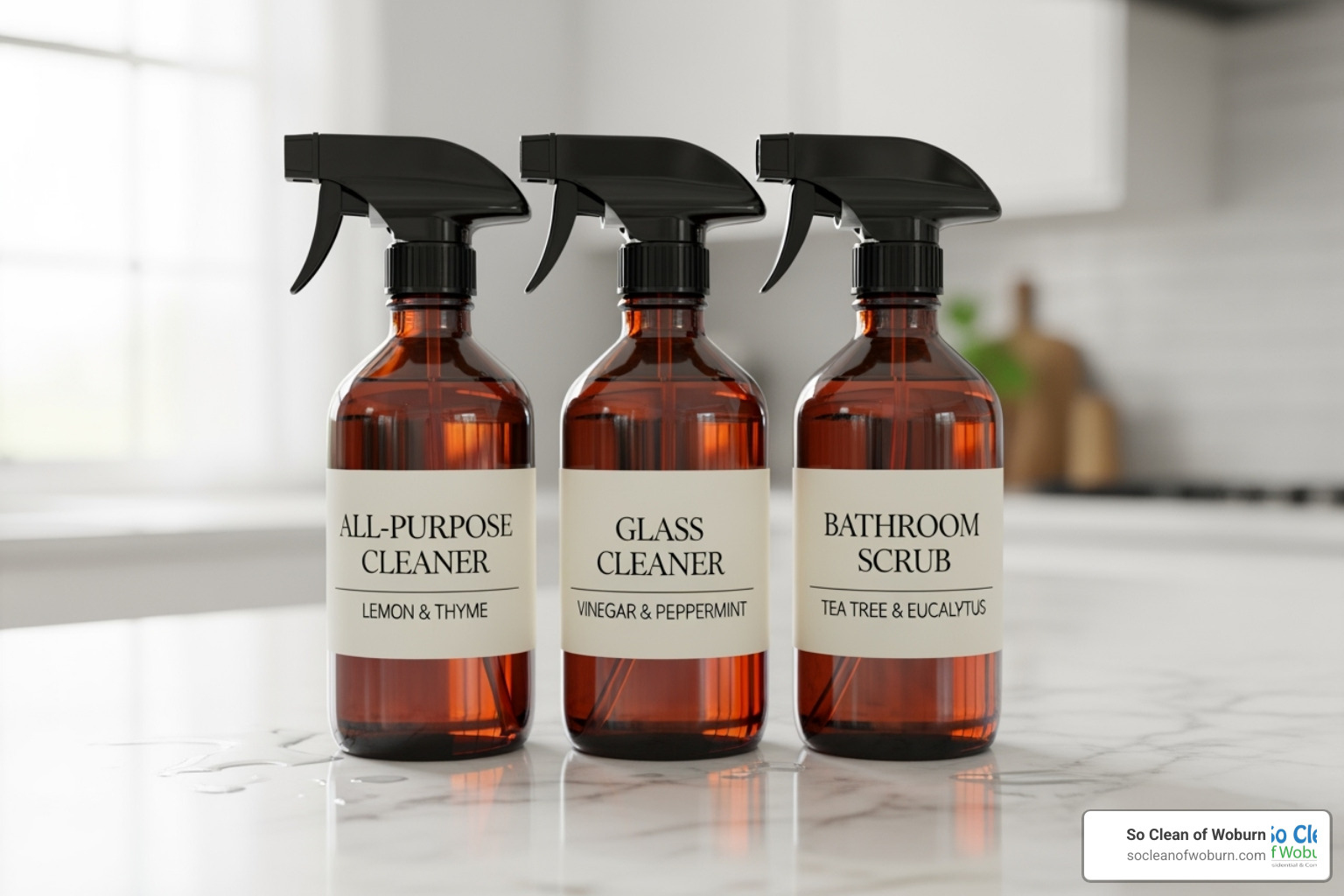
Glass spray bottles are our top recommendation, especially if you’re adding essential oils to the mix. Some essential oils can react with certain plastics over time, potentially weakening the bottle or affecting the cleaner’s quality. Glass eliminates this concern entirely.
Labeling your bottles clearly might seem obvious, but you’d be surprised how many people skip this step! Include the ingredients and date you made it, plus a reminder to “shake well before use.” Trust me, six months from now you won’t remember exactly what’s in that mysterious spray bottle under your sink.
Store your cleaner in a cool, dark place like a kitchen cabinet or pantry. Heat and sunlight can break down the olive oil, causing it to go rancid and smell off. A cabinet in your Woburn or Winchester kitchen works perfectly.
Remember to shake well before each use since oil and water naturally separate. This isn’t a flaw – it’s just physics! A good shake gets everything working together again.
Your homemade natural stainless steel cleaner should stay fresh for several weeks to a few months when stored properly. If you notice any funky smells (beyond the normal vinegar scent) or weird changes in texture, it’s time to whip up a fresh batch.
Are these natural cleaners safe for other surfaces in my home?
This is probably our most frequently asked question! While your natural stainless steel cleaner is specifically formulated for stainless steel, the individual ingredients are incredibly versatile around the house.
Let’s talk about vinegar precautions first, because this is where people sometimes run into trouble. Never use vinegar on natural stone surfaces like marble, granite, or quartz countertops. The acid can permanently etch and dull these surfaces – and trust me, that’s an expensive mistake! Similarly, avoid using it on grout or hardwood floors, as it can cause damage over time.
Baking soda, on the other hand, is your friend almost everywhere. It’s fantastic for cleaning and deodorizing sinks (whether they’re stainless steel or porcelain), scrubbing tubs and showers, and even freshening up your refrigerator or carpets. We love how versatile this simple ingredient is!
Olive oil polish requires a bit more caution on other surfaces. While it can work beautifully on some wood furniture, always test it in a hidden spot first. Too much oil can leave surfaces greasy or attract dust, which isn’t what anyone wants.
The key is understanding that each surface in your home has different needs. When in doubt, stick to using your natural stainless steel cleaner on stainless steel, and explore other natural cleaning solutions for different surfaces throughout your Massachusetts home.
Conclusion: Accept a Healthier, Shinier Home
Making the switch to a natural stainless steel cleaner isn’t just about getting your appliances to sparkle – though they absolutely will! It’s about making a choice that ripples through every aspect of your home life in the best possible way.
Think about it: you’re choosing safe, effective, and affordable solutions that protect your family’s health while delivering those stunning, streak-free results you’ve been after. No more worrying about harsh chemical fumes lingering in your kitchen or wondering what’s in that expensive commercial cleaner. With simple ingredients like white vinegar, baking soda, and olive oil, you know exactly what you’re using.
We’ve seen how these DIY methods can transform not just the look of your stainless steel, but your entire approach to cleaning. When you realize that a 50-75% cost savings comes with better results than many store-bought alternatives, it’s pretty empowering. You’re taking control of your cleaning routine while creating a healthier environment for everyone under your roof.
At So Clean of Woburn, we’re passionate about empowering homeowners across the Greater Boston area to make these positive changes. Our commitment to healthy homes and offices drives everything we do, from the methods we recommend to the services we provide. We understand that life in places like Burlington, Danvers, and Lynnfield can be incredibly busy – between work, family, and everything else on your plate, deep cleaning can feel overwhelming.
That’s exactly where our expertise comes in. When you want that professional touch while maintaining your commitment to safe and effective methods, we’re here to help. For a comprehensive approach using the same natural principles we’ve discussed today, explore our Green Cleaning Services Near Me. We bring our knowledge of eco-friendly cleaning directly to your doorstep, ensuring every surface – from your gleaming stainless steel appliances to every corner of your home – shines brilliantly while maintaining that healthy environment you’re working so hard to create.
Let us handle the detailed work so you can focus on what matters most: enjoying your beautifully clean, healthy home with the people you love.
Like us on Facebook!