
Why Plant Based Toilet Bowl Cleaners Are Taking Over Bathrooms
Plant based toilet bowl cleaners are products made with natural, biodegradable ingredients like citric acid and essential oils instead of harsh chemicals like chlorine bleach. As more families seek safer alternatives, these cleaners are becoming a bathroom staple.
They are effective, septic-safe, biodegradable, and free from chlorine, phosphates, and synthetic fragrances. Common options include:
- Liquid formulas: Gels in squeeze bottles ($5-$20)
- Cleaning tablets: Drop-in dissolving tablets ($10-$30 for multi-packs)
- Cleaning strips: Plastic-free dissolvable sheets ($10-$25)
These cleaners use natural acids to break down mineral deposits and stains, while essential oils provide antimicrobial properties and fresh scents without harsh fumes. Key benefits include being safer for pets and children, protecting waterways, and reducing exposure to toxic chemicals.
I’m Bill McGrath, owner of So Clean of Woburn. For over a decade, I’ve helped Massachusetts families switch to healthier cleaning products. My experience has shown that these natural alternatives deliver excellent results while creating safer homes.
Why Make the Switch? The Powerful Perks of Plant-Based Cleaners
When you switch to plant based toilet bowl cleaners, the first thing you’ll notice is a fresh, natural scent like lemongrass or tea tree oil, not harsh chemical fumes. But the benefits go far beyond pleasant aromas.
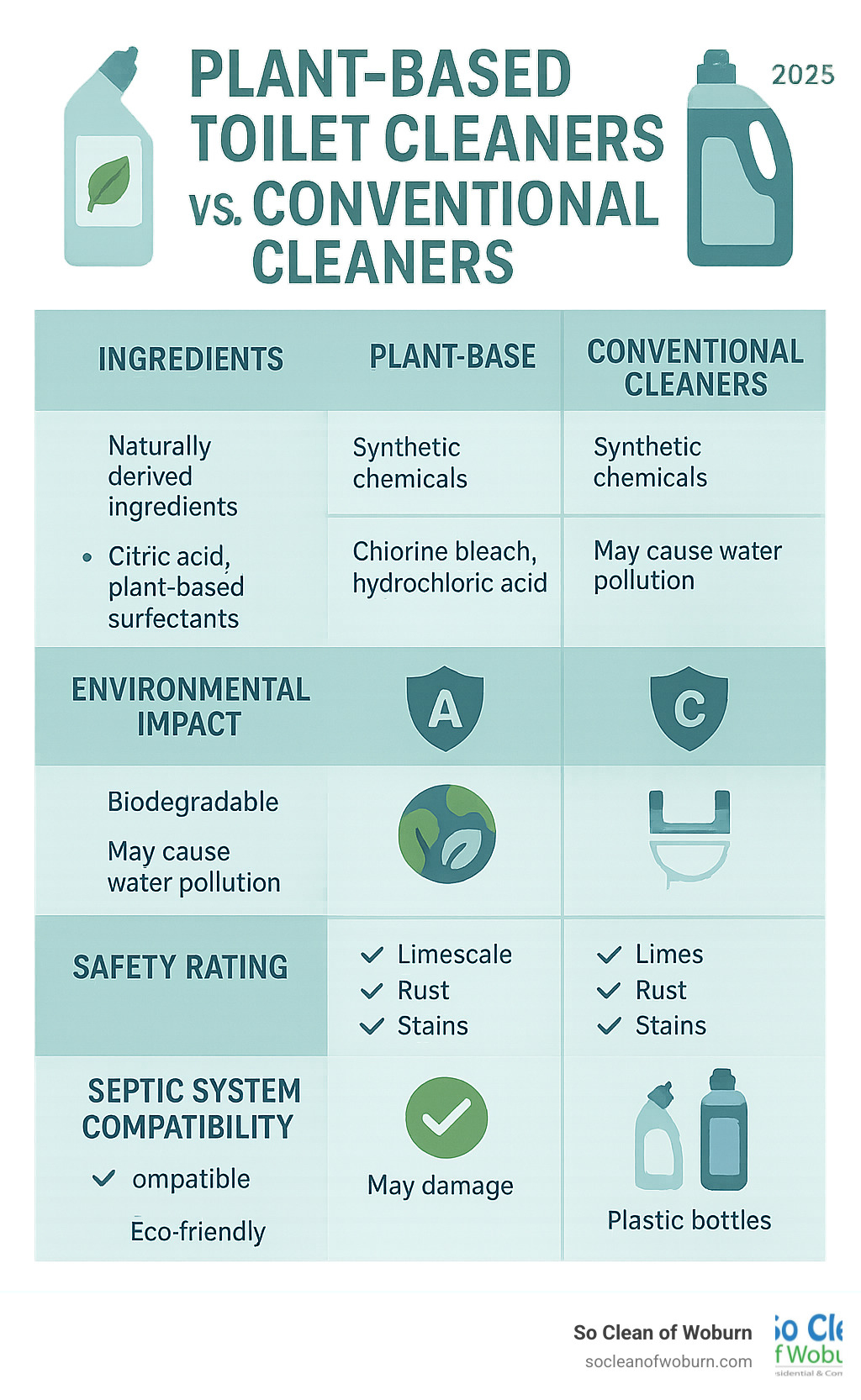
Traditional toilet cleaners often contain harsh chemicals like chlorine bleach and ammonia, which release volatile organic compounds (VOCs) that can irritate your respiratory system. Plant based toilet bowl cleaners are chlorine-free and phosphate-free, so you can clean without breathing in harmful fumes. Their natural ingredients work hard to tackle stains and odors without compromising your family’s health.
This switch is especially important for homes with pets and children. Non-toxic alternatives provide peace of mind, knowing that accidental contact is less likely to be harmful. The biodegradable formulas also break down naturally, unlike conventional cleaners that can linger in the environment. While some tough stains might require a bit more scrubbing, most families find the trade-off is well worth it for a healthier home.
The Environmental and Septic System Advantage
Here in Massachusetts, many homes rely on septic systems, especially in towns like Woburn and Andover. This is where plant based toilet bowl cleaners truly shine with their septic-safe formulas. They won’t disrupt the beneficial bacteria your septic system needs to function properly.
Traditional cleaners can kill these microorganisms, leading to expensive problems. Plant-based cleaners work with your septic system, not against it. They also offer waterway protection by reducing chemical runoff. When flushed, these cleaners break down naturally, with many becoming fully biodegradable within 28 days, preventing contamination of groundwater and local ecosystems. You can learn more about hard water stains from the U.S. Geological Survey’s Water Science School.
A Healthier Choice for Your Home
Indoor air quality is crucial to our health. Plant based toilet bowl cleaners improve it by not producing harsh fumes. They rely on non-toxic ingredients that are less likely to trigger respiratory issues or skin reactions.
For families with allergies, these cleaners are often a better choice as they skip the synthetic fragrances and dyes that are common irritants. The skin-safe formulations are gentler in case of accidental contact. Most importantly, pet and child safety is a primary benefit, reducing the risk from accidental exposure (though all cleaners should be stored safely). Many formulas also contain natural anti-fungal ingredients like tea tree oil to help prevent mold. The CDC provides detailed guidance on mold prevention for those interested.
Decoding the Label: What’s Inside a Plant Based Toilet Bowl Cleaner?
When shopping for a plant based toilet bowl cleaner, reading the label is key. The best brands are transparent, often boasting 98% or even 100% plant-based ingredients. Seeing familiar, plant-derived names instead of complex chemical compounds is a great sign.
Common Plant-Powered Ingredients and Their Purpose
Understanding the ingredients helps you appreciate how these cleaners work without harsh chemicals.
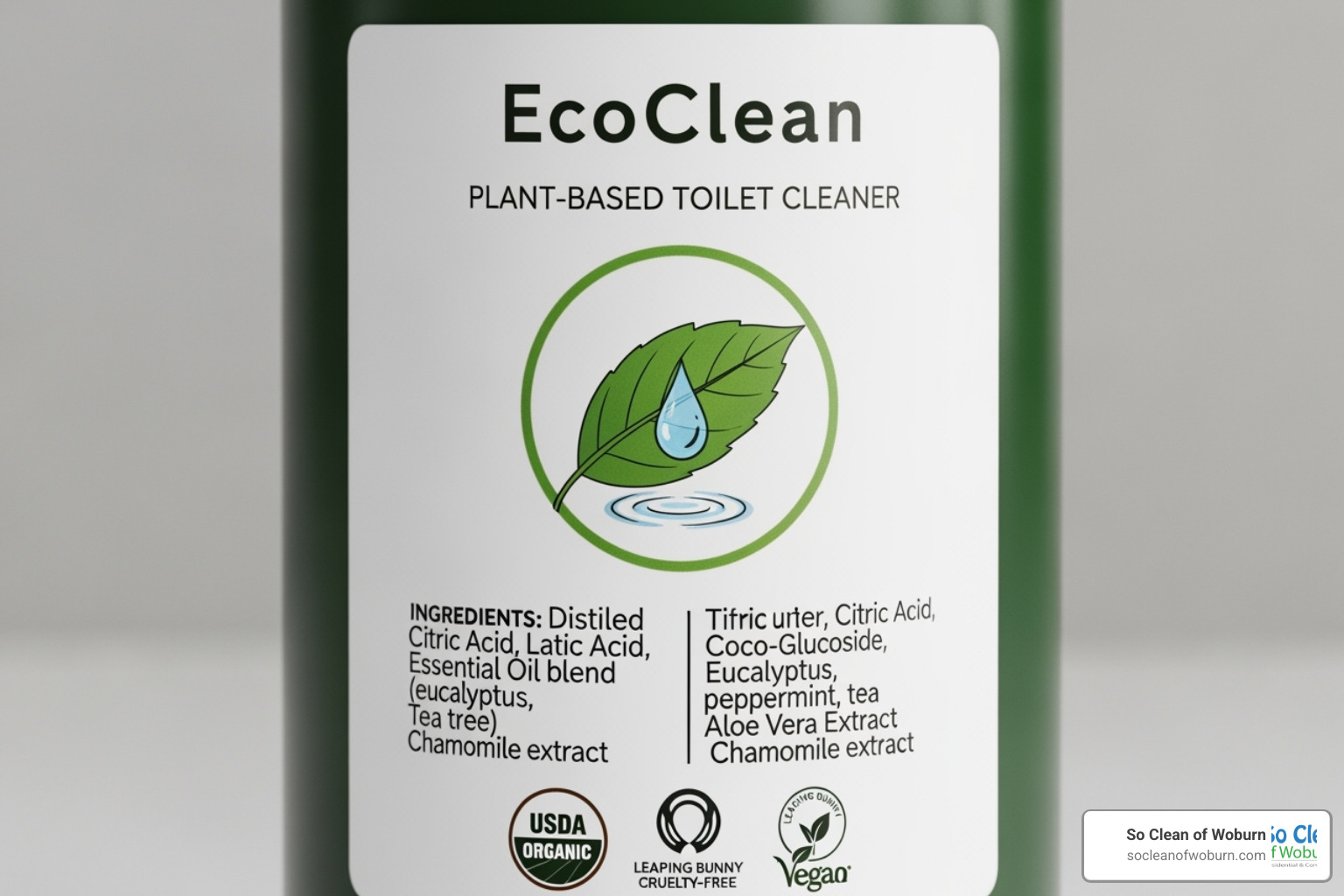
- Citric Acid: A powerhouse from citrus fruits that tackles mineral deposits and hard water stains. Some disinfecting cleaners use citric acid as their main active ingredient to kill common household bacteria.
- Lactic & Glycolic Acid: These natural descaling agents help dissolve stubborn mineral buildup.
- Plant-Derived Surfactants: Ingredients like decyl glucoside help lift grime away from surfaces so it can be rinsed clean.
- Xanthan Gum: A natural thickener that creates a gel formula, allowing the cleaner to cling to the bowl sides for better performance.
- Essential Oils: These provide both scent and function. Tea tree oil is antiseptic, lemongrass oil deodorizes, cedarwood oil is anti-fungal, and peppermint oil adds an invigorating freshness.
Other ingredients like potassium sorbate (a preservative) and sodium citrate (a pH balancer) help create a stable, effective formula.
Certifications That Matter
Third-party certifications help you choose products with confidence. Look for these trusted labels:
- EPA Safer Choice: Ensures the product has safer ingredients for health and the environment without sacrificing performance.
- Leaping Bunny: Guarantees the product is cruelty-free and not tested on animals.
- USDA Biobased: Certifies the percentage of the product derived from renewable plant materials.
- ECOLOGO: Indicates the product meets strict environmental standards throughout its lifecycle.
- EWG Verified: Signifies the product avoids ingredients of concern and offers full transparency.
Putting Them to the Test: How Effective is a Plant Based Toilet Bowl Cleaner?
The big question is: does a plant based toilet bowl cleaner really work? Our experience shows a resounding yes! These cleaners deliver impressive results without harsh chemicals.
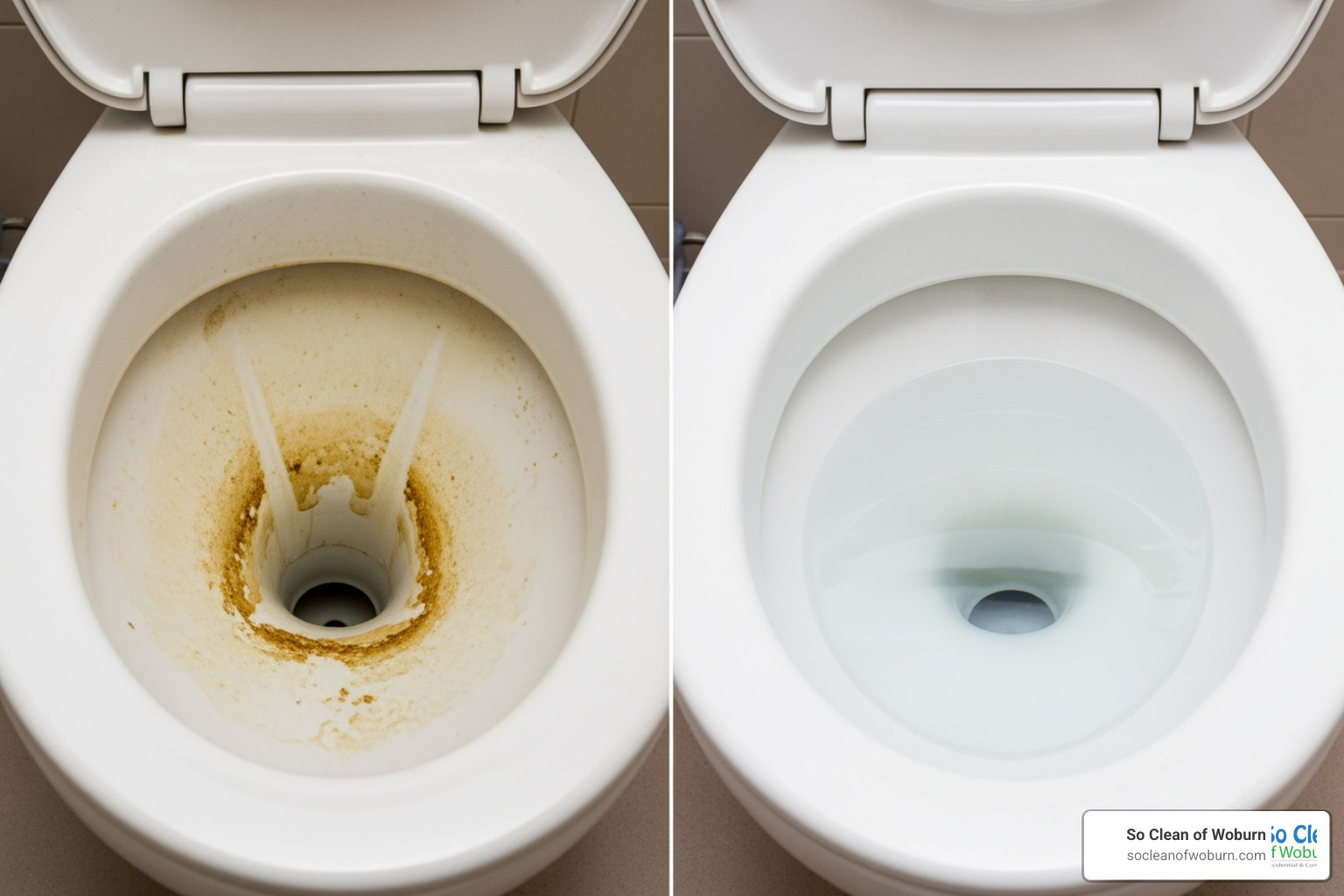
These products excel at tackling common toilet issues:
- Stains: Natural acids and surfactants effectively lift and dissolve general grime and discolorations.
- Limescale and Hard Water Stains: Ingredients like citric acid chemically break down mineral deposits, making them easy to scrub away.
- Rust Stains: The acidic nature of these formulas helps loosen and remove reddish-brown marks from iron in the water.
- Odor Elimination: Essential oils neutralize odors with their natural antimicrobial properties, leaving a genuinely fresh scent like lemongrass or peppermint, not an overpowering chemical fragrance.
Many users find these cleaners are better than bleach for mineral and rust stains. Furthermore, some plant-based disinfectants are approved to kill 99.99% of common household bacteria, proving their efficacy beyond just appearance.
How to Use Plant-Based Cleaners for a Sparkling Finish
Using these cleaners is simple. Follow these tips for the best results:
For liquid or gel formulas:
- Apply: Flush to wet the bowl, then squeeze the gel under the rim to coat the entire surface.
- Wait: Let the cleaner sit for 5-10 minutes (or longer for tough stains) to allow the active ingredients to work.
- Scrub: Use a toilet brush to scrub the bowl, focusing on any stained areas.
- Flush: Flush to rinse away the cleaner and grime.
For cleaning tablets or strips:
- Drop: Place one tablet or strip into the toilet bowl.
- Dissolve: Wait for it to dissolve completely.
- Scrub & Flush: Brush the bowl and flush to rinse.
For all formats, regular use every few weeks prevents stubborn buildup and makes cleaning easier.
Finding Your Perfect Match: What to Look For When You Shop
With so many plant based toilet bowl cleaner options available, you can find one that fits your routine, budget, and values.
Product Formats
- Liquid Gels: The most familiar option, these squeeze bottles ($5-$20) have a clinging gel formula that is great for targeting specific stains under the rim.
- Tablets: Convenient and pre-measured, these dissolving pucks ($10-$30 for multi-packs) eliminate guesswork and are great for busy households.
- Cleaning Strips: An innovative, plastic-free option. These lightweight, dissolvable sheets ($10-$25) save storage space and are perfect for eco-conscious homes.
Price Points
While plant-based cleaners can sometimes have a higher upfront cost, their concentrated formulas often make them cost-effective. Individual products typically range from $5 to $35. To save money, look for bulk purchasing options or subscription services, which can offer significant discounts. When comparing, calculate the cost per cleaning session, not just the bottle price.
Packaging Impact
Plant-based brands often lead in environmental responsibility.
- Plastic-free options: Tablets and strips dramatically reduce plastic waste.
- Refillable systems: Buying a reusable container and concentrated refills is both economical and eco-friendly.
- Compostable packaging: Some brands use packaging that breaks down in commercial facilities. You can visit findacomposter.com to find an industrial composter near you for proper disposal.
Where to Buy
Finding these cleaners in Massachusetts is easier than ever.
- Online retailers offer the widest selection for comparing brands and reading reviews.
- Health food stores in the Greater Boston area often have knowledgeable staff who can help with specific needs.
- Supermarkets are expanding their green cleaning sections, making these products conveniently accessible.
Frequently Asked Questions about Plant-Based Toilet Cleaners
We get many questions from families in Massachusetts and New Hampshire about making the switch. Here are answers to the most common ones.
Are plant-based toilet bowl cleaners really as effective as bleach on tough stains?
Yes, and for certain stains, they are often more effective. Bleach is a disinfectant but isn’t great at removing mineral buildup like hard water rings, limescale, or rust. Plant based toilet bowl cleaners use natural acids (like citric acid) that are specifically designed to dissolve these mineral deposits. For disinfection, many formulas are also proven to kill up to 99.99% of common household bacteria, so you get powerful cleaning and germ-fighting without the harsh fumes of bleach.
Are all plant-based toilet cleaners safe for my septic system?
This is a crucial question for many homeowners in our area. The vast majority of plant based toilet bowl cleaners are septic-safe because they are biodegradable and chlorine-free. Unlike conventional cleaners that can harm the beneficial bacteria in your tank, these formulas break down naturally without disrupting your system. However, it’s always best to confirm by looking for a “septic-safe” statement on the product label.
How much do plant-based toilet cleaners typically cost?
The cost varies by format and brand, but you can generally expect a price range of $5 to $35. Liquid gels are often the most affordable, while tablets and strips may have a higher upfront cost for multi-packs. Price is also affected by formula concentration and third-party certifications. To get the best value, consider bulk purchasing or subscription services, which can lower the cost per use significantly.
A Fresh Flush Towards a Greener Home
Switching to a plant based toilet bowl cleaner is a meaningful choice for a healthier home and planet. These products prove you don’t need harsh chemicals to tackle tough stains, limescale, and odors effectively. They create a safer environment, free from the harsh fumes and toxic residues that can endanger pets and children.
The benefits extend to environmental responsibility. By choosing biodegradable, septic-safe formulas and innovative plastic-free packaging, you contribute to cleaner waterways and less waste. Making the switch is a simple step with a significant positive impact.
At So Clean of Woburn, we’ve seen how eco-friendly practices transform homes across the Greater Boston area, from Reading to Lexington. We are passionate about helping our neighbors in communities like Woburn and Andover create spaces that are both spotless and safe. This transition starts with a single choice, but it contributes to better indoor air, protected local ecosystems, and a more sustainable future.
For those ready to see how professional green cleaning can improve your home, we invite you to visit our website to learn more about our green cleaning services and find how we can help you achieve a perfect balance of cleanliness and consciousness.
Like us on Facebook!