Why the Question “Do Eco-Friendly Cleaning Products Work?” Matters More Than Ever
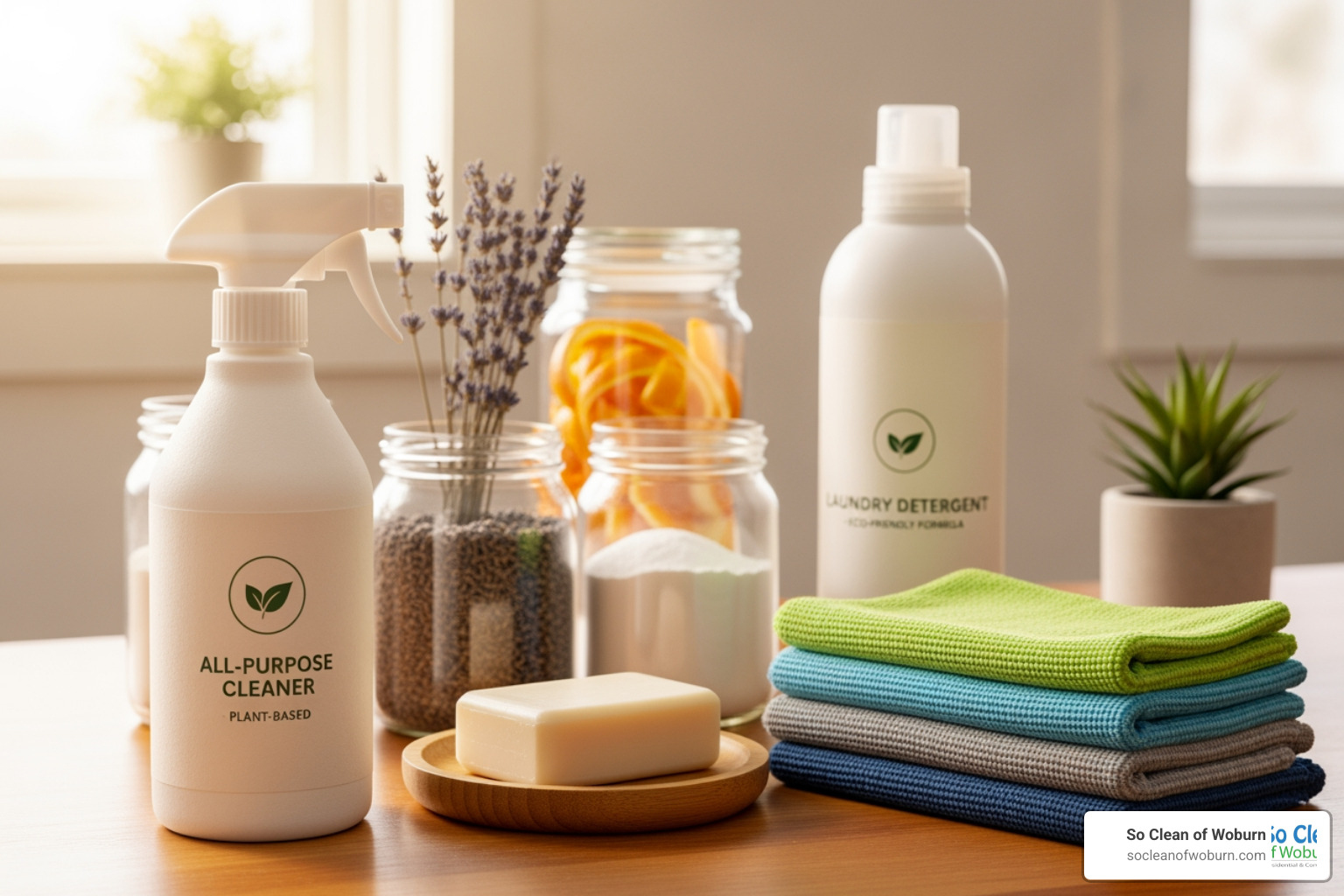
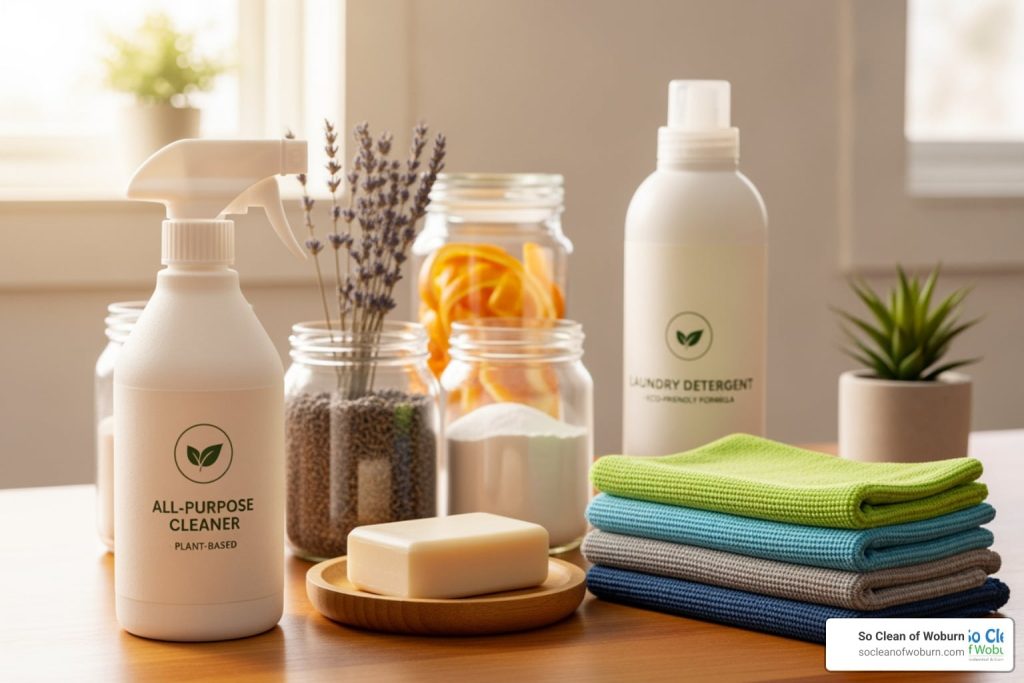
Do eco friendly cleaning products work as well as traditional cleaners? Here’s what the research shows:
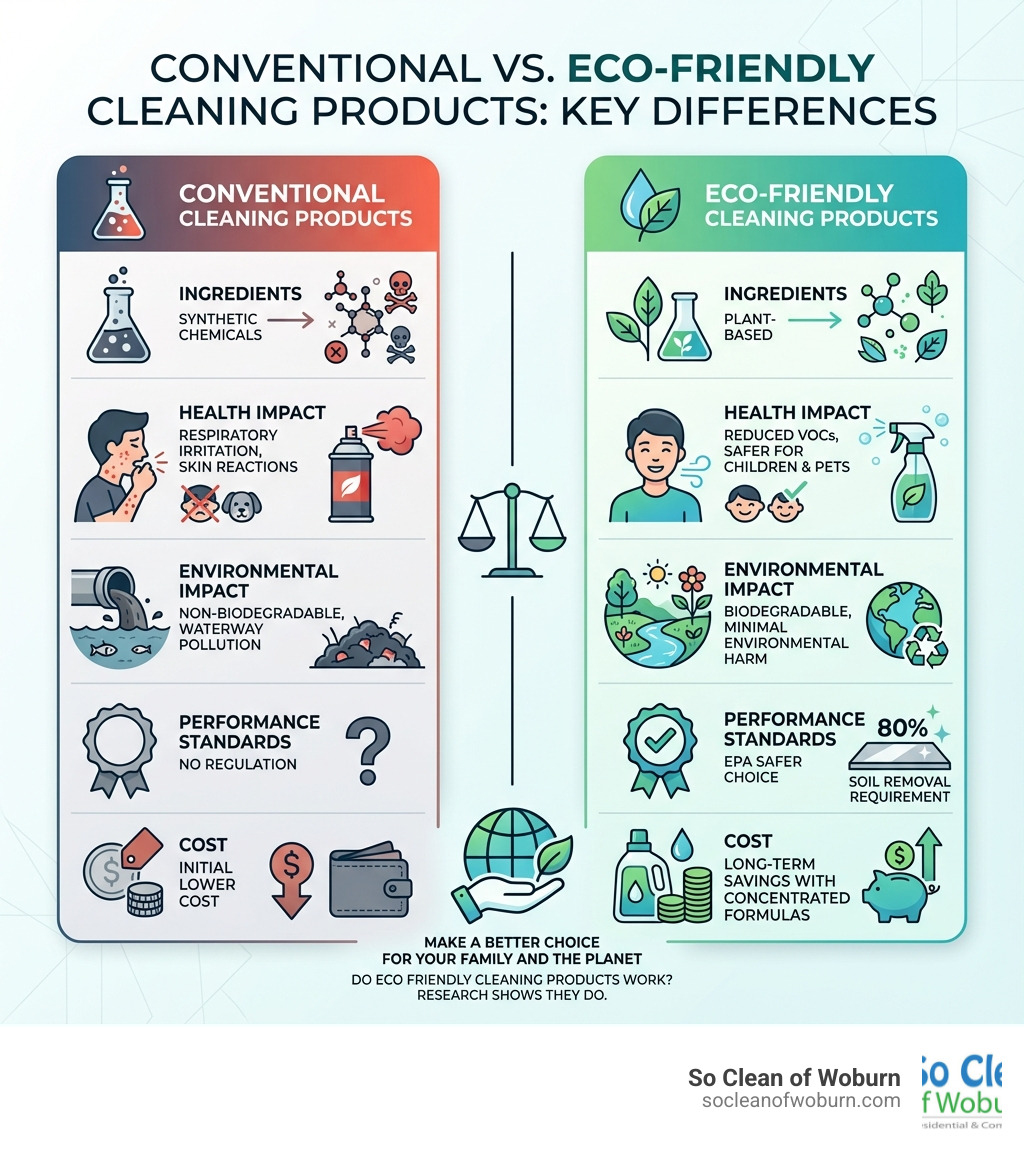
- Yes, they clean effectively – 98% of users report eco-friendly products work just as well as conventional ones
- They meet strict performance standards – EPA Safer Choice certified products must remove at least 80% of greasy soil
- They’re safer for your health – Green products contain fewer VOCs and respiratory irritants
- They protect the environment – Biodegradable ingredients break down safely without polluting waterways
- Some limitations exist – Disinfecting wipes (even “green” ones) may still trigger asthma in sensitive individuals
You’re in the cleaning aisle, weighing an “eco-friendly” product against your usual brand. You want to choose what’s best for your family and the planet, but you need it to work. The question is, can green products handle tough messes without harsh chemicals?
The demand for sustainable cleaning products has surged, but so has skepticism. Conventional cleaners often contain chemicals like ammonia, chlorine bleach, and phthalates, which can trigger respiratory issues, irritate skin, and pollute waterways. Do plant-based alternatives truly measure up?
As Bill McGrath, owner of So Clean of Woburn, I’ve spent years testing and using professional-grade cleaning products across countless homes and businesses in Massachusetts, and I can tell you that understanding whether do eco friendly cleaning products work is essential for anyone who wants both a spotless space and peace of mind. The science behind green cleaning has evolved dramatically, and the results might surprise you.
Explore more about do eco friendly cleaning products work:
- best natural upholstery cleaner
- biodegradable mold cleaner
- plant based glass cleaner
The Hidden Hazards in Conventional Cleaning Products
Before we dive into the effectiveness of eco-friendly cleaning products, it’s crucial to understand what we’re moving away from. Many conventional cleaning products, while seemingly effective, come with a hidden cost to our health and the environment. These products often rely on harsh synthetic chemicals that can linger in our homes long after the scent of “clean” fades.
Common ingredients found in traditional cleaners include substances like ammonia, chlorine bleach, phthalates, and parabens. These aren’t just tongue-twisters; they’re potent chemicals designed to cut through grime, but they can also cut into our well-being. According to Cécile Bascoul, PhD, director of product safety for DoTerra, “Because of their strength and some of the ingredients used, conventional cleaning products can pose risks to both human health and the environment.” A study examining 172 consumer products revealed that over 60% contained at least one hazardous chemical targeted by California’s Proposition 65 list, highlighting the widespread presence of concerning substances.
One of the most insidious groups of chemicals in conventional cleaners are Volatile Organic Compounds (VOCs). These compounds readily evaporate into the air, and anything we smell is essentially a VOC. While some VOCs are naturally occurring, many in cleaning products are synthetic and can lead to a host of problems. Common VOCs include benzene, ethylene glycol, formaldehyde, methylene chloride, tetrachloroethylene, and toluene.
Health Risks for Your Family and Pets
The impact of these chemicals on human health can be significant. VOCs released indoors can cause immediate symptoms such as eye and respiratory irritation, headaches, dizziness, nausea, and allergic skin reactions. For individuals with asthma or other respiratory sensitivities, these effects can be particularly severe, triggering attacks and worsening existing conditions. Long-term exposure to certain VOCs and other harsh chemicals has been linked to more serious health concerns, including reproductive harm and an increased risk of cancer.
Our beloved pets are often even more vulnerable than we are. They spend more time closer to the floor, where cleaning residues settle, and frequently lick their paws and other surfaces, directly ingesting chemicals. Their smaller size and faster metabolisms can make them more sensitive to chemical exposure, leading to skin irritation, respiratory issues, or even organ damage over time. Imagine your furry friend walking across a recently mopped floor, then grooming themselves – they’re essentially consuming whatever chemicals were left behind.
We believe that a clean home in Massachusetts shouldn’t come at the expense of your family’s health. For more detailed insights into the potential health impacts of cleaning products, we encourage you to explore scientific research on cleaning supplies and health.
Environmental Consequences of Harsh Chemicals
Beyond our immediate living spaces, conventional cleaning products leave a lasting mark on the environment. When we rinse these cleaners down the drain, their chemical components enter our wastewater systems. While standard sewage treatment can reduce some constituents, many non-biodegradable ingredients, like certain surfactants, can persist or break down into more toxic substances.
Phosphates, once common in detergents, can contribute to nutrient-loading in water bodies. This excess of nutrients can lead to algal blooms, which deplete oxygen and create “dead zones” that harm fish and other aquatic life. Chlorine bleach, another ubiquitous cleaner, can also be toxic to aquatic ecosystems.
Furthermore, the widespread use of single-use plastic packaging for conventional cleaning products contributes significantly to landfill waste and plastic pollution in our oceans. Even the VOCs that evaporate into our indoor air don’t just disappear; they contribute to outdoor air pollution, forming urban smog and ground-level ozone, which negatively affect respiratory and heart health, as well as plants and crops.
At So Clean of Woburn, we understand that our cleaning practices have a ripple effect. That’s why we’re committed to using methods and products that protect both your home and our shared environment in the Greater Boston area.
Do Eco-Friendly Cleaning Products Work as Effectively as Conventional Ones?

This is the million-dollar question. The effectiveness debate is often the biggest hurdle for consumers considering the switch, with many assuming “green” means less powerful. However, years of innovation and rigorous testing have proven this assumption largely false. In fact, a compelling statistic shows that 98% of participants in one study self-reported that natural products worked just as well as the products they previously used. This suggests that for most everyday cleaning tasks, the performance gap is negligible, if it exists at all.
Eco-friendly cleaning products leverage the power of nature, utilizing ingredients like plant-based surfactants (often from coconut oil), natural enzymes, and organic acids such as citric and lactic acid. These ingredients are chosen for their ability to break down grease, lift stains, and eliminate odors without harsh, synthetic chemicals. For instance, citric acid is recognized by the EPA as an effective disinfectant, offering a safer alternative to conventional germ-killing agents.
The Science Behind Green Cleaning Power
So, how do these plant-derived ingredients work their magic? It’s not just a hopeful guess; there’s real science at play.
- Plant-based Surfactants: These are the workhorses of eco-friendly cleaners. They reduce the surface tension of water, allowing it to penetrate and lift dirt, grease, and grime more effectively. Think of them as tiny magnets that attract both water and oil, pulling stains away from surfaces.
- Natural Enzymes: Certain enzymes are excellent at breaking down specific types of organic matter, such as food stains, protein residues, and fats. They act as biological catalysts, accelerating the cleaning process.
- Citric and Lactic Acids: These organic acids are powerful against mineral deposits (like hard water stains and soap scum) and can also act as natural disinfectants. Citric acid, for example, has been shown to neutralize bacteria like salmonella as effectively as some conventional disinfectants in lab tests.
- Mineral-based Abrasives: Ingredients like baking soda act as gentle abrasives, helping to scrub away tough stains without scratching surfaces.
These natural components work synergistically to provide a comprehensive clean. For example, our plant-based bathroom cleaner guide highlights how botanical extracts and essential oils can effectively tackle dirt, grime, and bacteria. Similarly, achieving a brilliant shine with our natural stainless cleaner complete guide relies on these same principles of gentle yet powerful natural chemistry.
Do Eco Friendly Cleaning Products Work? Comparing Performance and Standards
When we ask, “do eco friendly cleaning products work?”, we’re often looking for assurance that they meet the same, if not higher, standards as traditional products. The good news is that many genuinely eco-friendly products are not only effective but are also held to rigorous performance standards.
The Environmental Protection Agency (EPA) plays a crucial role here with its Safer Choice program. Products bearing the EPA’s Safer Choice label are required to perform comparably to conventional cleaning product alternatives. For instance, multipurpose cleaners must remove at least 80% of a greasy soil. This isn’t just a marketing claim; it’s a measurable standard. Samara Geller, senior director of cleaning science at the Environmental Working Group (EWG), emphasizes that products with this label are formulated with plant-based or biodegradable ingredients that “reduce or eliminate hazardous chemicals and provide complete transparency about their ingredients.”
While some “green” products might not be as effective for highly specialized tasks like killing certain viruses, manufacturers are continuously improving formulations. For everyday cleaning and general sanitation in our homes and businesses across Massachusetts, certified eco-friendly options are more than capable.
It’s important to distinguish between cleaning (removing dirt and physical germs) and disinfecting (killing germs). Many natural cleaners excel at cleaning. For disinfecting, look for EPA-registered active ingredients like hydrogen peroxide (at least 3%), ethanol (at least 70%), or citric acid (at least 0.5%), which are effective while being safer alternatives.
How to Spot Genuinely “Green” Products and Avoid Greenwashing
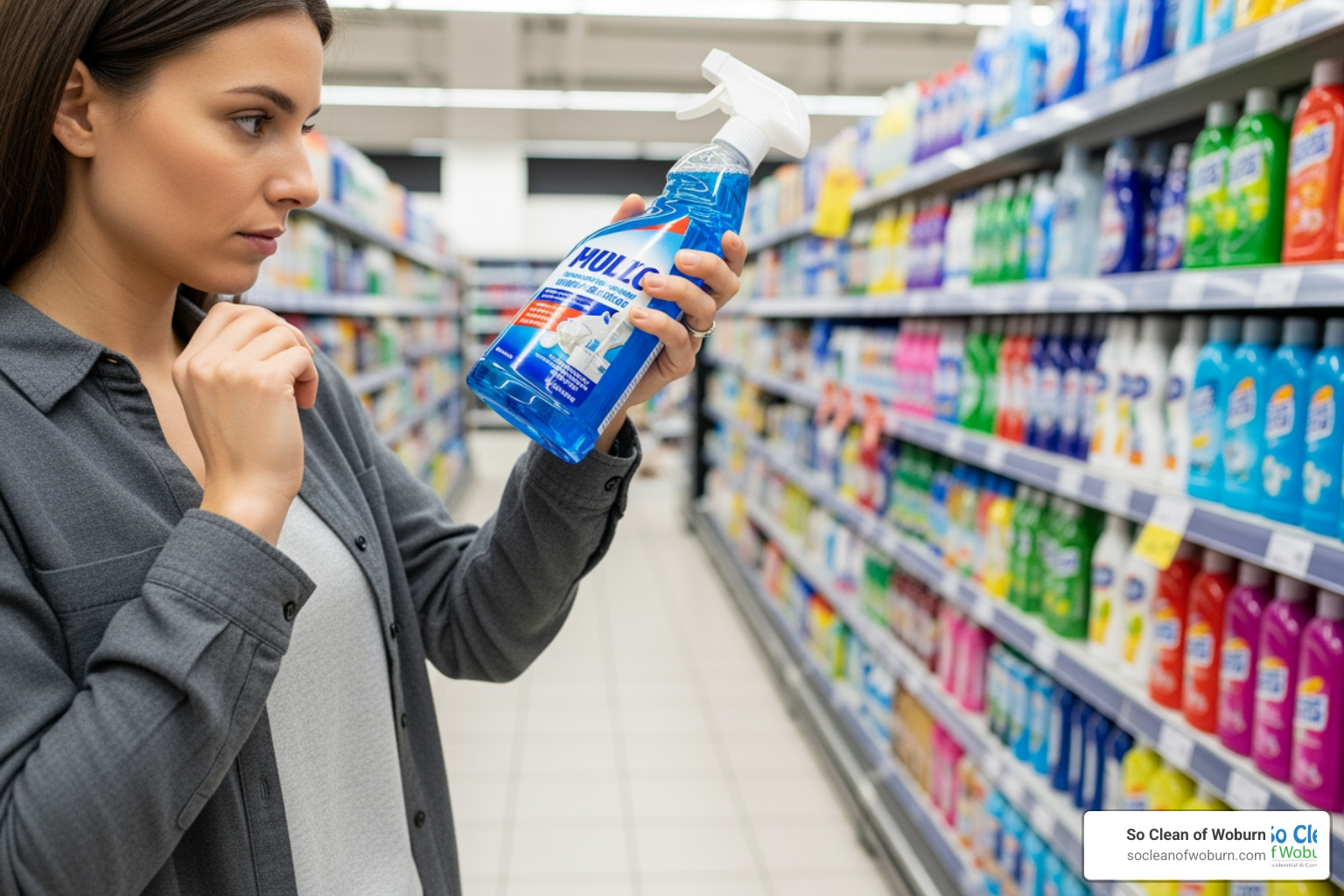
The cleaning aisle is full of marketing claims like “natural,” “non-toxic,” and “green.” But what do they really mean? Unfortunately, these terms are largely unregulated. This leads to “greenwashing,” where products are marketed as eco-friendly without offering real environmental or health benefits. Tactics include vague claims, misleading imagery, or highlighting one minor “green” feature while ignoring other negative impacts. This makes it hard for consumers to make informed choices. At So Clean of Woburn, we help you find genuinely non-toxic cleaning products for a healthier home.
Understanding Third-Party Certifications
To cut through the greenwashing, third-party certifications are your best allies. These independent organizations evaluate products against a set of stringent criteria, providing a reliable stamp of approval. When you see one of these seals on a product, you can be confident that it has been vetted for its environmental and health impacts.
Here’s a comparison of some key eco-labels we look for:
| Certification | Focus | Key Criteria |
|---|---|---|
| EPA Safer Choice | Helps consumers find products that perform well and are safer for human health and the environment. | – No ingredients on EPA’s list of chemicals of concern. – Ingredient safety for human health and environment. – Performance criteria. – Packaging sustainability. – Full ingredient disclosure. |
| EWG Verified | Identifies products free from EWG’s “unacceptable” ingredients and that meet strict health standards. | – Absence of EWG’s “unacceptable” ingredients. – Meets strict health standards. – Limits use of volatile organic compounds (VOCs). – Full ingredient transparency. |
| Green Seal | Focuses on products with a reduced environmental impact throughout their life cycle. | – Focus on environmental friendliness. – Considers effects on aquatic life. – Evaluates product degradation speed. – Rewards avoidance of ozone-depleting substances. |
| Ecologo | Certifies products with a lower environmental impact, considering factors like energy use, waste, and air quality. | – Lower environmental impact throughout the product’s life cycle. – Considers manufacturer’s energy and water usage. – Evaluates potential impact on indoor air quality. |
(Source: EWG’s Verified Cleaning Products, EPA’s Safer Choice, Green Seal, Ecologo)
These certifications are a reliable shortcut. Instead of deciphering complex chemical names, you can trust that a certified product meets high safety and environmental standards. A key component of these labels, as noted by NRDC senior scientist Anna Reade, is ingredient transparency. Certified products must list all ingredients, providing the full disclosure often missing from conventional cleaners. You can learn more on the EPA’s Safer Choice label.
Reading Labels: Ingredients to Look For and Avoid
Even with certifications, knowing what to look for and avoid on product labels empowers you further. When we’re choosing products for our clients in places like Cambridge, Lexington, or Woburn, we carefully check labels.
What to Look For:
- Biodegradable: The product breaks down naturally, minimizing pollution.
- Phosphate-free: Helps protect aquatic ecosystems from harmful algal blooms.
- Plant-derived/Plant-based: Ingredients are from renewable resources and often gentler.
- Full Ingredient Disclosure: A sign of a transparent, trustworthy brand.
- Concentrated Formulas & Recyclable/Refillable Packaging: Reduces waste and can be more cost-effective.
What to Avoid:
- Fragrance/Parfum: A vague term that can hide hundreds of chemicals, including VOCs and phthalates, which are linked to health issues and poor air quality.
- Dyes/Colorants: Unnecessary additives that can cause skin irritation.
- Chlorine Bleach & Ammonia: Harsh irritants that can cause respiratory problems. Never mix them.
- Quaternary Ammonium Compounds (Quats): Disinfectants (look for “-onium chloride”) linked to asthma and skin irritation. Safer alternatives include hydrogen peroxide, ethanol, and citric acid.
By becoming a savvy label reader, you can confidently choose products that truly align with a healthier, more sustainable lifestyle for your Massachusetts home.
The Tangible Benefits of Switching to Eco-Friendly Cleaning
The decision to switch to eco-friendly cleaning products extends far beyond simply being “nice to the planet.” It brings a host of tangible benefits that directly impact our daily lives, our family’s health, and even our wallets. At So Clean of Woburn, we see these benefits play out every day in the homes and businesses we service across the Greater Boston area.
- Improved Air Quality: By avoiding harsh VOCs and synthetic fragrances, you create a fresher, healthier breathing environment, which is crucial for a healthy home cleaning routine. This is especially important for children, the elderly, and those with respiratory issues.
- Safer for Family and Pets: With fewer irritants and toxins, you can have peace of mind knowing that freshly cleaned surfaces are safe for little hands and curious pets.
- Environmental Protection: Biodegradable ingredients prevent water pollution, while concentrated formulas and refillable packaging reduce plastic waste. This commitment to sustainability is a core part of our eco-friendly cleaning complete guide.
- Cost-Effective: While the initial cost may be higher, concentrated formulas last longer, and gentler ingredients can extend the life of your surfaces and fabrics, saving you money in the long run.
Do Eco-Friendly Cleaning Products Work to Improve Respiratory Health?
One of the most compelling reasons to ask “do eco-friendly cleaning products work for health?” is their impact on our respiratory systems. Conventional cleaning products are notorious for emitting VOCs, which are directly linked to respiratory irritation and can exacerbate conditions like asthma. Fragrances, in particular, are a significant source of these problematic compounds. You can learn more about the dangers of VOCs.
A recent research article highlighted the potential respiratory health risks associated with different types of cleaning products. It noted that weekly use of disinfecting wipes at home was associated with asthma, similarly to irritants and sprays, in a study of 41,570 French adults. However, the same study offered a promising insight: “Our results suggest that using green and home‐made products may induce fewer risks for respiratory health than using conventional ones.” This indicates that by choosing eco-friendly options, we can actively reduce our exposure to known respiratory triggers.
While even “green” or “homemade” products need to be used with caution (especially if they contain strong essential oils or are used in spray form), the overall reduction in VOCs and harsh chemical fumes contributes significantly to a healthier indoor environment. By minimizing these irritants, eco-friendly cleaning products do eco friendly cleaning products work towards creating a safer space for everyone, particularly those with asthma or chemical sensitivities in our communities like Malden, Medford, and Melrose.
Why Professional Eco-Friendly Cleaning Services Are a Smart Choice
While switching to eco-friendly products yourself is a great start, a professional service like So Clean of Woburn offers even more advantages for busy families in the Greater Boston area, from Andover to Burlington. When you choose our green maid services, you get a consistently healthy and responsible clean.
Our trained team knows which certified products to use on different surfaces, ensuring a spotless result without harmful residues. We handle the research and sourcing of the best eco-friendly solutions, removing the burden from you and guaranteeing a home that’s both sparkling and safe for your family and pets. We understand the unique needs of homes across Massachusetts, from historic properties in Lexington to modern residences in Winchester.
We offer customized cleaning plans for any need, from deep cleans to regular maintenance. This commitment to effective, safe products is the core of our green house cleaning services and green residential cleaning services. Choosing a professional service is an investment in your home’s health, freeing up your time while ensuring a superior, eco-conscious clean.
Conclusion: Achieve a Healthier Clean for Your Home and the Planet
After exploring the science, ingredients, and certifications, the answer to the question, “do eco friendly cleaning products work?” is a resounding yes. They are a powerful, effective, and essential choice for a healthier home and planet.
Conventional cleaners pose risks with their harsh chemicals and VOCs. In contrast, eco-friendly solutions use plant-derived ingredients and meet high-performance standards to deliver a clean that is both effective and safe. The benefits—from reduced respiratory risks to cleaner waterways and less plastic waste—are clear and compelling.
The key is to be an empowered consumer. By understanding greenwashing, recognizing certifications like EPA Safer Choice and EWG Verified, and knowing which ingredients to avoid, you can make choices that protect your family and community in Massachusetts.
At So Clean of Woburn, we are passionate about providing top-notch, customized cleaning solutions that deliver impressive results and ensure a healthy environment for homes and offices across the Greater Boston area. We believe that safety and sustainability are essential.
Make the switch today and make a difference. For a professional, customized clean using effective and safe products in Massachusetts, trust the experts. Learn more about our cleaning services and join us in creating a cleaner, healthier future for everyone!
Like us on Facebook!