Why an Office Cleaning Side Hustle is a Brilliant Move
How to start an office cleaning service is simpler than you think, and it’s one of the smartest side hustles you can launch in 2025. Here’s the fast-track overview:
Quick Start Guide:
- Plan Your Business – Define services, set goals, and budget $2,000-$6,000 for startup costs (or as low as $500 with bootstrapping)
- Choose a Legal Structure – Register as a sole proprietor or LLC in Massachusetts for liability protection
- Get Licensed & Insured – Obtain a business license ($50-$500), EIN, and general liability insurance ($48-$90/month)
- Buy Basic Equipment – Start with commercial vacuum, mop, microfiber cloths, and cleaning solutions ($300-$600)
- Set Your Pricing – Charge $50-$150/hour, $0.07-$0.25/sq ft, or $200-$1,800 per visit depending on scope
- Find Your First Clients – Network with property managers, create a Google Business Profile, and leverage word-of-mouth
- Scale Smart – Hire reliable team members and expand services as you grow
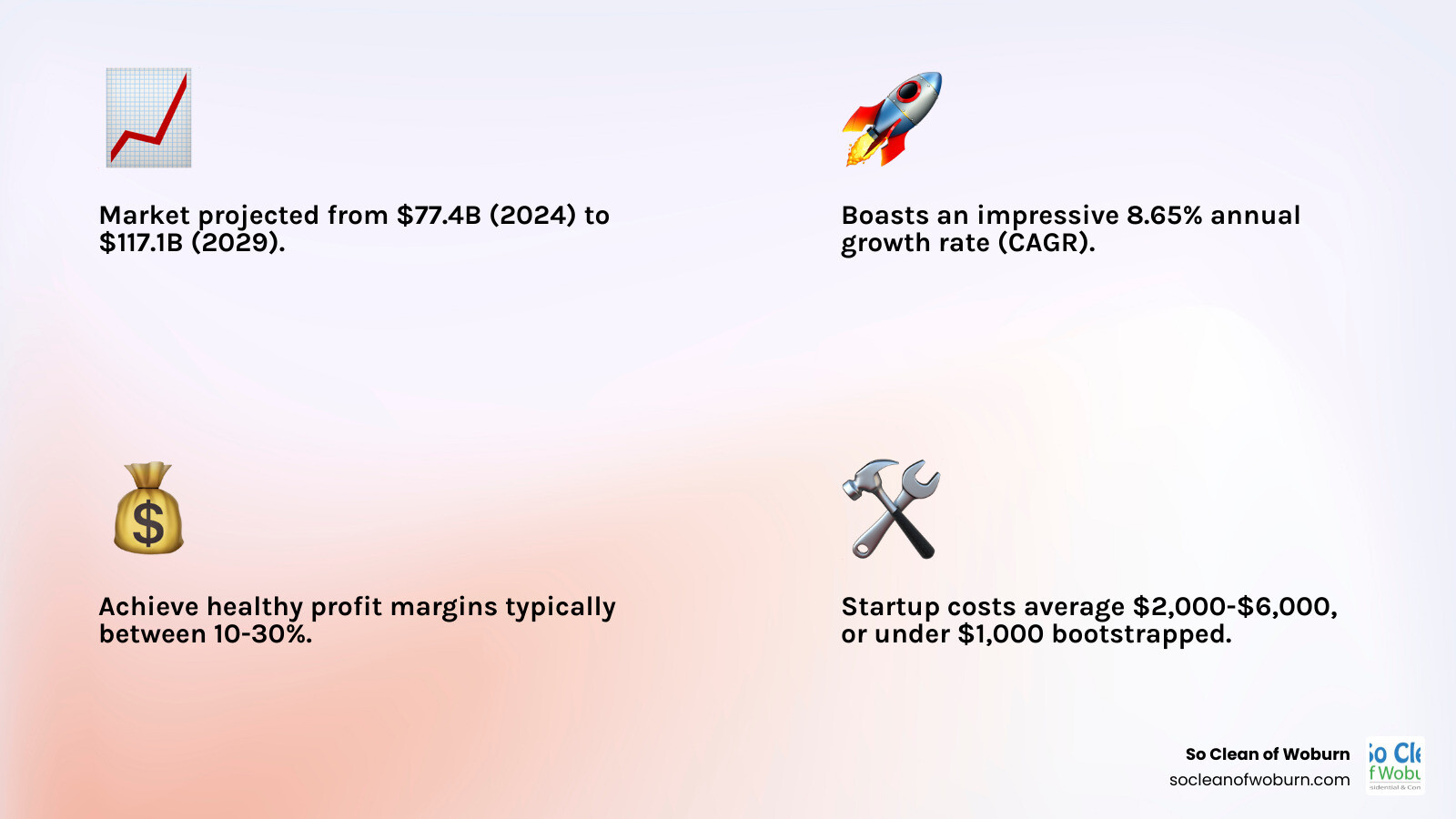
The commercial cleaning market is booming. It’s valued at $77.4 billion in 2024 and projected to hit $117.1 billion by 2029—that’s an 8.65% annual growth rate. Even better? This industry is recession-resistant because businesses always need clean, safe workspaces.
Here’s what makes office cleaning such an attractive side hustle:
- Low startup barrier – You can launch for $2,000-$6,000, or even less if you bootstrap
- Healthy profit margins – Most cleaning businesses earn 10-30% profit
- Flexible scheduling – Clean offices during evenings or weekends around your day job
- Scalable income – Start solo, then hire a team as you grow
- Steady demand – Commercial cleaning holds 55% of the entire cleaning services market
As one cleaning entrepreneur shared, “I started my janitorial cleaning service by cleaning offices on the side of my day job. I took baby steps and learned how to start a cleaning business from scratch.” That side hustle eventually grew into a half-million-dollar corporation.
The startup costs are manageable too. While some sources cite $2,000-$6,000 to cover licenses, insurance, supplies, and marketing, you can actually start for under $1,000 by using clients’ existing supplies and focusing on free marketing methods like networking and Google Business Profile setup.
I’m Bill McGrath, owner of So Clean of Woburn, and I’ve spent years helping businesses across the Greater Boston area maintain pristine workspaces. Throughout my experience, I’ve learned exactly how to start an office cleaning service from the ground up, from securing those first nervous clients to building a team that delivers consistent, high-quality results.
Quick look at how to start an office cleaning service:
- how to price office cleaning services
- how hiring a professional cleaning service benefits your office
- commercial business cleaning services
Step 1: Laying the Foundation – Business Plan & Legal Prep
Before we even think about mops and buckets, we need a solid blueprint. This is where we lay the groundwork for our office cleaning empire. Whether we dream of a small, local operation or a sprawling service across Middlesex County, MA, a well-thought-out plan is our first step.
One of the first big decisions is whether to go independent or buy into a franchise.
- Independent Model: This path offers us full control over every decision—from our brand to our pricing and services. It’s ideal for those of us who are “scrappy entrepreneurs” willing to put in the work and want complete autonomy. We can tailor our services to the unique needs of the Greater Boston area and surrounding towns like Woburn, Arlington, and Cambridge.
- Franchise Model: This option can be appealing if we have some initial investment money and want to launch quickly with a “business in a box” experience. Franchises often provide brand recognition, established systems, and initial client opportunities. However, they come with less control and ongoing fees.
Regardless of the model we choose, certain key skills are essential for success. These include:
- Business Management: Understanding how to run the day-to-day operations, manage resources, and plan for the future.
- Communication and Customer Service: Building rapport with clients, understanding their needs, and effectively addressing concerns is paramount. Our reputation in places like Beverly, Lexington, or Malden will depend on this.
- Industry Knowledge: While we don’t need to be cleaning gurus from day one, understanding cleaning techniques, products, and safety standards (like OSHA guidelines) is crucial. Hands-on experience or certifications (ISSA, IICRC) can give us a significant edge.
- Basic Cleaning Knowledge: Let’s face it, we need to know how to clean! Starting by cleaning on the side, as one expert did, can be a great way to learn professional-level techniques and product usage.
- Financial Planning: Managing our budget, understanding profit margins, and tracking expenses are vital for a profitable venture.
A comprehensive business plan will outline our company’s purpose, services, market analysis, marketing strategy, operations, and financial projections. It’s not just a formality; it’s our roadmap to success.

How to start an office cleaning service on a budget
The beauty of starting an office cleaning service is its relatively low barrier to entry. We don’t need a massive capital injection to get started. The average cost to start a cleaning business typically ranges from $2,000 to $6,000 in the U.S., covering essentials like licenses, insurance, supplies, and initial marketing.
However, we can significantly reduce these initial costs through smart bootstrapping:
- Equipment Budget: Basic cleaning equipment and supplies can cost us anywhere from $300 to $600. We can start with essentials and reinvest profits to upgrade.
- Licensing Fees: General business licenses in Massachusetts cities and towns can range from $50 to $500 annually, depending on our specific location (e.g., Woburn, Cambridge, Boston).
- Insurance Costs: General liability insurance, a non-negotiable for any cleaning business, can be as low as $48 per month or around $580 annually. We’ll dig deeper into insurance shortly.
- Bootstrapping with Personal Funds: Many successful entrepreneurs start by funding their business from their day job’s paycheck, purchasing only what’s absolutely necessary. We can even initially use clients’ existing supplies to save money. This lean approach allows us to gain experience and build capital before investing heavily.
Choosing Your Legal Structure
Selecting the right legal structure is a critical step that impacts our liability, taxes, and administrative burden. For those of us starting an office cleaning service in Massachusetts, here are the common options:
- Sole Proprietorship: This is the simplest and least expensive structure. We (the owner) are personally liable for all business debts and obligations. It’s often chosen by those starting small, like a side hustle.
- Partnership: Similar to a sole proprietorship but involves two or more owners. All partners share in profits, losses, and liabilities.
- Limited Liability Company (LLC): This is a popular hybrid option for small businesses. An LLC protects our personal assets from business debts and liabilities, meaning if the business faces a lawsuit, our personal savings or home are generally safe. While it offers liability protection, it’s typically more expensive to set up than a sole proprietorship, with filing costs potentially ranging from $40 to $500 depending on the state. LLCs also require members to pay self-employment taxes. For most cleaning businesses, an LLC is the preferred choice due to this balance of protection and flexibility.
- Corporation (S-Corp or C-Corp): This structure provides the strongest personal liability protection, as the business is a separate legal entity. However, it involves more complex setup, stricter regulations, and potential double taxation (for C-Corps). It’s generally not the first choice for a small cleaning side hustle.
We will also need to choose a business name. It should be professional, memorable, and not already in use. Once we have our name, we’ll need to register our business in Massachusetts. This involves checking name availability, and if we’re operating under a name different from our own, filing a “Doing Business As” (DBA) registration. Always check with local government offices in our specific city or town (like Woburn, Cambridge, or Boston) to ensure compliance with their requirements.
For more detailed guidance on these structures, we can refer to A guide to business structures.
Step 2: How to Start an Office Cleaning Service – Services, Pricing, and Gear
Now that we’ve laid the legal and planning groundwork, it’s time to define what we’ll offer and how we’ll equip ourselves. This is where we carve out our niche and ensure we stand out in the competitive commercial cleaning landscape of Massachusetts.
We need to decide what makes us unique. Will we focus on eco-friendly cleaning, specialized services, or exceptional customer communication? Differentiating from competitors is key to attracting and retaining clients in areas like Somerville, Stoneham, or Waltham. Focusing on quality from the outset will build our reputation and lead to valuable word-of-mouth referrals.

Defining Your Office Cleaning Services
The range of services we can offer is vast, allowing us to tailor our business to specific client needs. Here’s a breakdown of common and specialty office cleaning services:
General Cleaning (Core Services): These are the bread and butter of any office cleaning business.
- Dusting and wiping surfaces: Desks, shelves, office equipment, and common areas.
- Vacuuming and mopping: All floor types, ensuring a pristine appearance.
- Restroom sanitation: Thorough cleaning and disinfection of toilets, sinks, and floors. This is a critical area for health and hygiene. For more on this, check out our insights on Commercial Restroom Cleaning Services.
- Trash removal: Emptying all waste bins and replacing liners.
- Kitchen/Breakroom cleaning: Wiping down counters, sinks, microwaves, and appliances.
Specialty Services (Opportunities for Higher Margins): Offering specialized services can help us differentiate and command higher prices.
- Window cleaning: Interior and exterior window cleaning, especially for offices with large glass facades. Our guide on Commercial Window Cleaning offers more details.
- Carpet cleaning: Deep cleaning, stain removal, and maintenance for office carpets. See our resources on Commercial Carpet Cleaning Near Me.
- Floor stripping and waxing: For hard floors, maintaining their shine and longevity.
- Post-construction cleanup: Cleaning offices after renovation or construction projects.
- Disinfection services: Improved cleaning protocols, especially relevant in today’s health-conscious environment, targeting bacteria and viruses.
- Green cleaning: Using non-toxic, environmentally friendly products and methods. This is a growing market, with green cleaning products making up 30% of the cleaning industry, and it appeals to eco-conscious clients who may pay a premium.
When defining our services, we should consider the specific needs of businesses in our target areas, such as the busy offices in Boston or the corporate parks in Burlington.
Pricing Your Services for Profit
Determining our pricing strategy is crucial for profitability. We want to be competitive but also ensure we’re covering our costs and earning a healthy profit margin (aiming for 10-30%). Here are the most common pricing models:
| Pricing Model | Description | Average Rate |
|---|---|---|
| Hourly Rate | Charging by the hour for labor. This is ideal for jobs with unpredictable scope or for initial deep cleans. | $50 – $150 per hour |
| Per-Square-Foot Rate | The price is based on the total square footage of the office. This model is common for larger, recurring contracts. | $0.07 – $0.25 per sq ft |
| Flat Rate Per Job | A fixed price for the entire cleaning visit, agreed upon in advance. This is best for standard, recurring jobs. | $200 – $1,800 per visit |
| Monthly Retainer | A recurring monthly fee for a set schedule of cleaning services. This model provides predictable income and simplifies billing. | Varies based on scope |
Step 1: Laying the Foundation – Business Plan & Legal Prep
Before we even think about mops and buckets, we need a solid blueprint. This is where we lay the groundwork for our office cleaning empire. Whether we dream of a small, local operation or a sprawling service across Middlesex County, MA, a well-thought-out plan is our first step.
One of the first big decisions is whether to go independent or buy into a franchise.
- Independent Model: This path offers us full control over every decision—from our brand to our pricing and services. It’s ideal for those of us who are “scrappy entrepreneurs” willing to put in the work and want complete autonomy. We can tailor our services to the unique needs of the Greater Boston area and surrounding towns like Woburn, Arlington, and Cambridge.
- Franchise Model: This option can be appealing if we have some initial investment money and want to launch quickly with a “business in a box” experience. Franchises often provide brand recognition, established systems, and initial client opportunities. However, they come with less control and ongoing fees.
Regardless of the model we choose, certain key skills are essential for success. These include:
- Business Management: Understanding how to run the day-to-day operations, manage resources, and plan for the future.
- Communication and Customer Service: Building rapport with clients, understanding their needs, and effectively addressing concerns is paramount. Our reputation in places like Beverly, Lexington, or Malden will depend on this.
- Industry Knowledge: While we don’t need to be cleaning gurus from day one, understanding cleaning techniques, products, and safety standards (like OSHA guidelines) is crucial. Hands-on experience or certifications (ISSA, IICRC) can give us a significant edge.
- Basic Cleaning Knowledge: Let’s face it, we need to know how to clean! Starting by cleaning on the side, as one expert did, can be a great way to learn professional-level techniques and product usage.
- Financial Planning: Managing our budget, understanding profit margins, and tracking expenses are vital for a profitable venture.
A comprehensive business plan will outline our company’s purpose, services, market analysis, marketing strategy, operations, and financial projections. It’s not just a formality; it’s our roadmap to success.
How to start an office cleaning service on a budget
The beauty of starting an office cleaning service is its relatively low barrier to entry. We don’t need a massive capital injection to get started. The average cost to start a cleaning business typically ranges from $2,000 to $6,000 in the U.S., covering essentials like licenses, insurance, supplies, and initial marketing.
However, we can significantly reduce these initial costs through smart bootstrapping:
- Equipment Budget: Basic cleaning equipment and supplies can cost us anywhere from $300 to $600. We can start with essentials and reinvest profits to upgrade.
- Licensing Fees: General business licenses in Massachusetts cities and towns can range from $50 to $500 annually, depending on our specific location (e.g., Woburn, Cambridge, Boston).
- Insurance Costs: General liability insurance, a non-negotiable for any cleaning business, can be as low as $48 per month or around $580 annually. We’ll dig deeper into insurance shortly.
- Bootstrapping with Personal Funds: Many successful entrepreneurs start by funding their business from their day job’s paycheck, purchasing only what’s absolutely necessary. We can even initially use clients’ existing supplies to save money. This lean approach allows us to gain experience and build capital before investing heavily.
Choosing Your Legal Structure
Selecting the right legal structure is a critical step that impacts our liability, taxes, and administrative burden. For those of us starting an office cleaning service in Massachusetts, here are the common options:
- Sole Proprietorship: This is the simplest and least expensive structure. We (the owner) are personally liable for all business debts and obligations. It’s often chosen by those starting small, like a side hustle.
- Partnership: Similar to a sole proprietorship but involves two or more owners. All partners share in profits, losses, and liabilities.
- Limited Liability Company (LLC): This is a popular hybrid option for small businesses. An LLC protects our personal assets from business debts and liabilities, meaning if the business faces a lawsuit, our personal savings or home are generally safe. While it offers liability protection, it’s typically more expensive to set up than a sole proprietorship, with filing costs potentially ranging from $40 to $500 depending on the state. LLCs also require members to pay self-employment taxes. For most cleaning businesses, an LLC is the preferred choice due to this balance of protection and flexibility.
- Corporation (S-Corp or C-Corp): This structure provides the strongest personal liability protection, as the business is a separate legal entity. However, it involves more complex setup, stricter regulations, and potential double taxation (for C-Corps). It’s generally not the first choice for a small cleaning side hustle.
We will also need to choose a business name. It should be professional, memorable, and not already in use. Once we have our name, we’ll need to register our business in Massachusetts. This involves checking name availability, and if we’re operating under a name different from our own, filing a “Doing Business As” (DBA) registration. Always check with local government offices in our specific city or town (like Woburn, Cambridge, or Boston) to ensure compliance with their requirements.
For more detailed guidance on these structures, we can refer to A guide to business structures.
Step 2: How to Start an Office Cleaning Service – Services, Pricing, and Gear
Now that we’ve laid the legal and planning groundwork, it’s time to define what we’ll offer and how we’ll equip ourselves. This is where we carve out our niche and ensure we stand out in the competitive commercial cleaning landscape of Massachusetts.
We need to decide what makes us unique. Will we focus on eco-friendly cleaning, specialized services, or exceptional customer communication? Differentiating from competitors is key to attracting and retaining clients in areas like Somerville, Stoneham, or Waltham. Focusing on quality from the outset will build our reputation and lead to valuable word-of-mouth referrals.
Defining Your Office Cleaning Services
The range of services we can offer is vast, allowing us to tailor our business to specific client needs. Here’s a breakdown of common and specialty office cleaning services:
General Cleaning (Core Services): These are the bread and butter of any office cleaning business.
- Dusting and wiping surfaces: Desks, shelves, office equipment, and common areas.
- Vacuuming and mopping: All floor types, ensuring a pristine appearance.
- Restroom sanitation: Thorough cleaning and disinfection of toilets, sinks, and floors. This is a critical area for health and hygiene. For more on this, check out our insights on Commercial Restroom Cleaning Services.
- Trash removal: Emptying all waste bins and replacing liners.
- Kitchen/Breakroom cleaning: Wiping down counters, sinks, microwaves, and appliances.
Specialty Services (Opportunities for Higher Margins): Offering specialized services can help us differentiate and command higher prices.
- Window cleaning: Interior and exterior window cleaning, especially for offices with large glass facades. Our guide on Commercial Window Cleaning offers more details.
- Carpet cleaning: Deep cleaning, stain removal, and maintenance for office carpets. See our resources on Commercial Carpet Cleaning Near Me.
- Floor stripping and waxing: For hard floors, maintaining their shine and longevity.
- Post-construction cleanup: Cleaning offices after renovation or construction projects.
- Disinfection services: Improved cleaning protocols, especially relevant in today’s health-conscious environment, targeting bacteria and viruses. Our solution, for example, kills 99.9% of germs, bacteria, Human Coronavirus COVID-19, Hepatitis B & C, Herpes Simplex Virus, and Influenza A (H1N1) virus.
- Green cleaning: Using non-toxic, environmentally friendly products and methods. This is a growing market, with green cleaning products making up 30% of the cleaning industry, and it appeals to eco-conscious clients who may pay a premium.
When defining our services, we should consider the specific needs of businesses in our target areas, such as the busy offices in Boston or the corporate parks in Burlington.
Pricing Your Services for Profit
Determining our pricing strategy is crucial for profitability. We want to be competitive but also ensure we’re covering our costs and earning a healthy profit margin (aiming for 10-30%). Here are the most common pricing models:
| Pricing Model | Description | Average Rate |
|---|---|---|
| Hourly Rate | Charging by the hour for labor. This is ideal for jobs with unpredictable scope or for initial deep cleans. | $50 – $150 per hour |
| Per-Square-Foot Rate | The price is based on the total square footage of the office. This model is common for larger, recurring contracts. | $0.07 – $0.25 per sq ft |
| Flat Rate Per Job | A fixed price for the entire cleaning visit, agreed upon in advance. This is best for standard, recurring jobs. | $200 – $1,800 per visit |
| Monthly Retainer | A recurring monthly fee for a set schedule of cleaning services. This model provides predictable income and simplifies billing. | Varies based on scope |