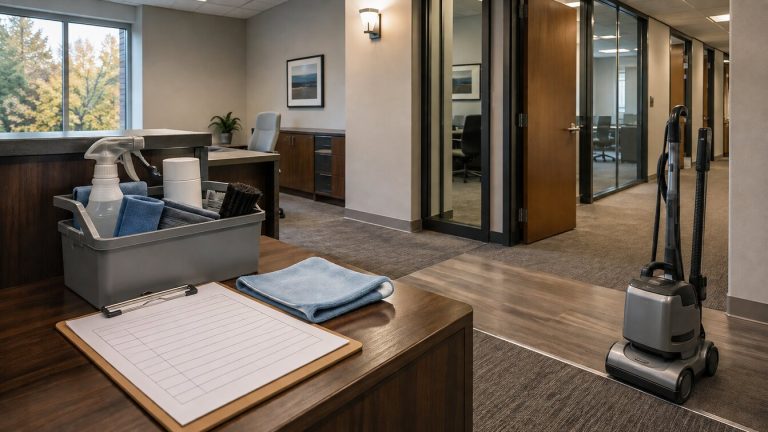
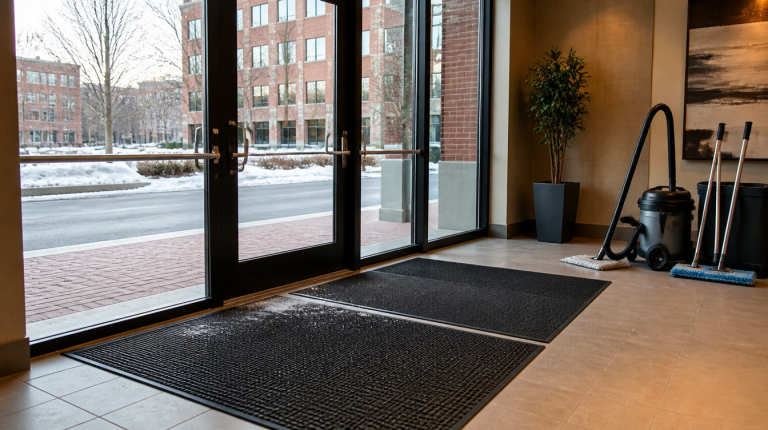
A practical hybrid office cleaning schedule keeps a fixed baseline for shared, high-touch, and hygiene-sensitive spaces, then changes the service level for flexible work zones according to actual use. It should not cut the entire office to a light schedule simply because average attendance is lower. Restrooms, entrances, break areas, conference rooms, and occupied desk neighborhoods can carry very different workloads on the same day.
The scheduling task is therefore not “How often should we clean the office?” It is “Which zones need an agreed reset, which zones change with use, and what signal tells the cleaning team to adjust?”
Start with planning inputs, not a generic frequency
- Attendance pattern: expected open days, normal peak days, and the gap between scheduled attendance and what actually happens.
- Zone map: entrances, restrooms, food areas, conference rooms, workstations, focus rooms, reception, stairs, elevators, and storage.
- Use signals: room bookings, hosted events, visible soil, supply use, work orders, and facility-manager observations.
- Service constraints: cleaning window, occupied areas, alarm and key procedures, locked rooms, noise limits, and who may authorize a change.
Use badge counts to inform attendance estimates, then confirm which zones were actually occupied. Check room reservations against observed use. Treat operational signals as prompts for a walkthrough, not as automatic proof that a task was or was not needed.
Give every zone a baseline and a trigger
The fixed baseline protects spaces that should not depend on a perfect occupancy forecast. The trigger determines when a flexible zone receives more or less attention. This separation makes the schedule easier to price, explain, and revise.
| Office zone | Stable baseline | Useful adjustment trigger |
|---|---|---|
| Entrances and main paths | Inspect and reset on every service visit. | Rain, leaves, winter salt, deliveries, or a hosted event increase floor attention. |
| Restrooms | Maintain the agreed cleaning, supply, and inspection standard independent of desk attendance. | Supply depletion, odor, fixture condition, or a known visitor surge prompts added service. |
| Break and coffee areas | Reset food-contact surroundings, sinks, waste, floors, and agreed appliances on each occupied service day. | Higher waste volume, catered meetings, spills, or a refrigerator-cleanout assignment changes the scope. |
| Conference rooms | Inspect after booked or observed use and restore the agreed room setup. | Bookings, fingerprints, glass condition, food service, or an upcoming client meeting prompts a fuller reset. |
| Workstation neighborhoods | Follow a documented rotation for floors, waste, and permitted desk surfaces. | Actual occupancy, visible debris, overflowing waste, or a team on-site day moves a zone forward. |
| Low-use rooms | Inspect on a defined cadence even when unused. | Visible dust, use since the last inspection, maintenance work, or an upcoming reservation triggers cleaning. |
Build a weekly service map for the real attendance pattern
Identify the office's actual busiest days and occupied zones from attendance and room-use observations. Assign preparation before those peaks, recovery after shared-space use, and periodic tasks during suitable access windows. Organize the service map around these modes:
- Pre-peak reset: prepare entrances, restrooms, food areas, booked meeting rooms, and expected workstation zones before peak attendance.
- Peak-day recovery: prioritize shared spaces, waste, touchpoints, floors, and rooms used by groups.
- End-of-week reset: clear accumulated soil, inspect low-use zones, rotate detailed workstation or floor tasks, and prepare for the next occupied day.
These modes describe why the visit changes; the signed scope should still name the tasks, responsible party, exclusions, and completion standard. Document routine and periodic tasks separately. Keep overall visit frequency distinct from the zone-level adjustments made within each visit.
Create a calendar handoff the cleaning team can use
A complicated dashboard is not required. The cleaning provider needs a timely, controlled summary of the changes that affect the next service visit. Choose a designated facility contact and a cutoff for updates.
- Expected high-attendance zones and any team-wide office day
- Conference rooms used for food, visitors, training, or evening events
- Rooms that will be locked, occupied late, or unavailable
- Construction, furniture moves, deliveries, or maintenance work that changes access
- Weather-related entry conditions such as heavy rain, leaves, snow, or deicing residue
- Approved additions and the person authorized to accept any cost change
Do not send personal employee schedules or unnecessary access data. Report expected occupancy and service needs at the zone level without disclosing who will be present.
Calibrate the plan against observed use
Any new hybrid schedule begins with assumptions. Set an initial review period with the provider and keep a compact log after each service.
- Coverage: Did every fixed-baseline zone receive the agreed service? Which flexible zones were unexpectedly busy?
- Triggers: Did the chosen signals predict work accurately? Which bookings, attendance estimates, or weather alerts produced false positives or missed needs?
- Balance: Are complaints, visible soil, supply shortages, or repeated extra requests concentrated in a particular zone or day?
At the review, document each adjustment separately so its effect can be tracked. Specify the affected zone, task, and service day rather than telling the crew to “clean more when it is busy.” Once the schedule is stable, use a consistent quality check—such as the site's office cleaning quality-control scorecard—to separate schedule problems from missed execution.
Put the schedule into the cleaning agreement
The final schedule should identify fixed services, flexible zones, trigger sources, notification cutoff, access rules, exclusions, and the approval path for extra work. It should also state how often the plan will be reviewed. That keeps a reasonable adjustment from turning into an informal scope change that nobody can price or verify.
If you are reviewing office service in Woburn or the supported service area across Middlesex, Essex, and Suffolk Counties, use So Clean's office-cleaning service page as the service overview. Bring a zone map and attendance and room-use observations to the estimate conversation so the proposed schedule reflects how the office is actually used.