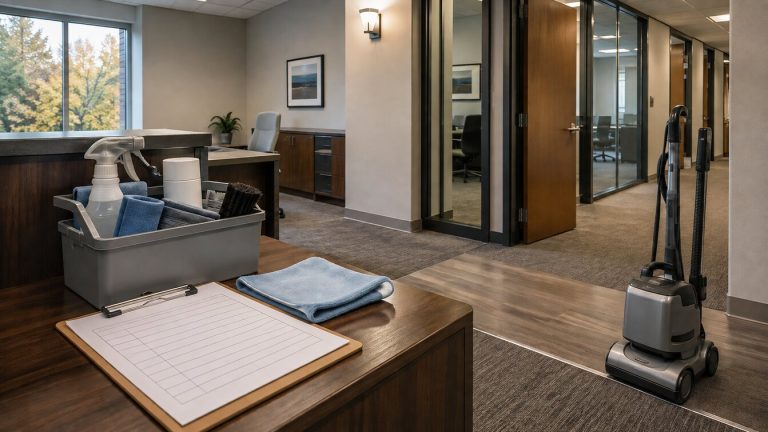

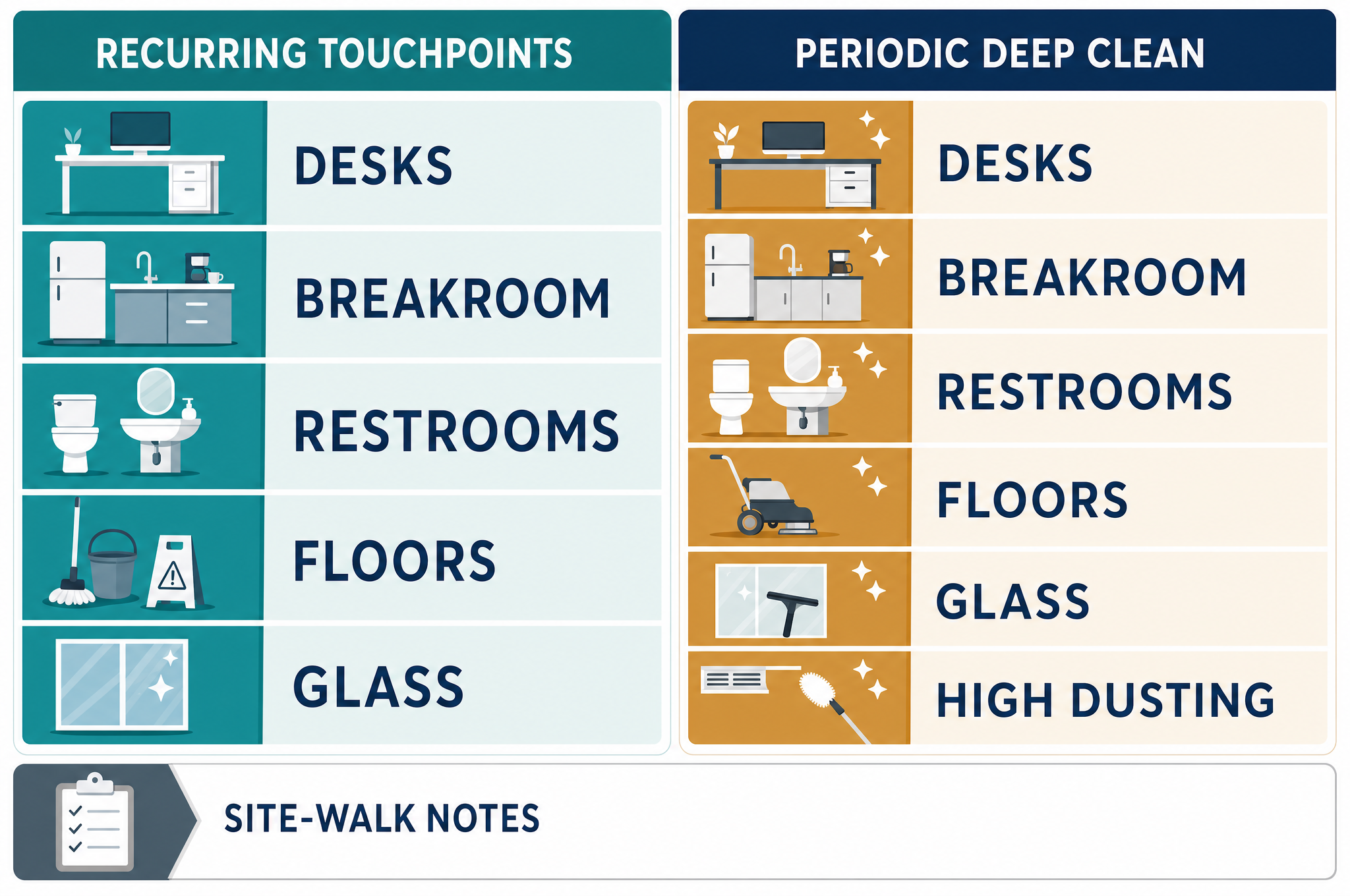
A useful office cleaning scope names the space, task, frequency, standard, and responsibility for every recurring item. Daily service should concentrate on waste, restrooms, break rooms, floors, and high-touch points. Detail work such as carpet extraction, high dusting, interior glass, floor refinishing, and appliance interiors belongs on a weekly, monthly, quarterly, or separately approved schedule.
That separation matters because “clean the office” is not measurable. A written scope gives the facility contact and cleaning team the same definition of complete, makes pricing easier to compare, and prevents periodic work from disappearing behind urgent nightly tasks.
Start with four definitions
- Cleaning removes soil, dust, and many germs with detergent, water, and physical action.
- Sanitizing reduces germs to levels established by public-health requirements.
- Disinfecting uses a registered product to kill remaining germs on a surface after it has been cleaned.
- Detail or restorative cleaning addresses buildup that routine service is not designed to remove, such as carpet extraction or floor-finish restoration.
The distinction is not just wording. The CDC explains that cleaning is usually the first step and that disinfection is most relevant when illness or higher-risk conditions make it necessary. A proposal should never use “disinfect” as a vague synonym for wiping.
A practical frequency matrix
| Frequency | Typical work | Scope question |
|---|---|---|
| Each visit | Trash and recycling, restroom fixtures, break-room counters and sinks, entry glass, vacuuming or spot mopping, agreed high-touch points | Which rooms are occupied, and what must be reset before opening? |
| Weekly | Desk-edge dusting where clear, full hard-floor mopping, low ledges, interior glass partitions, appliance exteriors | May cleaners move papers, electronics, or personal items? |
| Monthly | Baseboards, reachable vents, chair bases, door frames, deeper restroom detailing, partition spot cleaning | What height limit and access equipment are included? |
| Quarterly or seasonal | Carpet extraction, machine floor care, high dusting, full interior glass, salt-residue recovery | Is this in the base price or approved separately? |
Match frequency to how the office is actually used
A small law office with twenty assigned desks does not create the same cleaning load as a call center, clinic, shared workspace, or warehouse office with constant foot traffic. Record the number of occupants, visitor volume, restrooms, food-preparation areas, floor types, and days of operation. Then identify the spaces that can be serviced only during restricted hours.
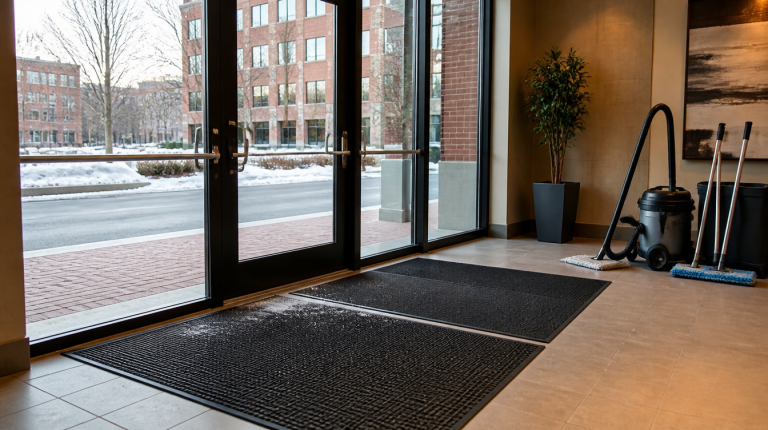
Greater Boston seasons also change the workload. Winter entry zones collect meltwater, grit, and deicing residue. Spring pollen shows quickly on dark furniture and glass. A good Woburn-area scope anticipates those cycles instead of treating every month as identical.
Copyable sample scope for a 10,000-square-foot professional office
This example is a planning model, not a quote. It shows the level of detail a facility manager can bring to a walkthrough.
| Area | Task and standard | Frequency |
|---|---|---|
| Open office and private offices | Empty liners as needed; vacuum traffic lanes; damp-wipe clear shared surfaces; leave papers and electronics undisturbed | Nightly |
| Two restrooms | Clean fixtures, mirrors, counters, partitions, and floors; refill client-supplied consumables; report leaks or damaged dispensers | Nightly |
| Break room | Clean sink, counters, tables, appliance exteriors, and floor; refrigerator interior excluded unless scheduled | Nightly |
| Carpet and resilient flooring | Spot clean as reported; extract carpet and perform appropriate machine care after inspection | Quarterly or approved separately |
Write exclusions and responsibilities into the scope
Common disputes begin with unspoken assumptions. State whether the cleaning provider or client supplies paper goods, liners, soap, and chemicals. Identify locked rooms, alarm procedures, key control, waste locations, recycling rules, security-sensitive desks, sharps or biohazards, pest evidence, and who can approve extra work.
Also list what is not routine janitorial work: exterior windows, post-construction dust, hazardous materials, bodily-fluid cleanup, data-center spaces, high work beyond the agreed limit, and moving heavy furniture. Cleaning chemicals require appropriate labels, training, and handling; OSHA’s cleaning-industry guidance is a useful reference for workplace hazards. The EPA Safer Choice label can help purchasers identify products evaluated against its ingredient and performance criteria.
Use a walkthrough and a change-control rule
- Walk every included room and record floor type, fixtures, access limits, and current condition.
- Mark each task as each-visit, weekly, monthly, seasonal, or on request.
- Define what “complete” looks like and how issues are reported.
- Name the person who can authorize additions, schedule changes, or emergency service.
- Review the scope after the first month and whenever occupancy or space use changes.
Questions facility managers ask
How often should an office be cleaned?
There is no responsible one-size answer. Occupancy, visitor traffic, restrooms, food service, floor types, operating hours, and required standards determine frequency. Many offices need waste, restrooms, break rooms, and traffic lanes addressed each service visit, with detail work rotated.
Who supplies cleaning products and consumables?
Either arrangement can work, but the proposal should name the responsible party for chemicals, liners, paper products, hand soap, and dispensers. It should also explain how low stock is reported.
What should not be included automatically?
Hazardous or regulated cleanup, exterior windows, construction cleanup, high-access work, heavy lifting, and restorative floor care should be specifically assessed and authorized rather than implied by a general janitorial line item.
For a site-specific walkthrough in Woburn, Greater Boston, or the North Shore, review So Clean’s office cleaning service and confirm whether your address is within the company’s service area.